EMAIL:
wr@insulatedpipeline.com



Number of visits:38 seconds Update time:2026-05-18
If you are managing a cross-border oil and gas pipeline or a multi-kilometer municipal water project, "coating selection error" is never just a technical hiccup—it is a catastrophic asset failure waiting to explode 8 to 15 years down the line.
The real danger is not a short-term leak, but rather:
Uncontrolled Cathodic Disbondment.
Complete stripping of the coating by rock abrasion during HDD (Horizontal Directional Drilling).
The "silent dissolution" of steel pipes in soil where the coating appears intact, but electrochemical protection has already failed.
These issues won't surface on the day of commissioning; they will hit your operational budget with a vengeance in the tenth year.
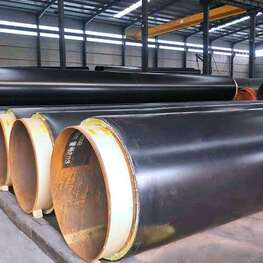
3LPE (Three-Layer Polyethylene), governed by the DIN 30670 framework, is essentially a "mechanical protection system" consisting of:
FBE Bottom Layer: Provides initial chemical adhesion.
Copolymer Adhesive Layer: Acts as a stress buffer.
HDPE Top Layer: The primary structural shield against impact.
The critical factor is not just the total thickness, but the specific performance of the anti-corrosion external coating for steel pipes, where the outer layer thickness is typically ≥ 2.5 mm (Heavy Duty) and impact resistance is ≥ 15 J/mm. In real-world engineering, these parameters determine whether the coating develops "penetrating cracks" under long-haul transport, rigging, and rock backfilling.
For cross-border projects, 3LPE’s value lies in controlling the Transit Damage Rate to <0.5%—a feat unattainable by single-layer FBE or standard TPEP.
The core of FBE (Fusion Bonded Epoxy) is not a "shield," but an integrated metal-coating interface reaction.
Critical Process Window: Sa 2.5 surface preparation with an anchor profile of 50–75 μm.
Performance Metric: Its success is measured by Cathodic Disbondment resistance. Under 1.5V potential at 20°C for 28 days, the disbondment radius must be restricted to 2–5 mm.
FBE is not designed to be "impact-proof"; it is "electrochemical-proof." It is ideal for stable buried environments, high-temperature medium transport, or scenarios requiring extreme adhesion with low mechanical risk. However, in HDD or rocky backfill zones, FBE lacks the mechanical redundancy required to prevent damage.
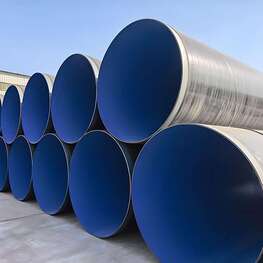
TPEP (Thermoplastic Epoxy + Polyethylene) is often misunderstood as a "3LPE upgrade," but its value proposition is entirely different:
Internal: Epoxy powder coating with controlled surface roughness to significantly reduce the Darcy Friction Factor.
External: 3PE structure or reinforced PE system.
TPEP solves the fundamental contradiction in municipal engineering: Flow Efficiency vs. Long-term Zero Leakage. In long-distance water supply, it reduces pump station energy consumption and controls long-term flow attenuation.
When selecting a solution, do not ask "which is better," but rather "what is the environmental stress model?"
Industry data is consistent: Over 90% of pipeline corrosion failures occur at the welded joints.
The issue is rarely the main coating, but rather the thermodynamic mismatch between Heat Shrink Sleeves (HSS) and the 3LPE body, or inconsistent manual application. A perfect main coating cannot save a project if the joints fail.
The standard must be 100% coverage. High-voltage holiday detection at 25kV must be performed before dispatch. Corrosion failure in long-distance pipelines is not a matter of probability; it is triggered by a single-point defect.
During Directional Drilling, rock friction and drag-force can cause "shear-type failure" of the HDPE layer. This isn't a simple puncture but a massive delamination. Such damage is invisible during acceptance but manifests as localized corrosion 1–3 years after backfilling.
To ensure asset integrity, the following clauses should be mandatory in technical agreements:
Clause 1: Raw Material Traceability
Explicitly define the brands for Epoxy powder and HDPE resin grades (e.g., PE80 / PE100). Every batch must be accompanied by a COA (Certificate of Analysis) detailing chemical composition and Melt Flow Index.
Clause 2: Peel Test Frequency
Require at least one test per production batch or every 500 meters. Peel strength must strictly adhere to the lower limits of EN/DIN standards.
Clause 3: Dunnage & Logistics Standards
Define the spacing of wooden supports (typically ≤ 3m) and mandatory soft-contact handling (nylon slings). Steel-to-steel contact must be strictly prohibited during stacking and transit.
Engineering Summary: Many coating damages are not manufacturing defects, but the result of poor logistics. Protect the "skin" of your pipeline at the contract stage, or pay the price in the operational stage.
 WeChat
 Scan wechat
WhatsApp:+86 15383177997
E-mail:wr@insulatedpipeline.com
E-mail:
Address:Development Zone, Cangzhou, Hebei Province, China
技术支持:沧州利畅网络

(jpeg).jpg)