EMAIL:
wr@insulatedpipeline.com



Number of visits:39 seconds Update time:2026-04-30
Many procurement managers face the same confusion:
Although suppliers are all offering 3PE anti-corrosion steel pipes, why do some quotes look extremely low-cost while others are significantly higher? And can quality differences really be identified visually?
In fact, the 3PE steel pipe market is highly technical. The large gap in both price and quality mainly comes from three key factors: raw material quality, manufacturing process control, and compliance with technical standards.
The excellent anti-corrosion performance of 3PE steel pipe comes from its three-layer composite structure. Each layer has a direct impact on cost and performance.
High-quality option:
Uses internationally recognized epoxy powder with strong adhesion and excellent cathodic disbondment resistance.
Low-quality option:
May contain recycled powder or reduced coating thickness.
If the powder quality is poor, the coating behaves like a “building without a foundation,” leading to large-scale peeling within a few years.
This layer acts as the “bonding bridge” between the epoxy and polyethylene layers.
High-quality adhesive ensures the three layers work as a unified system.
Low-quality adhesive may fail under temperature fluctuations, causing delamination of the coating system.
This is the “armor layer” protecting the pipe from mechanical damage and environmental exposure.
Key cost driver: raw material grade
Virgin imported polyethylene (high cost, excellent durability)
Domestic blended materials
Recycled materials (low cost but poor long-term performance)
Recycled PE may degrade quickly under UV exposure and environmental stress, becoming brittle within months of outdoor storage.
Beyond raw materials, two critical process factors often determine whether a pipe will last 10 years or 50 years.
High-quality 3PE steel pipes must undergo abrasive blasting to achieve Sa 2.5 cleanliness level.
High standard:
The steel surface appears metallic clean with a proper anchor profile for coating adhesion.
Low standard:
Incomplete rust removal or residual oxide scale.
The pipe may look acceptable at delivery but will suffer accelerated corrosion once buried underground.
Advanced manufacturers use automated extrusion and wrapping systems to ensure uniform thickness.
However, low-end suppliers often meet specifications on the pipe body but fail at the weld seam area, where coating thickness is significantly reduced.
This weak point is often the first location where pipeline corrosion failure occurs.
As an international buyer, understanding technical standards is essential for correct pricing evaluation.
Taking a DN500 pipe as an example, cost variations mainly come from the following factors:
1. Do Not Rely Only on Unit Price
When evaluating 3PE anti-corrosion steel pipe quotations, always require suppliers to clearly specify:
PE raw material brand
Whether the coating is normal or reinforced grade
Applicable standard (DIN / ISO / GB)
2. Pay Attention to Weld Seam Thickness
Request detailed inspection reports for weld seam coating thickness. This is the most vulnerable corrosion point in the entire pipeline system.
3. Focus on Packaging and Logistics Protection
Although 3PE coatings are durable, they can still be damaged during loading and sea transportation.
High-quality suppliers typically provide:
Nylon lifting slings instead of steel cables
Rubber pipe spacers
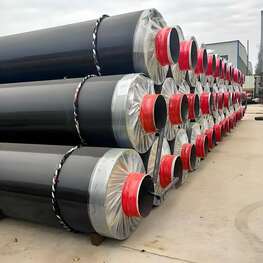
End caps or pipe protectors
These details slightly increase cost but significantly reduce the risk of damage upon arrival.
 WeChat
 Scan wechat
WhatsApp:+86 15383177997
E-mail:wr@insulatedpipeline.com
E-mail:
Address:Development Zone, Cangzhou, Hebei Province, China
技术支持:沧州利畅网络