EMAIL:
wr@insulatedpipeline.com


Published:2025-11-03 | Last Updated: 2026-08-13 Views: 110
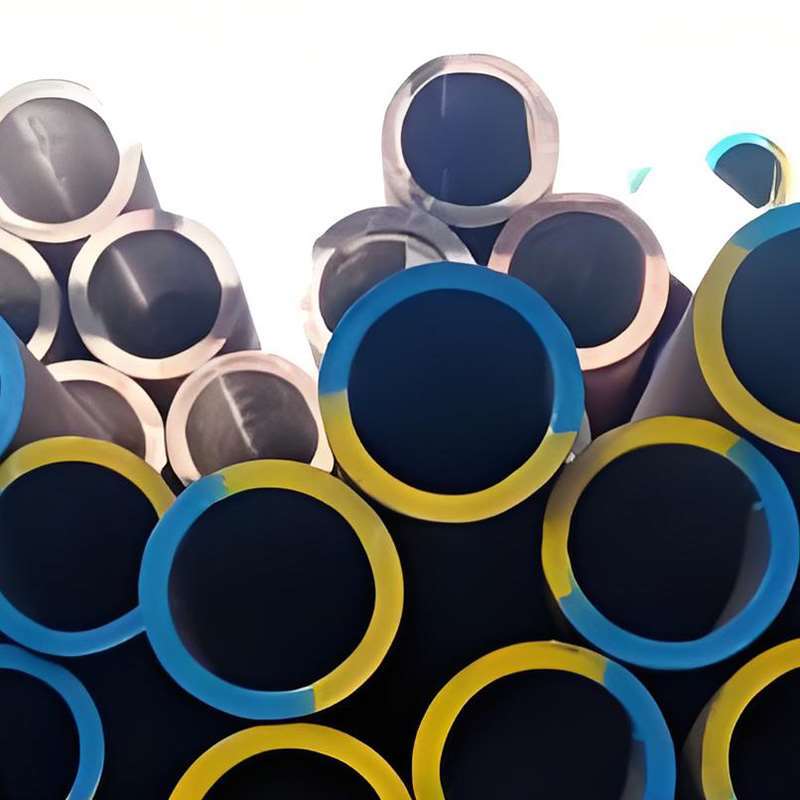
ASTM A335 alloy steel pipes are seamless pipes manufactured according to the American Society for Testing and Materials (ASTM) A335 standard. These high-temperature, high-pressure alloy steel pipes are primarily used for conveying high-temperature fluids such as steam, hot water, and thermal oil.
| Parameter Category | Detailed Description |
|---|---|
| Standard | ASTM A335 / ASME SA335 |
| Manufacturing Process | Seamless pipe: hot forging → hot piercing / extrusion → hot rolling or cold drawing → heat treatment (normalizing / tempering / quenching & tempering) → inspection → surface finishing / packing |
| Outside Diameter Range | 1/2" – 24" (21.3 – 609.6 mm) |
| Outside Diameter Tolerance | Hot rolled: ±0.5 ~ ±2.0 mm; cold drawn: ±0.3 ~ ±1.0 mm |
| Wall Thickness Range | Hot rolled: 2.8 – 50 mm; cold drawn: 1.5 – 25 mm |
| Wall Thickness Tolerance | Hot rolled: ±10 % or ±0.5~1.5 mm; cold drawn: ±5 % or ±0.3~0.8 mm |
| Length | Standard lengths: 5.8 – 12 m; cut-to-length available upon request |
| Steel Grades | P1, P2, P5, P9, P11, P12, P22, P91, P92, P5MN, P91M, etc. |
| Chemical Composition | Each grade controls C, Mn, Si, Cr, Mo, V, Nb, Ni, etc. per ASTM A335 |
| Service Temperature | P1–P22: 0–580 °C; P91/P92: 0–650 °C |
| Anti-corrosion Types | External & internal anti-rust oil, varnish; hot-dip galvanized optional; epoxy, FBE, etc. for special service |
| Applicable Pressure | Calculated per grade, wall thickness and temperature; meets boiler and high-temperature high-pressure piping requirements |
| Inspection Items | Chemical analysis, dimensions, mechanical properties (tensile, yield, impact), NDT (UT/RT), hydrostatic test, etc. |
| Main Applications | Boiler tubes in thermal power plants, high-temperature high-pressure steam lines, hot water/thermal oil piping, chemical & petrochemical process piping |
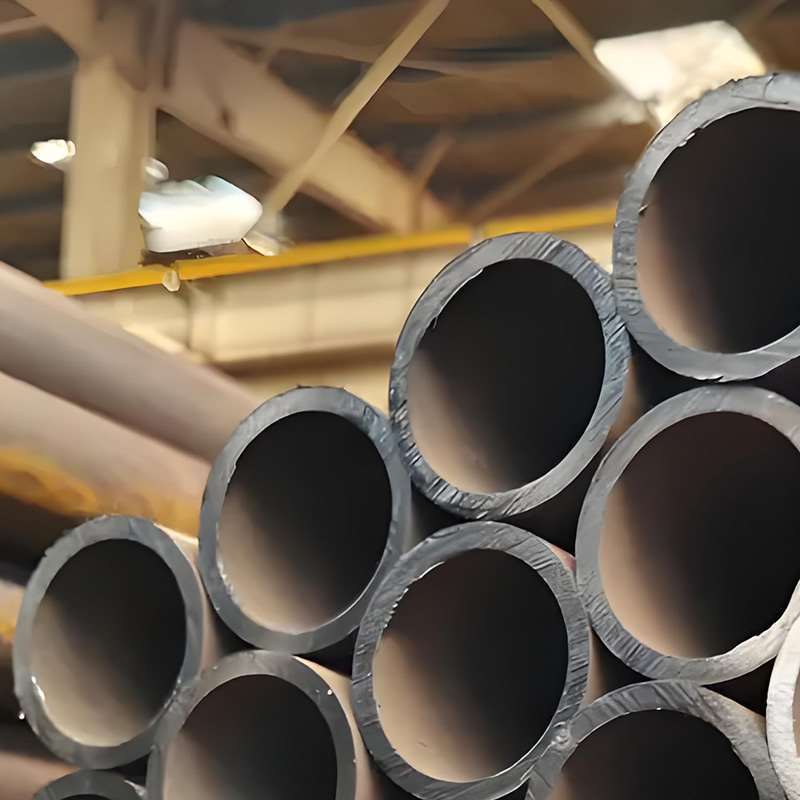
“P” denotes pressure piping, suitable for high-temperature, high-pressure boilers and thermal systems.
The subsequent numbers (e.g., 11, 22, 91) indicate the primary alloying elements and strength level of the steel. Each grade exhibits distinct yield strength, tensile strength, and high-temperature resistance.
| Steel Grade | Main Alloying Elements | Yield Strength σy (MPa) | Tensile Strength σb (MPa) | Applicable Temperature Range | Typical Applications |
|---|---|---|---|---|---|
| P1 | 1/4Cr-0.5Mo | 205–240 | 415–535 | 0–425 °C | Medium–low temperature steam and hot water pipelines |
| P2 | 1/4Cr-0.5Mo | 205–240 | 415–535 | 0–425 °C | Low-pressure boiler piping |
| P5 | 0.5Cr-0.5Mo | 205–250 | 415–535 | 0–540 °C | Medium-temperature boiler tubes; petrochemical equipment |
| P9 | 2.25Cr-1Mo | 290–315 | 415–535 | 0–580 °C | High-temperature, high-pressure steam pipelines |
| P11 | 1Cr-0.5Mo | 290–315 | 415–535 | 0–540 °C | Medium-temperature boiler tubes and steam pipes |
| P22 | 2.25Cr-1Mo | 295–350 | 415–585 | 0–580 °C | High-temperature boilers and thermal pipelines |
| P91 | 9Cr-1Mo-V-Nb | 585–690 | 620–760 | 0–650 °C | Ultra-high temperature boilers; supercritical power plant piping |
| P92 | 9Cr-1Mo-V-Nb | 620–690 | 650–760 | 0–650 °C | Ultra-high temperature boilers; thermal power plant piping |
| P5MN | 5Cr-0.5Mo | 345–380 | 485–610 | 0–580 °C | High-temperature chemical process piping |
| P12 | 2.25Cr-1Mo | 295–350 | 415–585 | 0–580 °C | High-temperature, high-pressure steam pipelines |
Steel grade | C (%) | Mn (%) | Si (%) | Cr (%) | Mo (%) | V (%) | Nb (%) | Ni (%) |
P1 | 0.06–0.14 | 0.30–0.60 | 0.10–0.35 | 0.25–0.50 | 0.45–0.60 | - | - | - |
P2 | 0.06–0.14 | 0.30–0.60 | 0.10–0.35 | 0.25–0.50 | 0.45–0.60 | - | - | - |
P5 | 0.05–0.15 | 0.27–0.60 | 0.10–0.35 | 0.45–0.60 | 0.45–0.60 | - | - | - |
P9 | 0.05–0.12 | 0.27–0.55 | 0.10–0.35 | 2.00–2.50 | 0.45–0.60 | - | - | - |
P11 | 0.08–0.15 | 0.30–0.60 | 0.10–0.35 | 1.00–1.50 | 0.45–0.60 | - | - | - |
P12 | 0.05–0.15 | 0.27–0.60 | 0.10–0.35 | 2.00–2.50 | 0.45–0.60 | - | - | - |
P22 | 0.05–0.15 | 0.27–0.60 | 0.10–0.35 | 2.00–2.50 | 0.85–1.05 | - | - | - |
P91 | 0.08–0.12 | 0.85–1.05 | 0.20–0.50 | 8.00–9.50 | 0.85–1.05 | 0.18–0.25 | 0.06–0.12 | - |
P92 | 0.08–0.12 | 0.30–0.60 | 0.20–0.50 | 8.50–9.50 | 0.40–0.60 | 0.18–0.25 | 0.06–0.12 | 0–0.40 |
P5MN | 0.05–0.15 | 0.27–0.60 | 0.10–0.35 | 0.45–0.60 | 0.45–0.60 | - | - | - |
P91M | 0.08–0.12 | 0.85–1.05 | 0.20–0.50 | 9.00–9.50 | 0.85–1.05 | 0.18–0.25 | 0.06–0.12 | 0–0.40 |
Answer: Common grades include P1, P2, P5, P9, P11, P12, P22, P91, P92, etc. Different grades correspond to varying temperature resistance and strength. Customers should select the appropriate grade based on the pipeline's operating temperature and pressure.
Answer: Request the supplier to provide the original Mill Test Certificate (MTC), which must include chemical composition, mechanical properties, heat treatment records, and inspection reports.
Answer: ASTM A335 specifies clear tolerances for outer diameter and wall thickness:
Hot-rolled pipes: Outer diameter ±0.5~2.0 mm, wall thickness ±10%
Cold-drawn pipes: Outer diameter ±0.3~1.0 mm, wall thickness ±5%
Customers should select based on the required design precision for the pipeline.
Answer: Standard lengths typically range from 5.8 to 12 meters. Cutting to customer specifications is possible, but note that shorter lengths may impact installation and welding efficiency.
Answer:
Hot-rolled pipes: Suitable for medium to large diameters and high-temperature/high-pressure applications, offering high production efficiency.
Cold-drawn pipes: Suitable for small-diameter, high-precision pipelines, featuring smooth surfaces and high dimensional accuracy.
Selection should be based on pipeline diameter and operating conditions.
Answer: Options depend on the usage environment:
- Internal/external application of rust-preventive oil or paint
- Hot-dip galvanizing
Epoxy coating (FBE), epoxy powder, or epoxy fiberglass lining
The specific corrosion protection type should be determined based on the medium and installation environment.
Answer: Evaluation can be based on the following aspects:
Whether Material Test Certificate (MTC) is provided
Availability of non-destructive testing reports (UT/RT)
Compliance of production processes with ASTM A335 (heat treatment, seamless or welding processes)
Whether customer installation references or third-party inspection reports are provided
Answer: Hot-rolled pipes generally require 20–40 days, while cold-drawn pipes take 30–50 days (depending on steel grade, specifications, and quantity). Custom grades (e.g., P91/P92) may require longer lead times. Confirm supplier production schedules in advance to avoid construction delays.
 WeChat
 Scan wechat
WhatsApp:+86 15383177997
E-mail:wr@insulatedpipeline.com
E-mail:
Address:Development Zone, Cangzhou, Hebei Province, China
技术支持:沧州利畅网络
.jpg)
.jpg)