EMAIL:
wr@insulatedpipeline.com



Number of visits:3 seconds Update time:2026-08-14
Buried steel pipes are exposed to a complex underground environment: not only must they withstand moisture, salts, acid and alkali corrosion, and microbial attack in the soil, but they must also endure impacts from backfill soil and rock, as well as soil shear forces caused by temperature changes.
When selecting an external anti-corrosion coating, there is never a “best” material—only a solution that is “suitable for the operating conditions.” Blindly pursuing high performance may lead to budget overruns, while simply seeking the cheapest option may create a hidden risk of catastrophic perforation. To select the right anti-corrosion coating, engineers need to follow the following four-step approach.
The soil is the “battlefield” for anti-corrosion coatings. Before selecting materials, you must first review two reports: the “Geotechnical Investigation Report” and the “Soil Corrosivity Test Report.”
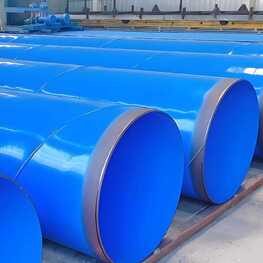
If the soil contains many stones or gravel: You must prioritize coatings with strong impact and scratch resistance, such as 3PE. If a thinner single-layer FBE is used, stones are likely to puncture the coating during pipeline backfilling and soil settlement, creating exposed areas.
If the site is in highly saline-alkali soil, a marsh, or a damp, waterlogged area: These environments are subject to severe electrochemical corrosion. In such cases, the coating’s resistance to water penetration and cathodic disbonding are the top priorities. Double-layer FBE or high-quality 3PE is the preferred choice.
For crossings under highways or railroads (using trenchless directional drilling): As the pipeline is forcibly dragged through underground silt and sand, the coating is subjected to severe friction. In such cases, it is essential to select wear-resistant, high-hardness materials, such as corrosion-resistant polyurea or modified epoxy glass flake coatings, or to apply an additional mechanical protective layer (such as fiberglass-reinforced plastic) over the 3PE/FBE coating.
.jpg)
Many anti-corrosion spiral steel pipes perform perfectly at room temperature, but when actually transporting oil, gas, or hot water, the temperature of the pipe walls rises, often leading to rapid failure of the anti-corrosion coating.
Room temperature to 60°C–80°C: This is the optimal operating range for 3PE coatings. It provides waterproofing and mechanical protection.
80°C–110°C and above (high-temperature oil transmission or thermal pipeline networks): Standard 3PE begins to soften, and its resistance to soil shear drops sharply. In such cases, an upgrade to 3PP (three-layer polypropylene) is essential. Polypropylene has a higher melting point and greater hardness, enabling it to withstand high temperatures of up to 110°C–140°C.
Environments with wide temperature fluctuations: As a thermosetting material, fusion-bonded epoxy powder has a coefficient of thermal expansion closest to that of steel pipes. It is less prone to internal stress cracking during sudden temperature changes and offers more stable performance.
| Coating Type | Key Advantages | Critical Limitations | Risk Prevention Tips |
|---|---|---|---|
| 3PE (Three-Layer Polyethylene Coating) | Extremely high electrical insulation resistance, near-zero water absorption, and excellent mechanical protection performance | Cathodic protection shielding effect. Once 3PE disbondment occurs, cathodic protection current cannot penetrate the polyethylene layer, resulting in hidden corrosion beneath the disbonded area | During procurement, strictly control the quality of the adhesive intermediate layer to prevent delamination between the polyethylene outer layer and the epoxy powder primer during long-term operation |
| FBE (Single-Layer / Dual-Layer Fusion Bonded Epoxy Coating) | Extremely strong adhesion to steel, does not shield cathodic protection current, excellent chemical corrosion resistance and temperature resistance | Thin coating thickness (single-layer FBE is typically 300–500 μm); relatively lower toughness and may be scratched by stones during transportation or backfilling | Recommended for areas with soft and fine soil conditions. For harder soil environments, upgrade to dual-layer FBE (DPS) by adding a rough outer epoxy layer to improve scratch resistance |
| Coal Tar Epoxy Coating | Low cost and simple application process (can be cold-wrapped or brush-applied on site) | Poor environmental performance (contains carcinogenic substances), fast aging rate, and weak resistance to penetration by plant roots | Has been largely eliminated from modern high-standard international projects and major crude oil/natural gas transmission pipelines. It is only suitable for low-demand applications such as small temporary water pipelines or localized repairs |
Once the materials have been selected, how can you ensure that the steel pipes you receive meet corrosion protection standards? Be sure to specify the following criteria in the purchase contract and quality inspection plan:
Rust Removal Grade: This is the foundation of corrosion protection lifespan. Whether using 3PE or FBE, shot blasting of the steel pipe surface must achieve Sa 2.5 grade, and the surface roughness depth must be controlled between 40–100 μm. If surface preparation does not meet these standards, even the best coating will peel off like dead skin.
Electrical Spark Leakage Testing: The anti-corrosion coating must be free of pinholes. 100% full-surface electrical spark leakage testing must be performed before shipment.
3PE Test Voltage: Typically performed at ≥25 kV (or 5 kV per millimeter of thickness).
FBE Test Voltage: Typically 2–3 kV.
Alignment with International Standards:
For North American or international oil and gas projects, verify compliance with relevant API 5L specifications and ISO 21809.
For domestic projects, verify strict compliance with GB/T 23257.
 WeChat
 Scan wechat
WhatsApp:+86 15383177997
E-mail:wr@insulatedpipeline.com
E-mail:
Address:Development Zone, Cangzhou, Hebei Province, China
技术支持:沧州利畅网络
.jpg)