
EMAIL:
wr@insulatedpipeline.com


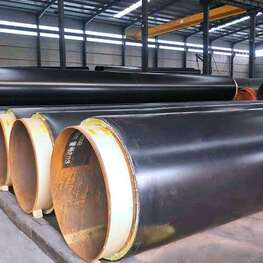


(jpeg).jpg "Polyurethane Insulation Steel Pipe")


A pre-insulated pipe system is designed to transport hot water, steam, or refrigerants. It features a pre-manufactured composite structure consisting of a steel inner pipe, an insulation layer, and a protective outer casing. The entire assembly is fully fabricated in the factory and transported directly to the job site for installation.
Unlike traditional on-site insulation methods, this system offers stable thermal performance, faster construction times, and a longer service life. As a result, it is widely utilized in district heating, municipal utility networks, regional energy transmission, and industrial piping applications.
A pre-insulated pipe system typically consists of a three-layer structure, with each layer having a clearly defined functional division:
The steel carrier pipe is the "transportation core" of the entire system, responsible for the direct transport of the medium (hot water, steam, cold water, etc.).
Typically made of carbon steel or seamless steel pipe.
Withstands internal pressure and temperature.
Determines the strength and safety of the system.
Different standards can be selected depending on the project (e.g., ASTM, EN, GB).
The insulation layer typically uses polyurethane foam (PU Foam) and is the "energy-saving core" of the entire system.
Low thermal conductivity, excellent insulation performance
Pre-fabricated foam filling on-site, uniform density
Effectively reduces heat loss
Improves energy utilization efficiency
Thickness can be adjusted according to project requirements
The outer jacket pipe, typically made of high-density polyethylene (HDPE), serves as the system's "protective outer shell."
Waterproof, moisture-proof, and corrosion-resistant
Resistant to UV rays and mechanical shock
Protects the internal insulation layer from damage
Provides a long-term stable operating environment
Extends the overall pipeline lifespan
When heat is transferred in a pipe, it gradually diffuses from the high-temperature hot water or steam to the external low-temperature environment. It is mainly lost through three mechanisms:
Heat conduction (transfer through the pipe wall)
Heat convection (heat is carried away by air)
Heat radiation (surface heat dissipation)
Without insulation, the heat will continuously decrease during the transmission process.
The PU (polyurethane) insulation layer is the core of the system.
It contains numerous closed microbubbles.
The air within these bubbles has very low thermal conductivity.
Effectively blocking heat transfer outwards.
Significantly slowing down the rate of temperature drop.
Pre-insulated pipes reduce heat loss through a three-layer structure:
Working steel pipe: Bears the heat medium
PU insulation layer: Blocks heat conduction (core insulation)
HDPE outer protective pipe: Waterproof, moisture-proof, and damage-resistant
In long-distance pipeline networks, the advantages of pre-insulated pipes are even more pronounced:
Lower heat loss and more stable temperature maintenance
No need for frequent reheating
Reduced energy consumption and operating costs
Improved heating efficiency and system stability
Suitable for urban district heating and industrial pipeline networks
A district heating pipe system is a pipeline system used to centrally generate heat energy and then distribute it to different users through a pipe network. Its core objective is to achieve efficient, energy-saving, and stable heating or cooling.
Its applications are very wide-ranging, mainly concentrated in urban infrastructure and industrial energy systems.
Residential heating
Commercial building heating (shopping malls, office buildings)
Schools, hospitals, public institutions
Centralized distribution of heat energy from power plants or boiler rooms to various areas of the city
Replacing decentralized small boiler heating
Advantages: More energy-efficient, more environmentally friendly, and easier to manage
In the industrial sector, District Heating Pipe Systems are commonly used for high-temperature heat transfer.
Plant production heating systems
Chemical reaction heating
Process hot water transfer in industries such as petroleum, food, and papermaking
Ensuring stable temperatures during production
Improving process efficiency
Reducing energy waste
This is a more modern application model.
Large urban new districts
Industrial parks
Airports, ports, development zones
Centralized heating + centralized cooling (combined heating and cooling)
Multi-energy complementarity (combined heat and power, geothermal energy, waste heat utilization)
With the development of green energy, this system is also widely used in clean energy projects.
Geothermal heating systems
Biomass energy heating
Industrial waste heat recovery systems
Efficiently delivers waste heat or natural heat sources to users
Reduces carbon emissions
| Parameter Item | Technical Parameters |
|---|---|
| Product Name | Pre Insulated Steel Pipe |
| Carrier Pipe Material | Q235B, Q355B, ASTM A53, ASTM A106, API 5L |
| Insulation Material | Polyurethane Rigid Foam (PU Foam) |
| Outer Jacket Material | High Density Polyethylene (HDPE) |
| Working Temperature | ≤120°C |
| Instantaneous Temperature Resistance | ≤140°C |
| Thermal Conductivity | ≤0.033 W/(m·K) |
| Water Absorption | ≤10% |
| Insulation Density | 60–80 kg/m³ |
| Pipe Diameter Range | DN20 – DN1200 |
| Pipe Length | 6m / 12m or Customized |
| Insulation Thickness | 20–120 mm |
| Working Pressure | 1.0MPa – 2.5MPa |
| Anti-corrosion Grade | Standard Anti-corrosion / Heavy-duty Anti-corrosion |
| Connection Type | Welded Connection |
| Installation Method | Underground Installation / Above-ground Installation |
| Service Life | More Than 30 Years |
| Applicable Medium | Hot Water, Steam, Thermal Oil, etc. |
| Standards | EN 253, CJ/T 114, ASTM, API 5L |
| Applications | District Heating, Thermal Pipeline Networks, Industrial Insulated Pipelines, Petrochemical Industry, etc. |
The selection of specifications mainly depends on three factors: flow rate, pressure, and conveying distance.
High flow rate → Choose a larger DN (e.g., DN200 or above)
High pressure → Choose a thicker-walled steel pipe
Long conveying distance → Increase the thickness of the insulation layer to reduce heat loss
Generally, thermal calculations are performed first in engineering projects to determine the final specifications.
The insulation layer thickness is not a fixed value and is usually determined by the following factors:
Temperature of the transported medium (the higher the temperature, the thicker the insulation)
Ambient temperature (thicker in cold regions)
Pipe burial depth and soil conditions
Allowable heat loss
Standard range: 20mm – 120mm
District heating projects typically choose 40–80mm
Common choices are as follows:
Q235B: General low-pressure heating systems
Q355B: Medium to high-strength engineering projects
ASTM A106 / A53: Commonly used in export projects
API 5L: High-requirement industrial or long-distance transportation
Principle: Higher pressure and longer distance → Higher material grade
The main functions of HDPE outer sheath are:
Waterproof and moisture-proof
Resistant to mechanical impact
Corrosion protection
Extended service life
Selection recommendations:
Buried projects → HDPE outer sheath must be used
Complex geological conditions → Choose a thickened outer sheath
Ordinary environments → Standard HDPE is sufficient
General application range of standard PU insulation systems:
Normal operating temperature: ≤120°C
Instantaneous temperature resistance: ≤140°C
If the temperature exceeds 120°C:
A higher-grade insulation system (such as composite insulation or multi-layer structure) is required.
Recommendations for different engineering scenarios are as follows:
1. District Heating
Recommended: Standard PU direct-buried insulated pipe system
2. Industrial hot water transportation
Recommended: Reinforced insulation + Q355B steel pipe
3. Long-distance transportation pipelines
Recommended: Thickened insulation layer + API 5L steel pipe
4. Cold region projects
Recommended: High-density insulation layer + reinforced HDPE outer protective pipe.
 WeChat
 Scan wechat
WhatsApp:+86 15383177997
E-mail:wr@insulatedpipeline.com
E-mail:
Address:Development Zone, Cangzhou, Hebei Province, China
技术支持:沧州利畅网络