EMAIL:
wr@insulatedpipeline.com


Published:2025-08-07 | Last Updated: 2025-08-30 Views: 170
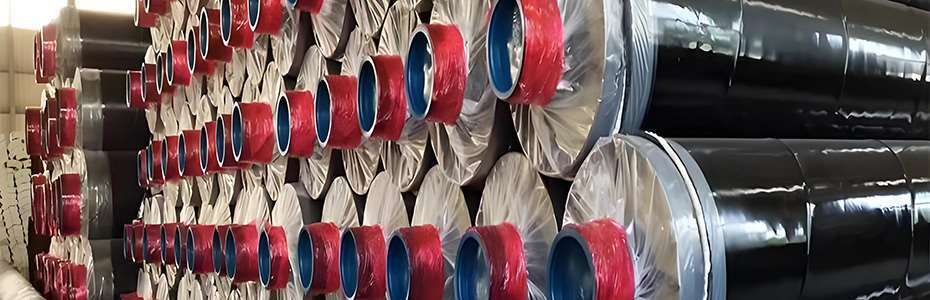
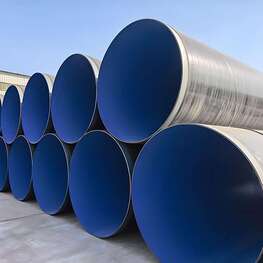
Steel-clad insulated pipes are high-performance pipelines featuring a three-layer structure comprising an inner pipe, insulation layer, and outer casing. Primarily used in thermal power, petroleum, natural gas, and chemical industries, they are commonly employed for long-distance transportation of high-temperature steam, thermal oil, and other heat-transfer media.
Steel-in-steel direct-buried insulated pipeline not only provide efficient thermal insulation, significantly reducing heat loss during transportation, but also offer exceptional pressure resistance and corrosion protection. They ensure safe and stable operation in demanding environments such as high temperatures and pressures, guaranteeing long-term reliability for the entire transportation system.
(1) Exceptional Thermal Insulation Performance
Heat loss can be reduced by up to 60%! This is achieved through its superior insulation material with an extremely low thermal conductivity. The surface temperature of the pipe typically does not exceed 50°C.
The interior features a multi-layer insulation design: ultra-fine glass wool combined with an aluminum foil reflective layer reflects the majority of radiant heat. It also incorporates an air layer and a high-density polyurethane layer with a high closed-cell rate, providing both thermal insulation and moisture resistance.
(2) High-Temperature and Corrosion Resistance
The inner working pipe is typically seamless steel pipe capable of withstanding high-temperature steam up to 450°C with high pressure resistance.
The outer layer uses anti-corrosion spiral steel pipes as protective casing, treated with 3PE anti-corrosion coating for exceptional durability and a design life exceeding 30 years. Temporary seals at both ends prevent moisture ingress before installation.
(3) Robust Structure and High Mechanical Strength
The outer shell exhibits strong compression resistance, maintaining its shape even during direct burial or pipe jacking construction.
Stainless steel supports and low-friction sliders are installed at regular intervals internally. The system incorporates a compensating structure design, significantly reducing the number of fixed supports required. This enhances overall stability and durability.
(4) Streamlined Construction
These high-temperature pre insulated pipeline come factory-finished with insulation, requiring only on-site welded steel pipes—drastically shortening project timelines.
Direct burial design minimizes excavation, often eliminating the need for inspection chambers, significantly boosting construction efficiency.
(5) High Safety and Reliability
The dual-pipe structure completely isolates the conveyed medium from the soil, enhancing safety.
Each pipe section incorporates a drainage system to effectively prevent internal water accumulation. All welds undergo rigorous non-destructive testing, ensuring quality assurance.
(6) Energy-Efficient, Cost-Effective, and Eco-Friendly
Significantly reduces thermal energy loss, delivering substantial long-term energy savings and helping lower operational costs.
Features low total lifecycle costs, with the majority of steel pipe materials being recyclable for environmental sustainability.
(7) Versatile Application in Critical Scenarios
Widely used in urban high-temperature steam heating, chemical equipment insulation, oil and gas transmission, and complex environments such as subsea pipelines, highly corrosive soils, and long-distance tunnel installations.
.jpg "Steel-in-Steel Insulated Steel Pipe")
(1) District Heating Systems
Widely used in urban heating networks and industrial park steam transportation steel-in-steel direct-buried insulated pipeline replace traditional trench-laid installations, effectively reducing civil engineering work by approximately 70%.
(2) Oil and Gas Industry
Suitable for long-distance oil and gas transmission, preventing medium solidification or degradation due to temperature drop. Provides reliable freeze protection and insulation, particularly in cold regions Prefabricated insulated steam pipes demonstrate outstanding performance in this sector.
(3) Chemical Industry
Used for transporting high-temperature, high-pressure steam and various chemical media. Commonly found in steam pipeline networks within refineries and chemical plants.
(4) Specialized Environmental Engineering
Covers demanding conditions such as subsea pipelines, long-distance tunnel installations, highly corrosive soil zones, and short-term high-temperature (up to 1200°C) medium transportation Steel jacketed preinsulated pipes emerge as the preferred solution due to their superior mechanical strength and corrosion resistance.
| Parameter Category | Specific Parameter | Value / Description |
|---|---|---|
| Working Pipe | Material | 20# Seamless carbon steel pipe (GB/T 8163) or Q235B spiral-welded pipe (SY/T 5037, GB/T 9711) |
| Specification | DN ≤150 mm: seamless tube; DN ≥200 mm: spiral-welded tube; wall thickness graded by diameter (e.g., DN500 ≥10 mm) | |
| Temperature resistance | ≥450 °C | |
| Design pressure | Maximum 2.5 MPa | |
| Inspection standard | 100 % radiographic testing (RT) of welds, meeting JB/T 4730.3 Level II | |
| Insulation Layer | Material | Ultra-fine glass wool, aluminosilicate fiber felt, polyurethane foam (closed-cell ratio ≥90 %), or aerogel |
| Structure | Multi-layer composite (e.g., ultra-fine glass wool + aluminum foil reflector + PU foam) | |
| Thermal conductivity | Overall thermal conductivity ≤0.06 W/(m·K) | |
| Heat loss | Outer surface temperature ≤50 °C; heat loss ≤120 W/m² per kilometre | |
| Outer Casing | Material | Q235B spiral-welded pipe (SY/T 5037, GB/T 9711) |
| Wall thickness | Graded by diameter (e.g., DN1200 ≥12 mm) | |
| Anti-corrosion | External 3PE coating (≥2.5 mm), coal-tar epoxy, or FRP layer | |
| Pressure resistance | Compressive strength ≥0.08 MPa; withstands 5 000 V spark test | |
| Service life | ≥30 years | |
| Overall Performance | Temperature range | –40 °C to 450 °C (short-term peak 1 200 °C) |
| Pressure capacity | Design pressure ≤1.6 MPa (conventional), maximum 2.5 MPa; burst pressure ≥3 × operating pressure | |
| Heat loss | ≥60 % lower than traditional pipelines; temperature drop ≤3 °C/km; pressure drop ≤30 kPa/km | |
| Other Key Parameters | Sliding/guide system | Stainless-steel fastening bands, PTFE sliding blocks; one guide support every 6 m |
| Moisture-exhaust pipe | One set at each end of every section for outer-sliding type | |
| Expansion joint | Bellows expansion joint or natural compensation; quantity of fixed piers reduced by 50 % | |
| Applicable standards | GB/T 38105-2019, CJJ/T 81-2013, GB/T 29047-2013, etc. |
.jpg "Steel-in-Steel Insulated Steel Pipe")
(1) Routine Inspection
Outer casing: Inspect for rust, scratches, or cracks, with particular attention to welded joints. Promptly repair any peeling of the anti-corrosion coating.
Insulation layer: Gently tap and listen for hollow sounds, which may indicate water ingress or collapse. For externally sliding double-wall insulated steel pipe ensure drainage pipes remain unobstructed with no continuous water flow.
Sliding Supports: Verify stainless steel sliders are not displaced and PTFE gaskets are not worn. Spacing between guide supports should be ≤6 meters.
(2) Periodic Maintenance
Anti-corrosion Coating: Conduct annual inspection using 5000V spark testing; immediately repair any leaks. Reapply epoxy coal tar coating annually (≥300μm).
Insulation Performance: Inspect surface temperatures via infrared thermography; prioritize areas exceeding 50°C. Polyurethane closed-cell rate must be ≥90%.
Compensators: Verify uniformity and deformation of bellows. Axial displacement in natural compensation sections must be ≤200mm.
(3) Special Environment Maintenance
Cold Regions: Install electric trace heating on drainage pipes to prevent freezing. Increase soil cover to ≥1.5 meters.
Corrosive Soil: Apply fiberglass layer (≥1.2mm) to outer casing; annually measure soil resistivity and install sacrificial anodes if necessary.
Coastal/High Humidity: Seal joints with moisture-proof sealant; monthly clean drain filters to prevent salt crystallization; monitor humidity and chloride ions for direct-buried preinsulated steam pipeline.
(4) Fault Handling
Insulation Layer Water Penetration: Close valves; vacuum extraction (≤-0.08 MPa); remove water-penetrated section and reapply foam insulation.
Shell Perforation: Temporarily seal holes <5mm with quick-drying sealant; for extensive corrosion, cut out and weld replacement section, then reapply anti-corrosion treatment.
Working Pipe Leakage: Immediately close valves; replace entire pipe section; backfill only after weld inspection approval.
 WeChat
 Scan wechat
WhatsApp:+86 15383177997
E-mail:wr@insulatedpipeline.com
E-mail:
Address:Development Zone, Cangzhou, Hebei Province, China
技术支持:沧州利畅网络
.jpg)
.jpg)