EMAIL:
wr@insulatedpipeline.com


Published:2025-08-28 | Last Updated: 2025-08-28 Views: 160
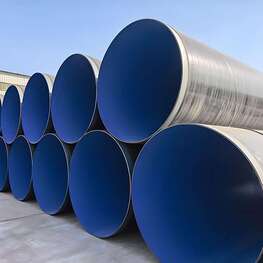
Single-layer corrosion-resistant epoxy powder coated pipes, commonly referred to as FBE (Fusion Bonded Epoxy) pipes, are pipes that utilize electrostatic spraying technology to uniformly apply epoxy powder coating to the surface of steel pipes heated to a specific temperature, causing the coating to melt and cure into a uniform, dense corrosion-resistant layer.
This coating forms a strong chemical bond with the steel pipe surface, providing excellent adhesion and effectively isolating corrosive media, thereby offering long-term corrosion protection for the pipeline.
FBE coating technology, renowned for its superior corrosion resistance and durability, is widely applied across various industries including petroleum and natural gas, water conservancy, and chemicals.
.jpg "Single-layer Anti-corrosion Epoxy Powder Pipe")
(1) Pipeline structure
Single-layer corrosion-resistant epoxy powder pipelines (FBE pipes) consist of a carbon steel pipe body + a single-layer epoxy powder coating:
Pipe body: Made of high-quality carbon steel (such as Q235, Q345, API 5L) to ensure the pipeline's mechanical strength and pressure resistance.
Coating: The outer surface is covered with a layer of epoxy powder, which is heated and melted to form a dense corrosion-resistant membrane.
(2) Coating Principles
The corrosion-resistant properties of the epoxy powder coating are primarily manifested in the following aspects:
Physical Barrier: The dense coating isolates moisture, oxygen, salts, and chemical media, preventing corrosion reactions.
Chemical Bonding: The coating firmly adheres to the steel pipe surface, exhibiting strong adhesion and resistance to peeling.
Abrasion and impact resistance: The coating can withstand light friction and impacts during handling and construction, maintaining its corrosion-resistant integrity.
(3) Summary:
Single-layer epoxy powder pipes achieve a balance between mechanical strength and corrosion resistance through the combination of high-strength steel pipes and a single-layer FBE coating, making them suitable for various application environments such as medium- and low-pressure water, oil, gas, and underground pipelines.
| Outside Diameter (OD, mm) | Wall Thickness (WT, mm) | Nominal Diameter (DN, mm) | Standard Length (m) | Coating Thickness (μm) |
|---|---|---|---|---|
| 21.3 | 2.0 – 3.0 | DN15 | 6 / 12 | 200 – 300 |
| 26.9 | 2.0 – 3.5 | DN20 | 6 / 12 | 200 – 300 |
| 33.7 | 2.5 – 4.0 | DN25 | 6 / 12 | 200 – 300 |
| 42.4 | 2.5 – 4.5 | DN32 | 6 / 12 | 200 – 300 |
| 48.3 | 2.5 – 5.0 | DN40 | 6 / 12 | 200 – 300 |
| 60.3 | 3.0 – 5.5 | DN50 | 6 / 12 | 200 – 300 |
| 76.1 | 3.5 – 6.5 | DN65 | 6 / 12 | 200 – 300 |
| 89.0 | 4.0 – 7.0 | DN80 | 6 / 12 | 200 – 300 |
| 108.0 | 4.5 – 8.0 | DN100 | 6 / 12 | 200 – 300 |
| 114.3 | 4.5 – 8.0 | DN125 | 6 / 12 | 200 – 300 |
| 139.7 | 5.0 – 9.0 | DN150 | 6 / 12 | 200 – 300 |
| 168.3 | 5.5 – 9.5 | DN200 | 6 / 12 | 200 – 300 |
| 219.1 | 6.0 – 11.0 | DN250 | 6 / 12 | 200 – 300 |
| 273.0 | 7.0 – 12.0 | DN300 | 6 / 12 | 200 – 300 |
| 323.9 | 8.0 – 13.0 | DN350 | 6 / 12 | 200 – 300 |
| 355.6 | 8.0 – 14.0 | DN400 | 6 / 12 | 200 – 300 |
| 406.4 | 9.0 – 16.0 | DN450 | 6 / 12 | 200 – 300 |
| 457.0 | 10.0 – 18.0 | DN500 | 6 / 12 | 200 – 300 |
| 508.0 | 12.0 – 20.0 | DN600 | 6 / 12 | 200 – 300 |
| 610.0 | 14.0 – 22.0 | DN700 | 6 / 12 | 200 – 300 |
| 720.0 | 16.0 – 25.0 | DN800 | 6 / 12 | 200 – 300 |
| 820.0 | 18.0 – 25.0 | DN900 | 6 / 12 | 200 – 300 |
| 1020.0 | 20.0 – 25.0 | DN1000 | 6 / 12 | 200 – 300 |
| 1219.0 | 22.0 – 25.0 | DN1200 | 6 / 12 | 200 – 300 |
| No. | Precautions | Key Points |
|---|---|---|
| 1 | Material Selection | Use carbon-steel grades that comply with standards (Q235, Q345, API 5L); choose the strength class according to the application. |
| 2 | Coating Quality | Ensure coating thickness ≥ 200 µm and adhesion ≥ 15 MPa; review salt-spray test reports and inspection certificates. |
| 3 | Pipe Specifications | Verify that outside diameter, wall thickness, and length match the design drawings to avoid on-site installation issues. |
| 4 | Standards & Certification | Confirm the manufacturer complies with GB/T, ISO, API, etc.; check mill test certificates and warranty documents. |
| 5 | Transport & Packaging | Use bundled or wooden-crate packaging to prevent coating damage; pay attention to shipping method and insurance. |
| 6 | Supplier Selection | Choose an experienced manufacturer; confirm delivery schedule, inventory availability, technical support, and after-sales service. |
Q: Can single-layer anti-corrosion epoxy powder pipes experience coating peeling or damage?
A: Yes. During transportation, handling, or construction, collisions or friction may cause the coating to peel off.
Solution: Use strapping or wooden crates for packaging during transportation and installation, and handle with care; implement protective measures at the construction site.
Q: What is the high-temperature resistance of a single-layer FBE coating?
A: The temperature resistance of a single-layer FBE coating is generally ≤80°C. High-temperature environments may cause the coating to soften or deteriorate.
Solution: In high-temperature environments, pipes with a double-layer FBE+PE/PP coating with higher temperature resistance can be selected, or thermal insulation protection can be added.
Q: What are the consequences of insufficient coating thickness?
A: If the coating is applied unevenly or is too thin, it may reduce corrosion resistance and lead to localized corrosion.
Solution: Ensure the coating thickness meets standards (≥200 μm) during procurement, and strictly control spray uniformity during construction.
Q: Does welding affect pipeline corrosion resistance?
A: Yes. If the coating is not properly protected or repaired during welding, the welded areas may become corrosion points.
Solution: Immediately perform coating repairs on weld seams after welding to ensure secure adhesion.
Q: Can long-term use or special environments cause issues?
A: Possibly. In highly corrosive soil, acidic/alkaline water, or chemical medium environments, a single-layer coating may be insufficient for long-term pipeline protection.
Solution: For corrosive environments, consider using double-layer corrosion-resistant pipes or adding external protective measures such as mortar sleeves or cathodic protection.
 WeChat
 Scan wechat
WhatsApp:+86 15383177997
E-mail:wr@insulatedpipeline.com
E-mail:
Address:Development Zone, Cangzhou, Hebei Province, China
技术支持:沧州利畅网络
.jpg)
.jpg)