
EMAIL:
wr@insulatedpipeline.com



Number of visits:96 seconds Update time:2025-12-26
In oil, gas, and municipal pipeline projects, straight seam submerged arc welded steel pipes (LSAW) are commonly used in long-distance pipelines, but their procurement cost is not simply a matter of unit price. When assessing overall costs, the purchaser needs to consider the entire lifecycle costs, from materials and transportation to construction and operation and maintenance.
The production cost of straight seam submerged arc welded steel pipes mainly consists of three parts: steel, welding process, and anti-corrosion treatment. Different types of projects have different requirements for these factors, and the purchaser can select the appropriate type based on the actual project conditions.
(1) Selection of steel price and grade
| Project Type | Recommended Steel Grade | Features | Application Notes |
|---|---|---|---|
| Urban Gas & Industrial Thermal Pipelines | X52 / X60 | Moderate strength, thinner wall possible, low cost | Suitable for medium- and low-pressure, short-distance projects; low unit cost, easy construction |
| Regional Natural Gas & Oilfield Gathering Pipelines | X65 / X70 | High pressure capacity, allows reduced wall thickness and lower construction weight | Medium- and long-distance pipelines, high-pressure operation, suitable for full-penetration welded pipes |
| High-Pressure Cross-Border Pipelines & Extreme Environments | X80 / X100 | High strength, reduces pipe diameter and number of welds | Long-distance high-pressure oil & gas trunklines; suitable for permafrost, desert, or offshore environments |
(2) Welding process and quality requirements
| Project Type | Welding Method | Inspection Requirements | Application Notes |
|---|---|---|---|
| Low-Pressure, Short-Distance | Single-side weld + external forming | Random UT/RT | Urban gas and industrial thermal pipelines; simple welding, low cost |
| Medium- to Long-Distance, High-Pressure | Double-side submerged arc welding | 100% UT/RT + metallographic inspection | Regional natural gas and oilfield gathering pipelines; high-pressure pipes must be full-penetration welded to ensure safety |
| Extreme Environment, High-Pressure | Double-side submerged arc welding + strict procedure qualification | 100% weld inspection, third-party certification | Offshore, permafrost, and highly corrosive pipelines; weld quality directly affects service life |
(3) Corrosion protection and coating treatment
| Project Type | Anti-Corrosion Solution | Application Notes |
|---|---|---|
| Low-Pressure, Short-Distance | Single-layer FBE (Fusion Bonded Epoxy) | Urban gas and industrial thermal pipelines; economical and suitable, moderate service life |
| Medium- to Long-Distance Pipelines | 3PE External Coating | Regional natural gas transport and oilfield gathering systems; long service life, strong corrosion resistance |
| High-Pressure, Corrosive Environments | 3PE + Internal Coating / Epoxy Mortar | Offshore pipelines and sulfur-containing oil & gas fields; extends service life and reduces operation & maintenance costs |
(4) Comprehensive procurement suggestions
Select the steel grade based on the engineering pressure and the conveyed medium: X52/X60 for medium and low pressure short distances, X65/X70 for high pressure long distances, and X80/X100 for extreme environments.
Welding process matching engineering requirements: For short-distance pipelines, single-sided welding can be selected; for medium and long-distance or high-pressure pipelines, double-sided submerged arc welding must be adopted to ensure full penetration.
Anti-corrosion treatment is selected based on the environment: FBE for low corrosion, 3PE for medium to high corrosion, and 3PE + internal anti-corrosion for high corrosion or offshore pipelines.
Pay attention to life cycle costs: High-grade steel with high initial costs and high-standard anti-corrosion pipes can save construction and operation and maintenance costs in the long term.
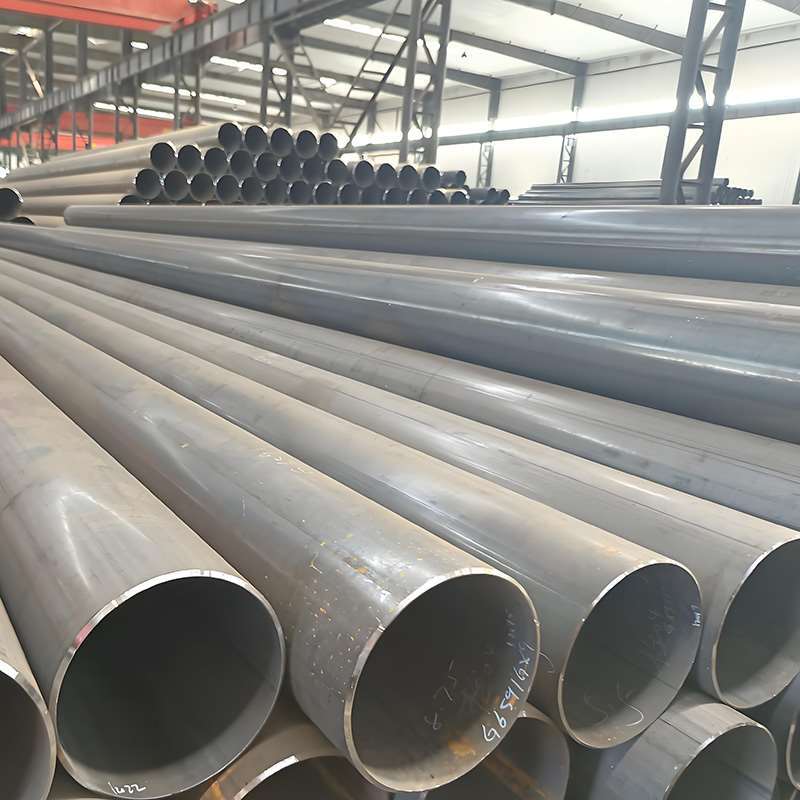
Transportation costs for straight seam submerged arc welded steel pipes account for a significant portion of the total procurement cost, especially for large-diameter, thick-walled pipes and long-distance projects. The purchaser needs to comprehensively evaluate factors such as transportation methods, packaging protection, and stacking methods.
(1) Transportation Methods
| Transportation Method | Applicable Scope | Advantages & Disadvantages | Application Recommendations |
|---|---|---|---|
| Road Transport | Medium- and short-distance pipelines (≤500 km) | Flexible, short transport time, but large-diameter pipes are limited | Suitable for small-diameter or medium-short distance projects; pay attention to vehicle load limits |
| Rail Transport | Medium- and long-distance land transport | High capacity, low cost, good stability | Suitable for long-distance pipelines or large-volume procurement; reduces transport cost |
| Water Transport (Inland / Sea) | Interprovincial or international transport | High capacity, low cost, but loading/unloading is complex | Preferred for cross-region or international procurement; plan docks and lifting equipment in advance |
| Combined Transport (Multimodal) | Long-distance, multi-stage transport | Optimizes use of multiple transport modes, reduces overall cost | Suitable for long-distance cross-region pipelines; can optimize transport routes and costs |
(2) Packaging and port protection
| Item | Inspection Points | Application Recommendations |
|---|---|---|
| Pipe End Protection | Check if end caps or protective rings are installed | Prevent damage to pipe ends during transport, especially for large-diameter pipes |
| Bundling & Securing | Ensure pipe bundles are tightly secured to prevent movement | Avoid scratches or deformation caused by pipe collisions |
| Moisture Protection | Check if waterproof tarpaulin or plastic film is applied | Prevent rain or snow from damaging anti-corrosion coating and pipe ends |
| Loading & Unloading Method | Use lifting slings or specialized lifting devices | Avoid damage to the anti-corrosion coating or pipe body at lifting points |
(3) Stacking and Transportation Safety
1) Stacking Method
Pipes should be stacked according to specifications and layered using support frames.
Avoid direct contact with the ground to prevent moisture damage or damage to the anti-corrosion layer.
2) Weight and Size Control
Large-diameter, thick-walled pipes require consideration of vehicle load-bearing capacity and loading/unloading safety.
Extra-long pipes (≥12 meters) require special transport vehicles or multi-point support to prevent bending and deformation.
3) Transportation Plan and Route
Plan short and safe transportation routes, avoiding potholes or low-bridge height restrictions as much as possible.
For cross-regional or international transportation, port and dock restrictions and customs clearance requirements must be understood in advance.
(4) Cost control strategy
| Cost Factor | Control Measures |
|---|---|
| Transport Distance | Optimize transport routes to reduce empty trips and detours |
| Transport Method | Choose the most economical transport method based on distance, quantity, and pipe diameter |
| Packaging & Protection | Select appropriate end caps and protective measures to minimize transport damage |
| Loading & Unloading Costs | Use specialized lifting devices and machinery to reduce labor and loss |
| Warehouse Storage | Stack by specifications with proper supports to prevent pipe deformation and stress |
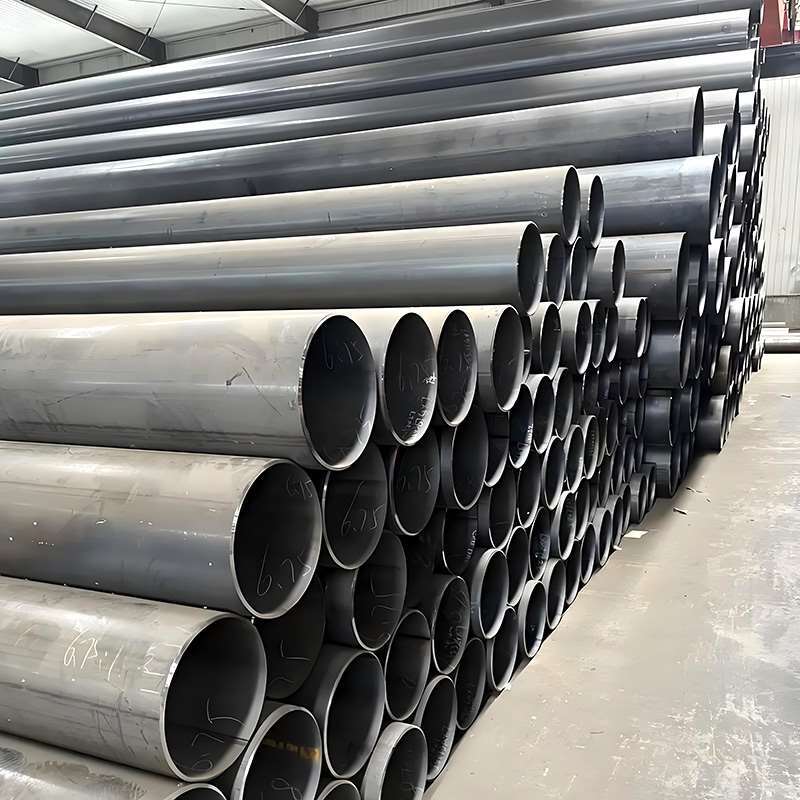
The construction and installation costs of straight seam submerged arc welded steel pipes account for a significant portion of the total project cost, especially for large-diameter, high-pressure, and long-distance pipelines. The costs are mainly determined by welding construction, laying methods, construction environment, and auxiliary equipment.
(1) Welding Construction Costs
| Item | Description | Application Recommendations |
|---|---|---|
| Welding Difficulty | Larger diameter and thicker wall increase welding difficulty and time/cost | Large-diameter pipes require double-side submerged arc welding with full penetration to ensure safety |
| Welder Qualification | Check if welders hold API/ASME/EN/GB certification | Qualified welders must be used for high-pressure, long-distance pipelines |
| Welding Inspection | Ratio and method of non-destructive testing (UT/RT/metallography) | Full inspection recommended for high-pressure projects; random inspection acceptable for medium- and low-pressure pipelines to ensure weld quality |
| Welding Procedure Control | Ensure current, voltage, welding speed, and filler material comply with WPS/PQR | Prevent weld defects such as porosity, slag inclusion, and incomplete penetration |
(2) Cost of laying method
| Laying Method | Characteristics | Impact on Construction Cost |
|---|---|---|
| Direct Burial | Excavation and trench construction | Large earthwork volume, high machinery cost, longer construction period |
| Above-Ground (Rack) Piping | Support installation | Higher material and support costs, but suitable for complex terrain or wetlands |
| Open Trench | Easy construction and monitoring | Suitable for urban or industrial park areas; shorter construction period, but occupies surface area |
(3) Construction Environment and Auxiliary Equipment Costs
1) Environmental Factors: Permafrost, wetlands, and high or low temperature environments require special construction measures, increasing construction costs.
Construction across rivers, highways, or tunnels requires special support, hoisting, and safety measures.
2) Auxiliary Equipment: Large-diameter pipelines require machinery such as cranes, hydraulic pipe turning machines, and welding equipment.
Welding platforms, scaffolding, and protective facilities are also part of the cost.
(4) Key points for construction and installation cost control
| Cost Factor | Control Measures |
|---|---|
| Welding Labor | Use qualified welders to improve welding efficiency and reduce rework |
| Welding Materials | Optimize consumption of welding wire and flux; choose high-efficiency welding processes |
| Laying Method | Select the most economical method based on terrain and environment (direct burial, above-ground, open trench) |
| Construction Equipment | Plan lifting, pipe-turning, and transport equipment in advance to avoid high-cost temporary rentals |
| Construction Environment | Consider season, temperature, rainfall, permafrost, etc., to minimize construction delays |
(1) On-site Acceptance: Costs for instrument testing such as UT, RT, and coating thickness measurement for full or random inspections.
Costs of third-party testing organizations (SGS, BV, DNV).
(2) Standards and Documents: Costs for providing certificates of conformity, material certificates, test reports, and other document management.
(1) Corrosion protection and maintenance: Early investment in high-quality anti-corrosion coatings can reduce mid-term operation and maintenance costs.
(2) Pipeline lifespan: The longer the pipeline lifespan, the lower the overall comprehensive cost.
Choosing high-standard steel pipes and superior anti-corrosion processes, although the unit price is higher, is more economical in the long run.
| Cost Item | Assessment Points | Control Measures |
|---|---|---|
| Material Cost | Steel grade, wall thickness, welding process | Select steel grades with the best cost-performance ratio |
| Corrosion Protection & Coatings | Type of external/internal corrosion protection, thickness, construction quality | Use long-life, low-maintenance anti-corrosion solutions |
| Transportation Cost | Transport distance, transport method, pipe end protection | Optimize transport routes and packaging methods |
| Installation & Construction Cost | Welding difficulty, laying environment | Optimize technical plans before construction |
| Inspection & Acceptance Cost | On-site inspection, third-party testing | Plan inspection ratio; ensure full inspection of critical points |
| Operation & Maintenance Cost | Corrosion maintenance, repair, pipeline service life | High-quality materials and processes reduce long-term O&M costs |
 WeChat
 Scan wechat
WhatsApp:+86 15383177997
E-mail:wr@insulatedpipeline.com
E-mail:
Address:Development Zone, Cangzhou, Hebei Province, China
技术支持:沧州利畅网络
.jpg)
.jpg)
.jpg)