EMAIL:
wr@insulatedpipeline.com


Published:2025-11-27 | Last Updated: 2026-04-23 Views: 99
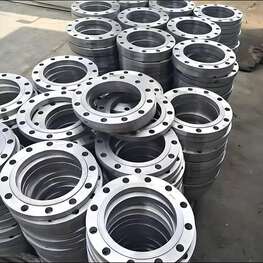
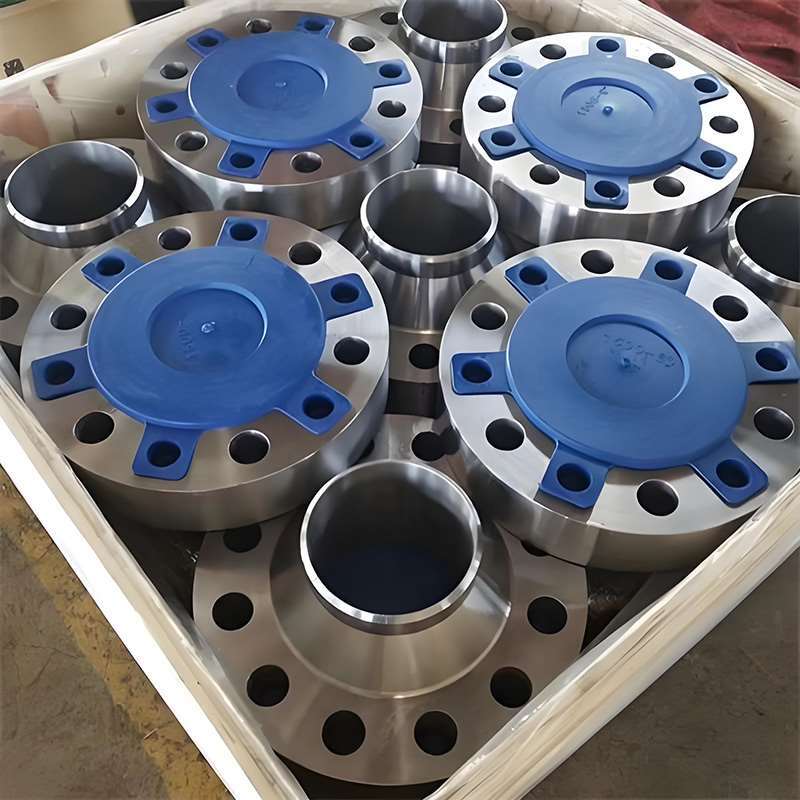
ASME B16.5 is a steel pipe flange standard established by the American Society of Mechanical Engineers, applicable to steel flanges, gaskets, and bolted connections with nominal sizes NPS ½“–24”.
This standard covers multiple pressure ratings including Class 150, 300, 400, 600, 900, 1500, and 2500, and is widely used in industrial sectors such as petroleum, chemical processing, power generation, shipbuilding, and water treatment.
| Item | Standard Description | Common Range |
|---|---|---|
| Standard Name | Pipe Flanges and Flanged Fittings | Applicable for nominal pipe sizes NPS ½"–24" |
| Flange Types | Weld Neck, Slip-On, Socket Weld, Threaded, Blind, Lap Joint | Six main structural types |
| Pressure Ratings | Defines the pressure-bearing capability of the flange | Class 150, 300, 400, 600, 900, 1500, 2500 |
| Dimension Units | Imperial (inch) | Used in North American and international projects |
| Applicable Temperature Range | Depends on material type | -29°C to +550°C (Carbon Steel), up to 815°C (Alloy Steel) |
| Sealing Face Types | RF, RTJ, FF, etc. | See detailed table below |
| Material Types | Carbon Steel, Stainless Steel, Alloy Steel | ASTM A105, A182 F304/F316, A350 LF2, etc. |
| Manufacturing Tolerance | Specifies dimensional, bolt hole, and sealing surface tolerances | Ensures interchangeability and sealing reliability |
| Name | Features | Common Applications |
|---|---|---|
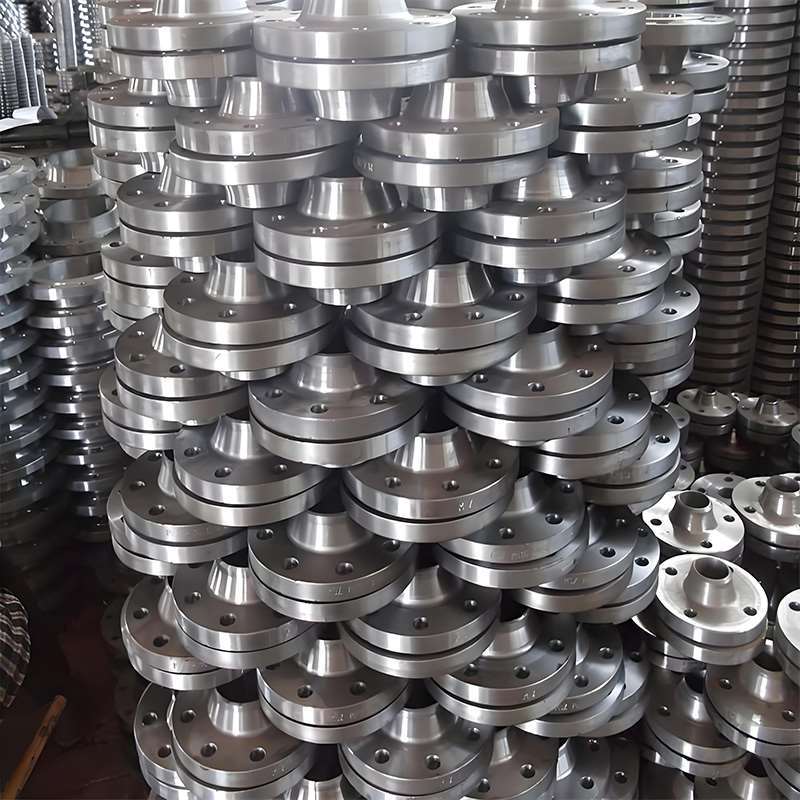
| Weld Neck Flange | Butt-welded to the pipe; strong pressure-bearing capacity | High-temperature and high-pressure systems |
| Slip-On Flange | Easy to weld and simple in structure | Medium and low-pressure systems |
| Socket Weld Flange | Pipe is inserted into the flange bore and then welded | Small-diameter high-pressure pipelines |
| Threaded Flange | Connected by threads without welding | Applications where welding is not suitable |
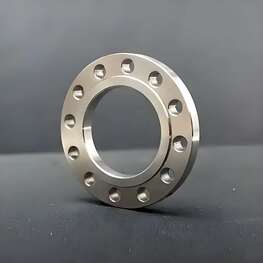
| Lap Joint Flange | Used with stub ends; ideal for anti-corrosion pipelines | Stainless steel lined or plastic-lined pipelines |
| Blind Flange | Used to close pipe ends or equipment outlets | Pressure testing, maintenance sealing |
| Pressure Class | Typical Working Pressure (@ 38°C) | Applicable Scenarios |
|---|---|---|
| Class 150 | 19.6 bar (285 psi) | Low-pressure water, oil, and gas systems |
| Class 300 | 51.0 bar (740 psi) | Medium-pressure petrochemical pipelines |
| Class 600 | 102 bar (1480 psi) | High-pressure steam or oil & gas transmission |
| Class 900 | 153 bar (2220 psi) | High-temperature and high-pressure installations |
| Class 1500 | 255 bar (3705 psi) | High-pressure reaction equipment |
| Class 2500 | 425 bar (6170 psi) | Ultra-high-pressure systems |
| Sealing Face Code | Chinese Name | Features | Common Pressure Ratings |
|---|---|---|---|
| RF | Raised Face | The most common type; suitable for spiral wound or graphite gaskets | Class 150–2500 |
| RTJ | Ring Type Joint | Metal ring gasket sealing; suitable for high-temperature and high-pressure service | Class 600 and above |
| FF | Flat Face | Flat gasket sealing; used in low-pressure systems | Class 150, 300 |
| TG/G | Tongue & Groove | High-precision sealing; prevents gasket displacement | Special sealing applications |
| FM | Male & Female | Precise gasket positioning; excellent sealing performance | High-pressure systems |
| Material Grade | Standard | Material Description | Application |
|---|---|---|---|
| Carbon Steel | ASTM A105 | Forged carbon steel | Ambient pressure piping systems |
| Low-Temperature Carbon Steel | ASTM A350 LF2 | Good low-temperature toughness | LNG and low-temperature equipment |
| Stainless Steel | ASTM A182 F304 / F316 | High corrosion resistance | Chemical and marine environments |
| Alloy Steel | ASTM A182 F11 / F22 | High-temperature and high-pressure resistance | Power plants, steam systems |
| Nickel-Based Alloy | ASTM A182 F51 / F55 | Resistant to chloride stress corrosion | Seawater and highly corrosive media |
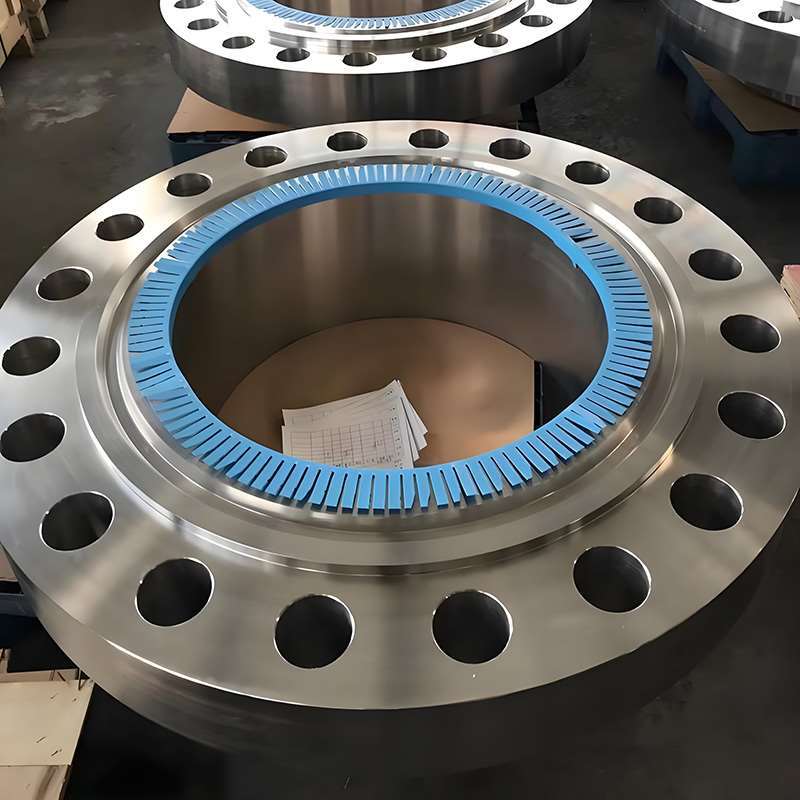
Used in refineries, natural gas transmission, and high-pressure pipeline systems. Commonly employs Weld Neck and RTJ flanges, capable of withstanding high temperatures and pressures to ensure long-term sealing reliability.
Suitable for pipelines carrying corrosive media such as acids and alkalis. Commonly employs Slip-On or Socket Weld flanges, available in stainless steel or alloy steel, typically rated at Class 150–300 pressure.
Used for boiler piping, steam systems, and heat exchanger connections. Commonly utilizes Weld Neck or Blind flanges, rated at Class 300–600 pressure, capable of withstanding high-temperature and high-pressure conditions.
Suitable for seawater pipelines and offshore platform piping. Commonly uses Slip-On or Lap Joint flanges, typically made of stainless steel or nickel alloys for strong corrosion resistance, with pressure ratings Class 150–300.
Used in water supply, wastewater treatment, fire protection, and HVAC systems. Commonly employs Slip-On or Threaded flanges with Class 150 pressure ratings, offering easy installation and low cost.
Used for pure water, steam, and clean gas pipelines. Commonly employs Lap Joint or Socket Weld flanges with smooth surfaces for easy cleaning, meeting sanitary standards.
 WeChat
 Scan wechat
WhatsApp:+86 15383177997
E-mail:wr@insulatedpipeline.com
E-mail:
Address:Development Zone, Cangzhou, Hebei Province, China
技术支持:沧州利畅网络