EMAIL:
wr@insulatedpipeline.com



Number of visits:1 seconds Update time:2026-07-14
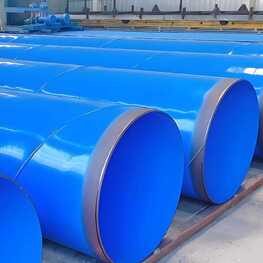
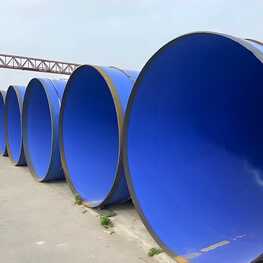
In underground pipeline projects, 3PE anti-corrosion steel pipes are hailed as the “stainless steel coating” for pipelines because they combine the strong adhesion of epoxy powder with the tear resistance and corrosion resistance of polyethylene.
However, in actual underground projects, some 3PE pipes have experienced corrosion protection layer failure just a few years after burial—or even immediately after construction was completed—leading to severe localized rusting, perforations, and leaks in the steel pipes. Given that 3PE technology is so well-established, why do these “underground failures” occur so frequently?
This article will move beyond superficial explanations and delve into four in-depth dimensions—microscopic materials, on-site construction, environmental stresses, and testing blind spots—to uncover the causes of 3PE coating failure in underground projects.
Underground pipelines are constructed by welding steel pipes together on-site. The 3PE coating applied to the pipe bodies is produced in standardized factory workshops and is of high quality; however, the on-site weld joints are completely exposed to harsh outdoor construction conditions. Statistics show that more than 70% of 3PE failures in buried pipelines occur at these weld joints.
Improper Curing of Heat-Shrink Tape: Radiation-crosslinked polyethylene (RLPE) heat-shrink tape is typically used for on-site splicing. When workers heat the tape with a torch, insufficient temperature may prevent the adhesive from fully melting and activating, or uneven curing may leave air pockets, resulting in “false bonding.” After the pipeline is buried, groundwater rapidly penetrates these air pockets under soil pressure, causing extensive delamination at the splice.
Incomplete rust removal from steel pipes: In the workshop, pipes are de-rusted using large shot blasting machines, which can achieve the extremely stringent Sa2.5 standard. However, when making splices in the field, construction workers often only perform a simple grind with a handheld angle grinder. If scale or moisture remains on the surface of the steel pipe, even if the heat-shrink tape is applied perfectly, it will eventually be forced open by groundwater due to insufficient adhesion.
.jpg)
Once buried, 3PE anti-corrosion steel pipes are subjected to underground mechanical stresses and electrochemical environments for decades.
Standard construction requirements stipulate that fine sand or soft soil must be used around the pipe during trench backfilling. However, when rushing to meet deadlines, some contractors simply dump soil containing sharp, large rocks, bricks, and construction debris directly onto the pipe.
The violent impact of these stones can directly cause microscopic cracks in the 3PE outer layer.
Once buried, under the gravitational force of soil tens of meters deep and the live load of heavy trucks repeatedly rolling over the surface, the sharp stones act like nails, continuously piercing the already softened polyethylene outer layer. Once the protective coating is penetrated, the steel pipe comes into direct contact with electrolytes in the soil, and corrosion begins immediately.
As a double safeguard, buried steel pipes are typically equipped with both 3PE anti-corrosion coating and cathodic protection (which uses a weak current to prevent rust). If the anti-corrosion coating develops a tiny leak due to the mechanical impact described above, the cathodic protection current will concentrate and flow toward that leak point. If the current in the protection system is overdesigned, an electrolysis reaction will occur at the leak point, producing hydrogen gas and releasing alkaline substances. The pressure of the hydrogen gas and the strongly alkaline environment will force the surrounding intact 3PE coating to peel off in large patches from the pipe surface along the damage site.
For some 3PE steel pipes, the seeds of failure were sown even before they left the factory. To cut costs, some small manufacturers engage in the following non-compliant practices during production:
Cutting corners leads to uneven thickness: Standards stipulate that the outer polyethylene layer of 3PE must typically be between 1.8 and 3.7 millimeters thick. To save material, some manufacturers apply an excessively thin coating or, when the steel pipe has poor ovality, result in extremely thin coating in certain areas, significantly reducing the pipe’s resistance to soil stress.
Incomplete cross-linking and curing of the epoxy powder: The base layer of 3PE is epoxy powder, which requires the steel pipe to be heated to over 200 degrees Celsius to fully melt and undergo a curing reaction. If the heating rate in the workshop is too fast, or if oil residue on the steel pipe’s surface has not been thoroughly cleaned, the epoxy powder will not fully “bond” to the steel pipe, resulting in inherent adhesion deficiencies.
Use of low-quality recycled plastic: If the polyethylene used for the outer layer is not a grade specifically designed for high-density pipes but instead contains a large amount of recycled plastic, this protective coating will rapidly undergo photo-oxidative aging and environmental stress cracking underground. Within a few years, it will become brittle, crack, and peel off on its own, much like an aged plastic bag.
3PE-coated pipes are not a one-size-fits-all solution; failing to consider the specific underground environment during selection can lead to catastrophic consequences:
High-temperature media cause the protective coating to “melt”: As mentioned earlier, the upper temperature limit for conventional 3PE is 70 degrees Celsius. If the underground pipeline transports uncooled high-temperature crude oil or hot water from chemical plants, the outer polyethylene layer will soften significantly, causing the peel strength to plummet dramatically and resulting in instant failure under soil pressure.
“Forced dragging” during trenchless crossings can scrape through the coating: In trenchless projects such as directional drilling across roads or rivers, the pipeline is forcibly dragged through underground rock formations. If standard-grade 3PE is still used in rocky or stony geological conditions, the protective coating can easily be scraped off in large patches by rocks during the pullback process. Under such conditions, it is essential to upgrade to reinforced-grade 3PE or add an epoxy fiberglass protective layer.
Strictly Control Pipe Procurement at the Source: Verify authenticity to ensure manufacturers use 100% original-packaged high-density polyethylene and high-quality epoxy powder that meets standards; reject low-cost, substandard pipes.
Strict on-site supervision of joint repair: Treat weld joint repairs as a top-priority quality control point. Strictly enforce sandblasting for rust removal, and ensure that heat-shrink tape application is performed by skilled workers to prevent adhesive overflow and eliminate air bubbles.
100% Electromagnetic Leak Detection and Strict Prohibition of Non-Compliant Backfilling: Before the pipeline is placed in the trench, a full-line scan must be conducted using an electromagnetic leak detector; any spark (leak point) detected must be repaired immediately. Backfill soil must be screened to remove large, sharp stones.
Scientifically Optimize Cathodic Protection: Precisely measure the soil resistivity underground and set the cathodic protection potential appropriately to prevent cathodic delamination of the anti-corrosion coating caused by “over-protection.”
Failures of 3PE anti-corrosion steel pipes in underground projects are rarely due to technical shortcomings; most are caused by three major forms of reckless construction practices: “substandard raw materials, rough backfilling, and perfunctory on-site joint repairs.” Only by strictly adhering to data specifications during manufacturing and upholding the red lines for joint repairs and backfilling during construction can 3PE steel pipes truly demonstrate their proven capability to “remain corrosion-free underground for decades.”
 WeChat
 Scan wechat
WhatsApp:+86 15383177997
E-mail:wr@insulatedpipeline.com
E-mail:
Address:Development Zone, Cangzhou, Hebei Province, China
技术支持:沧州利畅网络