
EMAIL:
wr@insulatedpipeline.com


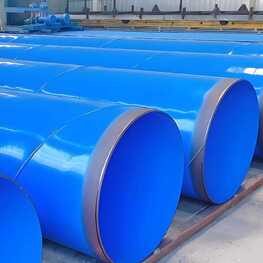
.jpg "Epoxy Coating Pipeline")
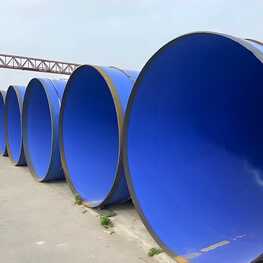
.jpg "Epoxy Coated Pipe")

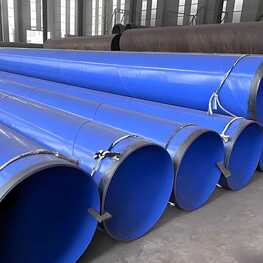
.jpg "Anti-corrosion Pipe Coating")
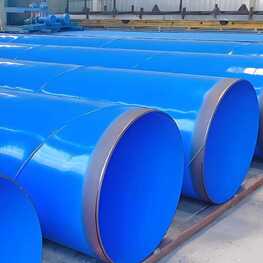
.jpg "Fusion Bonded Epoxy (FBE) Coated Pipe")
.jpg "Single-layer Anti-corrosion Epoxy Powder Pipe")
.jpg "FBE Coated Pipe")
FBE-Coated Steel Pipe is a steel pipe product in which a corrosion-resistant coating is formed on the pipe surface by high-temperature fusion spraying of epoxy powder.
FBE stands for Fusion-Bonded Epoxy, commonly referred to in Chinese as “fusion-bonded epoxy coating.”
This type of corrosion-resistant steel pipe is widely used in:
Municipal water supply projects
Oil and gas transmission
Fire protection piping systems
Buried water transmission pipelines
Chemical fluid transportation
Offshore and underground pipeline projects
Steel pipes are widely used in water supply, oil and gas, fire protection, and industrial pipeline systems. However, steel has a major weakness—it is susceptible to corrosion.
Once steel pipes corrode, it not only affects their service life but can also cause leaks, work stoppages, and even safety accidents.
Therefore, an increasing number of engineering projects are adopting FBE corrosion protection technology to improve the long-term stability and safety of steel pipes.
Many steel pipes need to be buried underground for extended periods, or exposed to water, air, and various chemical media.
In such environments, without anti-corrosion protection, steel pipes are prone to rust and corrosion.
Common sources of corrosion include:
Moisture and salt in the soil
Oxygen in the air
Chemical media such as acids and alkalis
Stray currents in the ground
Humid environments and rainwater erosion
Over time, steel pipes may experience:
Thinning of the pipe wall
Surface rusting
Pipe leakage
Increased risk of pipe bursting
Shortened service life
For large-scale water supply, oil and gas, or municipal engineering projects, the cost of repairs after pipe damage is extremely high.
FBE coating is not simply a standard paint application; it is a specialized protective coating formed through high-temperature fusion.
Simply put, epoxy powder is sprayed onto the surface of steel pipes at high temperatures, causing the coating to bond firmly with the pipe and form a “protective shell.”
Its main advantages include:
1. Strong corrosion resistance
The FBE coating effectively isolates:
Moisture, air, salt spray, and chemical media, thus reducing the contact between the steel pipe and the external environment and lowering the possibility of corrosion.
2. Extremely strong adhesion
Ordinary paint tends to peel off over time.
The FBE coating, however, is "fused" to the steel pipe at high temperatures, resulting in stronger adhesion and making it less prone to cracking or peeling even after long-term use.
3. Adaptability to various engineering environments
FBE anti-corrosion steel pipes can be used for:
Buried pipelines
Water supply projects
Oil and gas pipelines
Fire protection systems
Industrial fluid transportation
Because it not only enhances safety but also reduces long-term operating costs.
Longer Service Life
Under normal construction and operating conditions, the service life of FBE-coated steel pipes typically reaches:
30 years
40 years
or even more than 50 years
This makes them ideal for infrastructure projects requiring long-term operation.
Less Maintenance
Once the corrosion protection has stabilized, the likelihood of pipeline issues decreases significantly.
This means:
Fewer repairs
Less downtime
Lower maintenance costs
For large-scale projects, this can result in substantial savings on long-term operating costs.
Rust removal (preparation) → Heating (preparation) → Spraying (coating) → Curing (setting) → Inspection (acceptance).
1. Surface Pretreatment (Rust Removal)
This is the key factor determining the quality of corrosion protection.
Process: Rust removal is performed using shot blasting or sandblasting.
Purpose: To remove rust, scale, and contaminants from the surface of the steel pipe, ensuring the surface meets the specified cleanliness level (typically Sa2.5) and achieves a certain degree of surface roughness to increase the coating’s adhesion area.
2. Medium-Frequency Heating
To melt the powder, the steel pipe must be heated.
Process: A medium-frequency induction heater is used to heat the steel pipe uniformly.
Temperature: Typically heated to between 180°C and 230°C (specific temperature depends on the powder brand).
3. Electrostatic Spraying
This is the core process in the formation of the anti-corrosion coating.
Process: The steel pipe advances while rotating, and an electrostatic spray gun evenly applies epoxy powder to the pipe surface.
Principle: The powder is negatively charged, while the steel pipe is grounded (positively charged). Through the principle of electrostatic attraction, the powder adheres firmly to the outer surface of the steel pipe and instantly melts and flows out upon heating.
4. Curing and Cooling
This process transforms the coating from a “liquid” state into a “hard shell.”
Curing: The sprayed steel pipes utilize residual heat to trigger a cross-linking reaction in the epoxy resin, ensuring complete curing.
Cooling: After a period of natural curing, water cooling is applied to bring the steel pipes down to room temperature, facilitating subsequent handling and inspection.
5. Quality Inspection
Ensure that every pipe leaving the factory meets “Shield” standards.
Leak Detection: Use an electric spark leak detector to check for pinholes (leakage points).
Thickness Measurement: Verify that the coating thickness meets design specifications (typically several hundred micrometers).
Visual Inspection: Ensure the coating is smooth, free of bubbles, and free of cracks.
| Item | Parameter Range / Description |
|---|---|
| Product Name | FBE Coated Steel Pipe (Fusion Bonded Epoxy Coated Steel Pipe) |
| Base Pipe Type | Seamless Steel Pipe / ERW Steel Pipe / SSAW Spiral Steel Pipe / LSAW Longitudinal Welded Steel Pipe |
| Outer Diameter Range | DN15 – DN3000 (or Φ21.3mm – Φ3048mm) |
| Wall Thickness Range | 2.0mm – 30.0mm |
| Steel Grade | API 5L Gr.B / X42 / X52 / X60 / X65 / X70, etc. |
| Coating Type | Single-layer FBE / Double-layer FBE |
| Coating Material | Fusion Bonded Epoxy Powder |
| Coating Thickness | 250 μm – 500 μm (standard: 300–400 μm) |
| Surface Preparation Grade | Sa2.5 (abrasive blast cleaning standard) |
| Preheating Temperature | 180°C – 230°C |
| Operating Temperature | -30°C – 100°C (modified FBE may allow higher temperatures) |
| Coating Adhesion Strength | ≥ 10 MPa (typical value) |
| Cathodic Disbondment Performance | Complies with ISO 21809-2 / CSA Z245.20 |
| Holiday Detection (Spark Test) | 100% inspection, no pinhole defects |
| Standards | API 5L / ISO 21809-2 / AWWA C213 / CSA Z245.20 |
| Service Life | 30 – 50+ years (depending on service conditions) |
| Application Areas | Municipal water supply / Oil & gas transmission / Firefighting pipelines / Industrial piping systems / Underground engineering |
| End Treatment | Plain end / Beveled end / Grooved end |
| Packaging | Steel strap bundling / Protective caps / Waterproof packaging / Seaworthy export packing |
The standards for FBE-coated steel pipes primarily consist of three main components: base pipe standards, coating standards, and testing standards. Different countries and projects (oil and gas, municipal, and water supply) may adopt different systems.
| Standard | Description | Application Scope |
|---|---|---|
| API 5L | Line pipe standard for oil and gas industry | Oil and gas transmission pipelines |
| ASTM A53 | Standard specification for carbon steel pipes | Industrial and structural applications |
| ASTM A106 | Seamless carbon steel pipe for high-temperature service | High-temperature fluid transportation |
| EN 10217 | Welded steel tube standard | European engineering projects |
| GB/T 9711 | Chinese standard for line pipe steel | Domestic oil & gas and transmission pipelines |
| Standard | Description | Application Scope |
|---|---|---|
| ISO 21809-2 | External coating (FBE) for oil and gas pipelines | Main international standard for oil & gas projects |
| AWWA C213 | FBE coating standard for potable water pipelines | Municipal water supply systems |
| CSA Z245.20 | Fusion bonded epoxy coating applied in plants | Canada and North American projects |
| DIN 30671 | Epoxy powder coating standard for pipelines | European industrial projects |
FBE is more of a “basic corrosion protection” system, while 3PE is more of an “enhanced protection system.”
| Item | FBE Coated Steel Pipe | 3PE Coated Steel Pipe |
|---|---|---|
| Coating Structure | Single-layer epoxy powder | Three-layer composite structure (FBE + adhesive layer + PE) |
| Protection Focus | Chemical corrosion resistance | Combined chemical + mechanical protection |
| Overall Characteristics | Simple, stable, cost-effective | Stronger, higher impact resistance, more complex |
FBE: More effective at resisting chemical corrosion (such as water, salt, and soil corrosion)
3PE: In addition to corrosion resistance, it offers enhanced resistance to impact and external forces
| Application Scenario | Recommended Choice |
|---|---|
| Municipal water supply network | FBE |
| General buried water transmission pipelines | FBE |
| Long-distance oil & gas transmission pipelines | 3PE |
| Highly corrosive soil areas | 3PE |
| Marine / coastal engineering | 3PE |
| Cost-sensitive projects | FBE |
| Item | FBE | 3PE |
|---|---|---|
| Construction Process | Simple (abrasive blasting + spray coating) | Complex (three-layer composite system) |
| Construction Efficiency | High | Medium |
| Cost | Lower | Higher |
FBE: Approximately 30–50 years
3PE: Approximately 40–60 years
FBE-coated steel pipes are pipes coated with a layer of “fused-bonded epoxy (FBE)” applied to the pipe surface through a high-temperature fusion process.
Their primary functions are:
To block moisture, oxygen, and soil
To prevent rust and corrosion of the steel pipe
To extend the service life of the pipeline
Under standard installation conditions and normal operating environments:
The service life typically ranges from 30 to 50 years.
Key factors affecting service life include:
The degree of soil corrosion
Coating thickness
Installation quality
Whether a cathodic protection system is used
Yes.
FBE coatings have excellent chemical stability and are unlikely to release harmful substances, making them widely used in:
Municipal water supply networks
Drinking water distribution systems
In simple terms:
FBE: Single-layer epoxy coating, with a focus on “corrosion resistance”
3PE: Three-layer structure, with a focus on “corrosion resistance + impact resistance”
Selection guidelines:
Standard municipal water supply → FBE
Long-distance oil and gas transmission → 3PE
Under normal circumstances, no.
The FBE coating forms a chemical bond with the steel pipe surface through high-temperature fusion, resulting in extremely strong adhesion.
However, the following factors may affect quality:
Substandard surface preparation (failing to meet Sa2.5 standards)
Improper control of application temperature
Severe impact during transportation
FBE-coated steel pipes are widely used in:
Municipal water supply systems
Industrial circulating water systems
Fire protection piping systems
Buried pipelines in environments with low to moderate corrosion
General oil and natural gas transmission
Yes, it can be repaired.
Common repair methods include:
Epoxy repair materials
Specialized FBE repair coatings
Heat-shrinkable sleeve repairs
Compared to 3PE, FBE is a moderately economical corrosion protection solution.
Cost characteristics:
More expensive than standard paint coatings
Cheaper than 3PE
Its advantages are “high cost-effectiveness + wide range of applications.”
They generally do not require frequent maintenance.
Under normal operating conditions:
They are virtually maintenance-free once buried
Only routine inspections are required within the design service life
 WeChat
 Scan wechat
WhatsApp:+86 15383177997
E-mail:wr@insulatedpipeline.com
E-mail:
Address:Development Zone, Cangzhou, Hebei Province, China
技术支持:沧州利畅网络