
EMAIL:
wr@insulatedpipeline.com



Number of visits:91 seconds Update time:2025-12-28
| Type | Full English Name | Manufacturing Process | Description |
|---|---|---|---|
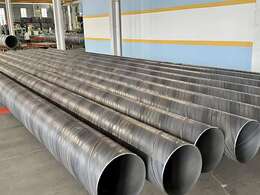
| SSAW | Spiral Submerged Arc Welded | Spiral welding | Steel strip is formed into a spiral and welded using submerged arc welding to form the pipe |
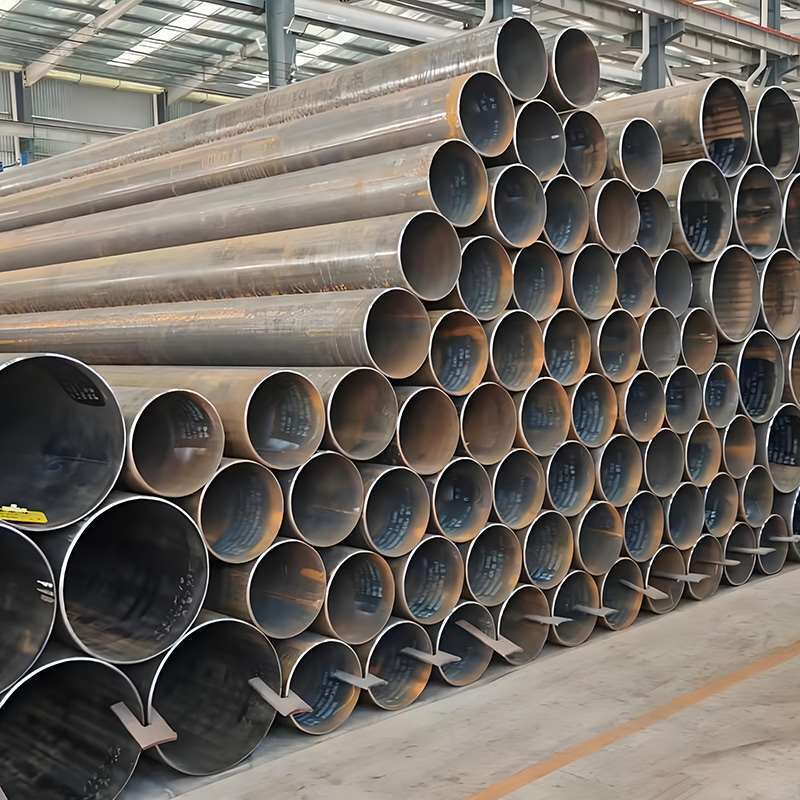
| LSAW | Longitudinal Submerged Arc Welded | Longitudinal welding | Steel plate is rolled into a cylinder and welded longitudinally along the pipe axis |
| Characteristic | SSAW | LSAW |
|---|---|---|
| Diameter Range | Flexible for large diameters; common OD 219–3600 mm | Medium to large diameters; common OD 219–1620 mm |
| Wall Thickness Range | 6–40 mm | 8–80 mm |
| Weld Strength | Spiral weld strength slightly lower | Longitudinal weld strength higher; suitable for high-pressure applications |
| Dimensional Accuracy | General accuracy | High accuracy |
| Available Length | Can produce long coil pipes; custom lengths available | Fixed length according to steel plate specifications |
| Transportation Cost | Relatively low; can transport as coils | Higher transport cost; length is limited |
| Construction Adaptability | Flexible; suitable for long-distance laying | Suitable for pressure pipelines and critical pipelines |
| Price | Relatively low | Relatively high |
(1) Project Pressure Requirements
LSAW steel pipes are recommended for high-pressure pipelines (≥10MPa).
SSAW steel pipes can be considered for medium and low-pressure pipelines due to their high cost-effectiveness.
(2) Pipe Diameter and Length Requirements
SSAW is preferred for large-diameter, long-distance transportation, especially for pipes above DN500.
LSAW is the preferred choice for pipelines requiring high diameter accuracy, pressure resistance, or critical nodes.
(3) Construction Environment and Transportation
SSAW steel pipes offer significant advantages in remote areas or areas with limited transportation, reducing transportation costs.
LSAW is more suitable for projects with spacious construction sites and high pipeline accuracy requirements.
(4) Budget Considerations
SSAW steel pipes have a low unit price, making them suitable for large-scale installations.
LSAW steel pipes are more expensive, but suitable for critical parts or pipelines with high pressure requirements, reducing future risks.
(1) Clarify Project Requirements
Diameter and Wall Thickness: Determine the DN and wall thickness based on the transport medium, pressure, and flow rate to avoid construction delays due to incompatible specifications.
Length and Quantity: Determine the length of each pipe and the total quantity, and choose between whole pipes or segmented supply based on transportation conditions.
Working Environment: Consider factors such as geographical location, soil corrosivity, temperature, and humidity to determine the anti-corrosion treatment and material grade.
(2) Material and Standards
Common Materials:
SSAW: Q235B, X42, X52, X60
LSAW: X52, X60, X65, X70
International Standard References:
API 5L (Oil and Gas Pipeline Standard)
GB/T 9711 (Chinese Standard)
EN 10208 (European Standard)
Material Certificates: Confirm that the manufacturer provides a Mill Test Certificate (original material certificate) to ensure that the steel meets the requirements.
(3) Corrosion Protection and Coating
Selection of Corrosion Protection Type:
FBE Single/Double Layer Coating
Epoxy Asphalt Coating
Steel-Jacketed Insulated Pipe (Suitable for Long-Distance Heat Transmission Pipelines)
Acceptance Criteria:
Uniform thickness, no peeling, strong adhesion
The supplier can be requested to provide coating test reports (such as adhesion test, dry film thickness test)
(4) Weld and Pipe Body Quality
Weld Inspection:
LSAW: Longitudinal weld ultrasonic or radiographic testing
SSAW: Spiral weld ultrasonic or radiographic testing
Pipe Body Appearance Inspection:
No obvious dents, cracks, or scars
Dimensional tolerances within standard range
(5) Supplier Qualifications and Reputation
Production Capacity: Select manufacturers with large-scale production equipment and stable production capacity to ensure on-time delivery.
Experience and Case Studies: Prioritize manufacturers with similar project experience, especially for municipal, petroleum, and industrial pipeline projects.
After-Sales Service: Provide transportation, hoisting, and technical consultation services. Provide a quality problem traceability and replacement mechanism.
(6) Delivery and Logistics
Transportation Methods:
SSAW steel pipes can be transported in coils, saving costs.
LSAW steel pipes are usually transported in straight pipes; transportation length and road conditions must be considered.
Packaging and Protection:
The pipe ends should be fitted with protective sleeves to prevent damage to the coating and welds during transportation.
(7) Acceptance and Inspection
Random on-site inspection should be conducted upon receipt of goods:
Pipe diameter, wall thickness, tolerance
Weld inspection report (UT/RT)
Anti-corrosion layer thickness and adhesion
It is recommended to keep complete acceptance records for easy project tracking and quality accountability.
 WeChat
 Scan wechat
WhatsApp:+86 15383177997
E-mail:wr@insulatedpipeline.com
E-mail:
Address:Development Zone, Cangzhou, Hebei Province, China
技术支持:沧州利畅网络
.jpg)
.jpg)