
EMAIL:
wr@insulatedpipeline.com



Number of visits:21 seconds Update time:2026-06-01
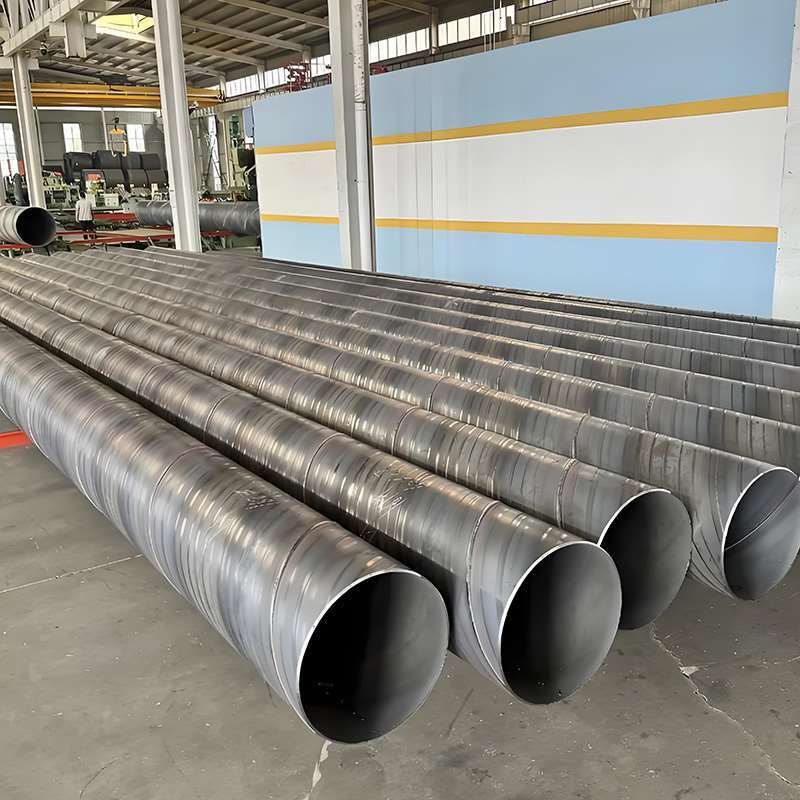
Spiral Steel Pipe (SSAW) is widely used in oil and gas transmission, district heating, water supply and drainage systems, piling, and construction engineering due to its high production efficiency, low cost, and capability for continuous large-diameter manufacturing. However, because application scenarios vary significantly, the pressure, medium, and environmental conditions acting on the pipe are highly complex.
If technical specifications are not properly verified before procurement, it can easily lead to installation failure on site, insufficient pressure resistance, or even serious safety accidents.
The following is a detailed breakdown of the core specifications and technical parameters that must be clarified before purchasing SSAW steel pipes, helping engineers and procurement professionals achieve accurate selection.
Geometrical dimensions are the most intuitive parameters of SSAW steel pipes. They directly determine flow capacity, material consumption, and compatibility with fittings such as flanges, valves, and elbows.
SSAW steel pipes are typically specified by nominal outer diameter (e.g., D219, D529, D1020, etc.). When purchasing, it is essential to confirm whether the requirement refers to nominal OD or precise actual OD, and to clearly define the allowable tolerance range (typically ±0.5% to ±1% depending on relevant standards).
Wall thickness is the key factor determining pressure-bearing capacity and structural rigidity. Special attention must be paid to “negative tolerance” issues. In domestic trade practice, there is often a distinction between “net thickness” and theoretical thickness with allowable under-tolerance. It must be clearly specified whether the delivered actual net wall thickness meets the engineering design pressure requirements.
The standard delivery length for SSAW steel pipes is typically 12 meters. However, customized lengths such as 6 m, 9 m, or other specific dimensions can be produced based on transportation limitations, construction conditions (e.g., mountainous lifting or urban trenchless installation), or piling requirements. It should be noted that fixed length delivery usually involves allowable positive and negative tolerances.
The applicable standard and steel grade directly determine the chemical composition, mechanical properties, manufacturing process, and inspection requirements of the pipe. Different applications require different standards:
| Application Area | Standard | Typical Material / Grade | Characteristics & Selection Guidance |
|---|---|---|---|
| General fluid / structural piling | SY/T 5037 (Industry Standard) | Q235B, Q355B | Suitable for low-pressure water, sewage, gas, and structural piling. Basic NDT requirements and cost-effective solution. |
| High-pressure / industrial transmission | GB/T 9711 (National Standard) / API Spec 5L | L245/B, L290/X42, L360/X52, L415/X60 | Divided into PSL1 and PSL2. Used for long-distance oil & gas pipelines and high-pressure water systems. High strength, excellent toughness, strict requirements for weldability and drop-weight impact tests. |
| Low-pressure fluid transport (enhanced requirements) | GB/T 3091 | Q235B, Q355B | Used for water, gas, air, heating steam, etc. Widely applied in urban utility networks. |
| European market / export | EN 10217 / EN 10219 | P235TR1, S235JRH, S355J2H | Common European standards for pressure and structural applications. Specific requirements for grain structure and impact toughness. |
For buried, exposed, or offshore pipelines, corrosion protection is essential. Without proper protection, steel pipes are highly susceptible to soil corrosion, moisture, or chemical attack. Therefore, anti-corrosion and insulation systems are critical for modern pipeline engineering.
3PE Coating (Three-Layer Polyethylene):
Currently the mainstream anti-corrosion system for buried oil, gas, and water pipelines. When purchasing, it is necessary to confirm whether it is standard or reinforced grade, which determines the thickness specifications of the epoxy powder base layer, adhesive layer, and outer polyethylene (PE) layer.
FBE Coating (Fusion Bonded Epoxy):
Single-layer or double-layer FBE is commonly used in natural gas pipelines or as a base anti-corrosion coating. The coating thickness must be specified (typically 300–500 μm).
Coal Tar Epoxy Coating (Cloth & Coating System):
A traditional anti-corrosion method for water pipelines, such as “three cloth five coat” or “four cloth six coat.” The number of fiberglass cloth layers and total coating thickness must be clearly defined.
IPN8710 Drinking Water Coating:
For potable water pipelines, the internal coating must use non-toxic IPN8710 epoxy resin to ensure compliance with drinking water safety standards.
For district heating networks or crude oil pipelines, polyurethane foam insulation specifications must be confirmed. This includes the inner steel carrier pipe, the thickness and density of the polyurethane foam layer, and the outer casing pipe (typically HDPE or fiberglass-reinforced plastic), including its diameter and wall thickness.
To ensure that SSAW steel pipes do not fail under high pressure or harsh operating conditions, inspection requirements must be clearly defined in the procurement contract:
Hydrostatic Test Parameters:
Each pipe must undergo hydrostatic testing before delivery. The test pressure and holding time (typically not less than 5 seconds) should be specified to ensure no leakage occurs.
Non-Destructive Testing (NDT) Ratio:
Define weld inspection requirements clearly. General fluid pipes may require only sampling inspection, while national or international standards (e.g., API 5L PSL2) require 100% full-length ultrasonic testing (UT) and radiographic testing (RT) for re-inspection, especially at pipe ends and girth weld areas.
Pipe End Preparation:
Specify whether the pipe ends are beveled (for on-site welding connection, typically 30°–35° bevel angle) or plain ends (deburred, used for flange connections or temporary installations).
Actual wall thickness vs. nominal thickness: Prevent suppliers from using negative tolerance to deliver thinner pipes.
Mill Test Certificate (MTC): Confirm whether original factory certificates with heat numbers are required for each batch.
Weight calculation method: Clarify whether settlement is based on actual weighing or theoretical weight, as differences may reach 3%–5% or more.
Transportation protection: Large-diameter SSAW pipes are prone to end deformation during long-distance transport. Confirm whether pipe end protectors (bevel guards) are included.
 WeChat
 Scan wechat
WhatsApp:+86 15383177997
E-mail:wr@insulatedpipeline.com
E-mail:
Address:Development Zone, Cangzhou, Hebei Province, China
技术支持:沧州利畅网络

.jpg)
