EMAIL:
wr@insulatedpipeline.com


Published:2025-11-06 | Last Updated: 2026-04-23 Views: 111
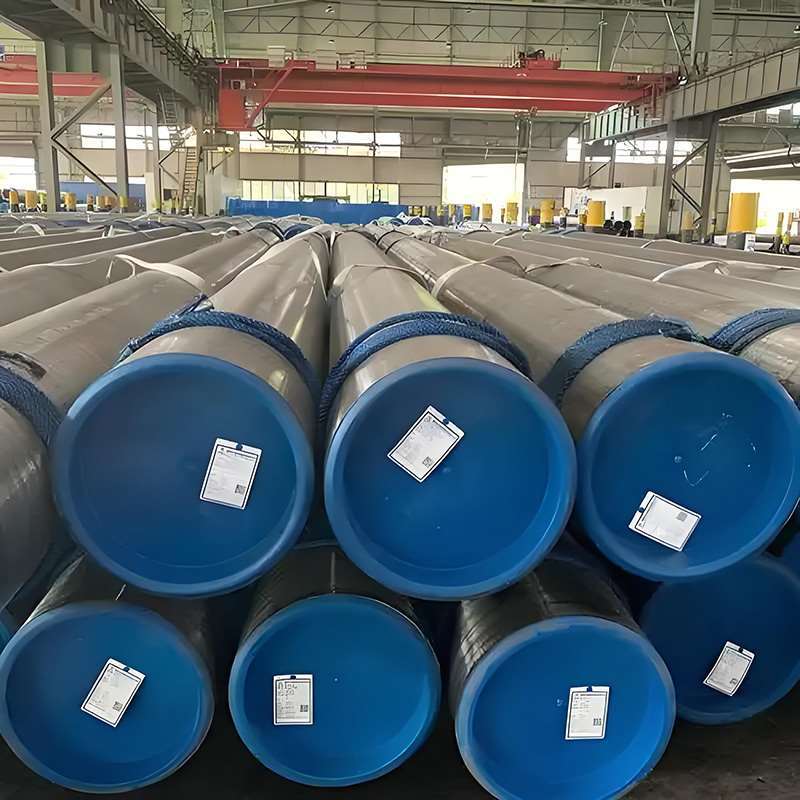
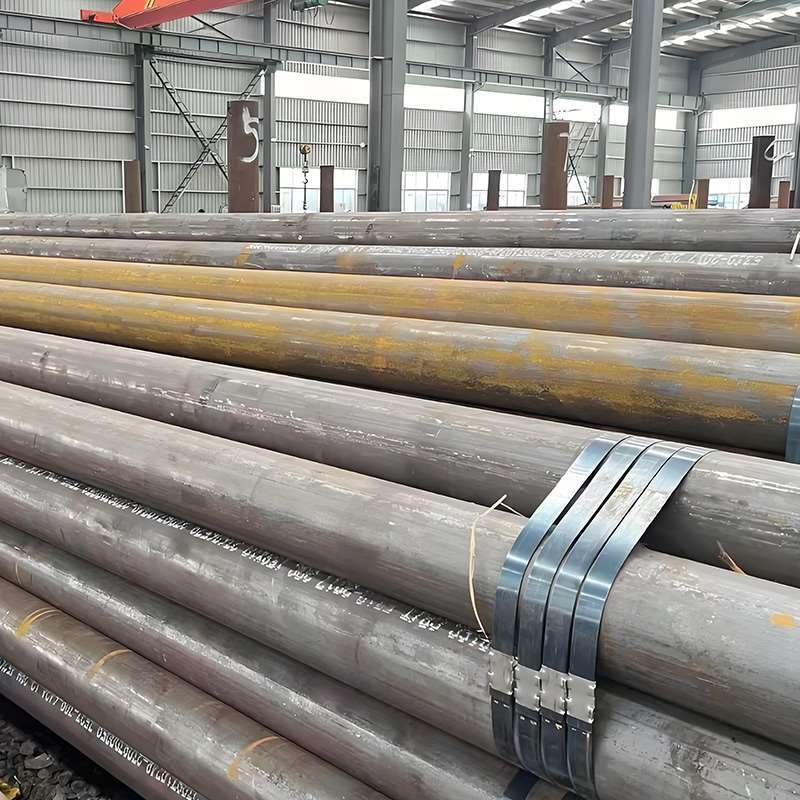
ASTM A213 alloy steel pipes are seamless alloy steel pipes manufactured according to ASTM A213 / ASME SA213 standards. They are primarily used in high-temperature, high-pressure applications such as boilers, heat exchangers, hot water systems, steam systems, and petrochemical pipeline systems.
Product Features:
High-Temperature Resistance: Suitable for long-term use in high-temperature environments, ensuring pipeline stability.
High Strength and Toughness: Meets stringent chemical composition and mechanical property requirements to ensure high-pressure safety.
Seamless Construction: Eliminates welds, reduces stress concentration, and enhances pipeline reliability.
Rigorous Inspection: Each pipe undergoes chemical composition analysis, dimensional checks, mechanical property testing, and non-destructive testing to guarantee compliance with standard requirements.
| Parameter Category | Detailed Description |
|---|---|
| Standard | ASTM A213 / ASME SA213 |
| Manufacturing Process | 1. Hot Rolled Seamless Tube 2. Cold Drawn / Cold Finished Seamless Tube |
| Outer Diameter Range | 1/2" – 24" (21.3 – 609.6 mm) |
| OD Tolerance | Hot Rolled: ±0.5 ~ ±2.0 mm Cold Drawn: ±0.3 ~ ±1.0 mm |
| Wall Thickness Range | Hot Rolled: 2.8 – 50 mm Cold Drawn: 1.5 – 25 mm |
| Wall Thickness Tolerance | Hot Rolled: ±10% or ±0.5~1.5 mm Cold Drawn: ±5% or ±0.3~0.8 mm |
| Length | Standard Length: 5.8 – 12 m, customized cutting available upon request |
| Steel Grade / Type | T1, T2, T5, T9, T11, T12, T22, T91, etc. |
| Chemical Composition | Controlled contents of C, Mn, Si, Cr, Mo, Ni, V, Nb according to steel grade |
| Applicable Temperature | T1–T22: 0–525 °C T91: 0–650 °C |
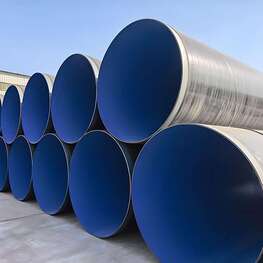
| Anti-Corrosion Type | Internal and external anti-rust oil, anti-rust paint, hot-dip galvanizing, epoxy coating (FBE), epoxy fiberglass lining |
| Applicable Pressure | Calculated based on steel grade, wall thickness, and temperature; meets boiler and high-temperature high-pressure pipe requirements |
| Inspection Items | Chemical composition, dimensions, mechanical properties (tensile, yield, impact), NDT (UT/RT), hydrostatic test, etc. |
| Main Applications | Boiler tubes, heat exchanger tubes, steam pipelines, hot water/hot oil pipelines, petrochemical and chemical industry high-temperature piping |
| Grade | C (%) | Mn (%) | Si (%) | Cr (%) | Mo (%) | Ni (%) | V (%) | Nb (%) |
|---|---|---|---|---|---|---|---|---|
| T1 | 0.06–0.14 | 0.30–0.60 | 0.10–0.35 | 0.25–0.50 | 0.45–0.60 | – | – | – |
| T2 | 0.06–0.14 | 0.30–0.60 | 0.10–0.35 | 0.25–0.50 | 0.45–0.60 | – | – | – |
| T5 | 0.05–0.15 | 0.27–0.60 | 0.10–0.35 | 0.45–0.60 | 0.45–0.60 | – | – | – |
| T9 | 0.05–0.12 | 0.27–0.55 | 0.10–0.35 | 2.00–2.50 | 0.45–0.60 | – | – | – |
| T11 | 0.08–0.15 | 0.30–0.60 | 0.10–0.35 | 1.00–1.50 | 0.45–0.60 | – | – | – |
| T12 | 0.05–0.15 | 0.27–0.60 | 0.10–0.35 | 1.75–2.00 | 0.45–0.60 | – | – | – |
| T22 | 0.05–0.15 | 0.27–0.60 | 0.10–0.35 | 2.00–2.50 | 0.85–1.05 | – | – | – |
| T91 | 0.08–0.12 | 0.85–1.05 | 0.20–0.50 | 8.00–9.50 | 0.85–1.05 | – | 0.18–0.25 | 0.06–0.12 |
Description
C (Carbon): Increases strength and hardness.
Mn (Manganese): Enhances strength and toughness.
Si (Silicon): Deoxidizer that also improves strength.
Cr (Chromium): Enhances heat resistance and oxidation resistance.
Mo (Molybdenum): Improves high-temperature strength and creep resistance.
Ni (Nickel), V (Vanadium), Nb (Niobium): Enhances toughness and high-temperature performance.
Application Reference: Different steel grades are suitable for varying temperatures, pressures, and operating conditions. Selection should be based on specific design requirements.
Process Overview:
Ingot heating → Hot piercing or extrusion to form blank tube
Hot rolling process to form blank tube into specified outer diameter and wall thickness
Heat treatment (normalizing/tempering/quenching and tempering) to enhance high-temperature strength and toughness
Dimensional inspection, non-destructive testing, cutting, packaging
Characteristics:
Suitable for medium-to-large diameter pipes
Wider tolerances for outer diameter and wall thickness
Commonly used for high-temperature, high-pressure pipelines
Process Overview:
First manufactured as hot-rolled rough tubes
Drawn to specified outer diameter and wall thickness via cold drawing or cold rolling
Heat treated (tempering/quenching and tempering) to enhance toughness and dimensional stability
Inspected, polished, and packaged
Characteristics:
High precision with tight tolerances on outer diameter and wall thickness
Smooth surface suitable for machining or high-precision installation
Commonly used for small-diameter high-pressure pipelines
| Grade | Tensile Strength, min, ksi [MPa] | Yield Strength, min, ksi [MPa] | Elongation in 2 in. or 50 mm, min, % | Hardness A Brinell/Vickers | Rockwell |
|---|---|---|---|---|---|
| T5b | 60 [415] | 30 [205] | 30 | 179 HBW / 190 HV | 89 HRB |
| T9 | 60 [415] | 30 [205] | 30 | 179 HBW / 190 HV | 89 HRB |
| T12 | 60 [415] | 32 [220] | 30 | 163 HBW / 170 HV | 85 HRB |
| T23 | 74 [510] | 58 [400] | 20 | 220 HBW / 230 HV | 97 HRB |
| T24 | 85 [585] | 60 [415] | 20 | 250 HBW / 265 HV | 25 HRC |
| T36 Grade 1 | 90 [620] | 64 [440] | 15 | 250 HBW / 265 HV | 25 HRC |
| T36 Grade 2 | 95.5 [660] | 66.5 [460] | 15 | 250 HBW / 265 HV | 25 HRC |
| T91 Type 1 & 2 | 85 [585] | 60 [415] | 20 | 190–250 HBW / 196–265 HV | 90 HRB – 25 HRC |
| T92 | 90 [620] | 64 [440] | 20 | 250 HBW / 265 HV | 25 HRC |
| T93 | 90 [620] | 64 [440] | 19 | 250 HBW / 265 HV | 25 HRC |
| T115 | 90 [620] | 65 [450] | 20 | 190–250 HBW / 196–265 HV | 90 HRB – 25 HRC |
| T122 | 90 [620] | 58 [400] | 20 | 250 HBW / 265 HV | 25 HRC |
| T128 | 94 [650] | 71 [490] | 20 | 265 HBW / 280 HV | 27 HRC |
| T911 | 90 [620] | 64 [440] | 20 | 250 HBW / 265 HV | 25 HRC |
| T921 | 109 [750] | 84 [580] | 20 | 276 HBW / 290 HV | 26 HRC |
| All other low-alloy grades | 60 [415] | 30 [205] | 30 | 163 HBW / 170 HV | 85 HRB |
Note: The mechanical property requirements of ASTM A213 do not apply to tubing with an inside diameter less than 1/8 inch [3.2 mm] or a wall thickness less than 0.015 inch [0.4 mm].
A1: Different grades of ASTM A213 alloy steel pipes have varying applicable temperature and pressure ranges.
T11, T12, T22: Suitable for medium-to-high temperature boilers and steam piping, operating at approximately 400–525°C (752–925°F) and handling medium-to-high pressure steam.
T91, T92: Suitable for ultra-high temperature boilers and supercritical piping, operating up to 650°C (1170°F) and handling high pressure.
A2:
T11: Medium-temperature boiler and steam pipes with lower Cr-Mo content, withstanding temperatures up to approximately 450°C.
T22: High-temperature boiler pipes with higher Cr-Mo content, withstanding temperatures up to approximately 525°C.
T91: Ultra-high-temperature boiler tubes, alloyed with Cr-Mo-V-Nb, with a temperature resistance up to 650°C.
The primary distinctions lie in chemical composition and temperature resistance. T22 or T91 are preferred for high-temperature, high-pressure systems.
A3:
Steel grade selection depends on the following factors:
Operating temperature and pressure: Use T22/T91 for high-temperature and high-pressure applications.
Medium type: Steam, hot water, thermal oil, or chemical media.
Pipe diameter and wall thickness: Align with design requirements and pressure-bearing capacity.
Corrosion resistance requirements: Select corrosion-resistant or high-alloy grades when necessary.
A4:
Hot-rolled pipes: Suitable for medium to large diameters, high-temperature/high-pressure pipelines. Offers high production efficiency with wider tolerances.
Cold-drawn pipes: Suitable for small diameters and high-precision installations. Features tighter tolerances for OD and wall thickness with a smoother surface finish.
Select the process based on the pipeline design's dimensional accuracy and installation requirements.
A5:
Nominal Pipe Size (NPS)
Determines the pipe outer diameter (OD).
Wall Thickness (Schedule)
Selected based on design pressure and temperature; common options include SCH 40, SCH 80, SCH 160, etc.
For high-temperature/high-pressure applications, select slightly thicker walls to ensure safety margins.
Where necessary, confirm final selection by evaluating pipe mechanical properties and pressure-bearing capacity.
A6:
Common corrosion protection methods include:
Rust-preventive oil coating: Suitable for short-term storage and transportation.
Hot-dip galvanizing: Applicable for general industrial environments with strong corrosion resistance.
Epoxy coating (FBE) or epoxy glass fiber lining: Suitable for high-temperature, high-pressure, or chemical-service pipelines.
Selecting the appropriate corrosion protection method based on the operating environment can extend the service life of the pipes.
 WeChat
 Scan wechat
WhatsApp:+86 15383177997
E-mail:wr@insulatedpipeline.com
E-mail:
Address:Development Zone, Cangzhou, Hebei Province, China
技术支持:沧州利畅网络
.jpg)
.jpg)