
EMAIL:
wr@insulatedpipeline.com



Number of visits:5 seconds Update time:2026-08-07
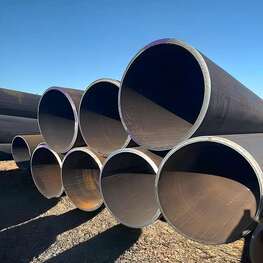
Municipal water supply projects are the “lifeline” that keeps cities running. In such projects, carbon steel pipes have become the standard material for large-diameter water transmission trunk lines due to their high pressure-bearing capacity and good toughness. However, if carbon steel pipes are buried directly underground or come into prolonged contact with tap water, they are prone to rust and corrosion.
To ensure the safety of drinking water and ensure that the pipeline network has a service life of more than 50 years, it is essential to select an appropriate anti-corrosion coating for carbon steel pipes.
If problems arise in underground municipal water supply networks, not only are repair costs high, but they can also lead to water outages that disrupt residents’ daily lives. Therefore, project owners typically have three mandatory criteria when selecting pipes:
Water quality safety—no secondary contamination: Since the inner walls of the pipes come into contact with drinking water, the corrosion-resistant materials must be non-toxic and odorless, and must not breed bacteria or release harmful substances even when submerged in water for long periods.
The outer walls must be pressure-resistant and wear-resistant: The urban underground environment is complex, with various stray currents, and backfill soil may contain stones. The outer walls of the pipes must be able to withstand acid and alkali corrosion from the soil as well as mechanical impacts.
The inner walls must be smooth to save on electricity costs for pumping: After several years of use, if scale builds up or rust deposits form inside the pipes, water flow will slow down, forcing water pumps to operate at full capacity. The smoother the inner walls, the more electricity costs will be saved over decades.
.jpg)
To meet all of the above requirements simultaneously, the following two types of high-efficiency corrosion-resistant carbon steel pipes are currently the primary choices for large-diameter municipal water supply projects:
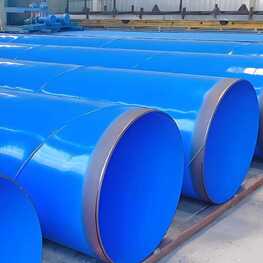
TPEP-coated steel pipes are currently the “standard” solution for municipal water conveyance and main water supply lines. They ingeniously combine two materials in a single pipe:
Inner Wall (Thermoset Epoxy Powder): The coating surface is as smooth as a mirror, offering low flow resistance and reducing energy consumption during water transmission. More importantly, it complies with national drinking water hygiene standards, resists rust and scale buildup, and ensures clear water quality.
Outer Wall (3PE Corrosion Protection): The base layer consists of epoxy powder, while the outer layer is made of hard, high-density polyethylene. This outer shell is impact-resistant, withstands soil stress, provides excellent insulation, and shields against corrosion from groundwater and stray currents.
Spiral-welded submerged-arc-welded steel pipes are widely used in large-diameter municipal pipeline networks. Combined with 3PE external anti-corrosion technology, the Anti-Corrosion Spiral Steel Pipe is a powerful tool for withstanding harsh underground geological conditions.
This type of pipe has high mechanical strength and can withstand deep soil and water pressure. When paired with proven external anti-corrosion technology, it effectively prevents electrochemical perforation caused by deteriorating external environments, ensuring the safety of the entire water supply pipeline.
Verify Health Permits: When purchasing municipal water supply pipes, the internal anti-corrosion coating must be accompanied by a “Health Safety Product Permit for Water-Contacting Materials” issued by provincial or municipal health authorities; this is essential for compliance and market entry.
Calculate Long-Term Operating Costs: Although high-quality corrosion-resistant steel pipes may be more expensive initially, their smooth inner walls result in significant savings on water pumping electricity costs over decades of operation. Combined with the savings from trenchless maintenance, these benefits far outweigh the initial price difference.
Prioritize the Quality of On-Site Joints: No matter how well the pipes are manufactured, they are useless if the on-site welded joints are weak points. Insist that the contractor apply strict thermal shrink wrap or liquid epoxy corrosion protection to the welds and inspect each one individually with an electric spark tester to ensure zero leaks.
 WeChat
 Scan wechat
WhatsApp:+86 15383177997
E-mail:wr@insulatedpipeline.com
E-mail:
Address:Development Zone, Cangzhou, Hebei Province, China
技术支持:沧州利畅网络
.jpg)
.jpg)