EMAIL:
wr@insulatedpipeline.com



Number of visits:5 seconds Update time:2026-07-31
In municipal water supply and long-distance water conveyance projects, steel pipes are the most widely used piping material because they are sturdy, durable, and capable of withstanding high pressure. However, when buried underground or exposed to constant water flow over long periods, steel pipes are highly susceptible to rust and corrosion. If an underground pipe leaks, it not only wastes water but also requires excavation to repair, which is both time-consuming and labor-intensive.
Therefore, selecting the right anti-corrosion coating is key to extending the service life of the pipes and saving on future maintenance costs.
Coating Peeling: If the external protective coating is not firmly bonded to the steel pipe, it will peel or flake off over time. Once groundwater seeps in, the applied protective current cannot pass through, and the steel pipe will corrode through unnoticed.
Scale and Rust on the Inner Wall: If the anti-corrosion treatment on the pipe’s inner wall is inadequate, it not only leads to rust deposits and scale buildup—which reduce water flow and increase pump energy consumption—but also fosters bacterial growth, compromising the quality of tap water.
Rust at Welded Joints: Pipes are assembled by welding sections together. If the anti-corrosion treatment at the welded joints is inadequate, the entire pipeline will begin to deteriorate from these points first.
.jpg)
Features: This type of corrosion-resistant spiral steel pipe is relatively inexpensive.
Disadvantages: Cement mortar is very heavy, which increases transportation and installation costs; furthermore, the rough surface of the cement creates significant resistance to water flow and may crack or peel off over time.
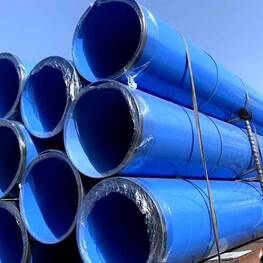
Features: TPEP-coated spiral steel pipes are currently the superior solution. Their outer wall consists of a durable 3PE plastic layer that withstands impacts from large rocks in the soil; the inner wall is coated with thermoset epoxy powder, resulting in a surface as smooth as a mirror.
Advantages: The smooth inner wall reduces flow resistance, saving electricity when pumping water. Furthermore, this material is safe and non-toxic, making it ideal for transporting drinking water and municipal water.
When selecting a corrosion-resistant solution, don’t just look at who offers the cheapest pipes—you need to calculate the total cost:
Total Cost = Cost of Pipes + Installation Fees + Decades of Electricity Costs for Slow Water Pumping + Future Repair Costs
Consider Water Quality: If the water is for drinking, we recommend TPEP-coated spiral steel pipes to ensure clean water quality. If the water is for irrigation or industrial cooling, standard corrosion-resistant pipes will suffice.
Consider Energy Savings: TPEP pipes have smooth inner walls, allowing water to flow quickly. Over several decades of use, the savings on pumping electricity costs are substantial—more than enough to offset the higher initial cost of the pipes.
Consider the Construction Environment: If the soil contains many rocks, or if the installation requires drilling and pipe pulling, you must choose spiral steel pipes with 3PE external coating. Their hard outer shell is less likely to be scratched by rocks.
 WeChat
 Scan wechat
WhatsApp:+86 15383177997
E-mail:wr@insulatedpipeline.com
E-mail:
Address:Development Zone, Cangzhou, Hebei Province, China
技术支持:沧州利畅网络


.jpg)