EMAIL:
wr@insulatedpipeline.com


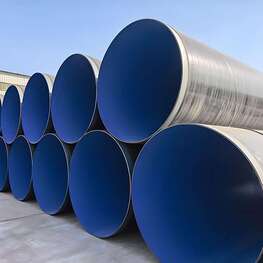
TPEP-coated steel pipe is a double-layer corrosion-resistant steel pipe with both internal and external coatings, typically featuring:
Inner layer: Thermoset epoxy powder
Outer layer: 3PE three-layer polyethylene coating
Therefore, TPEP is essentially a high-performance corrosion-resistant steel pipe system that combin es “internal epoxy + external 3PE” coating technologies.
It is widely used in:
Water supply and drainage projects
Long-distance water transmission pipelines
Oil and gas transportation
Fire protection networks
Municipal underground pipelines
Chemical and industrial fluid transportation
Due to its excellent corrosion resistance and long service life, TPEP-coated steel pipe has become one of the most commonly used corrosion-resistant pipe products in modern buried pipeline projects.
The structure of TPEP-coated steel pipe is often referred to as "outer 3PE, inner fused epoxy". It combines the corrosion resistance of plastic with the high mechanical strength of steel pipe.
Common pipe types: Seamless steel pipes, long-seam submerged-arc welded pipes (LSAW), or large-diameter spiral steel pipes (SSAW).
Function: Provides the primary pressure-bearing capacity and structural strength.
The outer wall consists of three layers of materials with different functions, collectively referred to as the 3PE corrosion-resistant coating:
First Layer: Primer (Fusion-Bonded Epoxy Powder – FBE)
Directly sprayed onto the surface of the steel pipe after rust removal.
Function: Provides excellent adhesion and serves as the core corrosion-resistant layer.
Second Layer: Intermediate Layer (Adhesive – AD)
Typically a modified polyethylene copolymer.
Function: Acts as the “glue” between the underlying epoxy powder and the outer polyethylene layer, ensuring the three-layer structure remains intact.
Third Layer: Top Layer (High-Density Polyethylene – HDPE)
Formed using a winding or wrapping process.
Function: Provides mechanical protection, impact resistance, and waterproofing, and resists environmental stress cracking.
Material: Modified heavy-duty anti-corrosion epoxy resin powder (typically food-grade).
Process: A thermal spray process is used to melt the powder at high temperatures and allow it to flow and level out on the inner wall of the steel pipe.
Functions:
Friction Reduction: The inner wall is extremely smooth with low surface roughness, which increases water flow and reduces energy consumption.
Corrosion Protection and Scale Prevention: Prevents fluid erosion of the steel surface and inhibits microbial growth and scaling.
| Layer | Position | Material | Main Function |
|---|---|---|---|
| Top Layer | Outermost External Layer | High-Density Polyethylene (HDPE) | Mechanical protection, sealing, wear resistance |
| Adhesive Layer | Middle External Layer | Copolymer Adhesive (AD) | Bonding inner and outer layers, preventing delamination |
| Primer Layer | Innermost External Layer | Fusion Bonded Epoxy (FBE) | Adhesion, chemical corrosion resistance |
| Substrate | Core Layer | Steel Pipe | Pressure bearing, structural support |
| Inner Lining Layer | Internal Surface | Melted Epoxy (EP) | Hygienic protection, flow reduction, internal corrosion resistance |
1. Surface Pretreatment
Preheating: After the steel pipes enter the production line, they are first preheated to remove surface moisture.
Shot Blasting: A high-speed shot blasting machine is used to impact the inner and outer walls of the steel pipes.
Standard: Must achieve Sa2.5 grade.
Purpose: To remove scale and rust, and to create a certain “anchor pattern depth” (microscopic irregularities), thereby increasing the contact area between the anti-corrosion powder and the metal surface.
2. Medium-Frequency Heating
Use a medium-frequency induction heating furnace to heat the steel pipes evenly.
Temperature control: Typically set between 200°C and 230°C.
Note: Temperature is a critical parameter. If the temperature is too low, the epoxy powder will not melt sufficiently; if the temperature is too high, the epoxy resin will degrade, affecting its corrosion-resistant properties.
3. Coating Application (Internal and External Coating)
A key feature of TPEP is the combined application of corrosion-resistant coatings on both the inner and outer walls:
Internal Coating (FBE):
Food-grade epoxy powder is evenly sprayed onto the inner wall of the hot steel pipe using an electrostatic spray gun. Upon contact with the high-temperature pipe wall, the powder immediately melts, flows, and begins to cure.
External Coating (3PE):
Base Layer: Sprayed epoxy powder (FBE).
Intermediate Layer: A copolymer adhesive (AD) is applied over the epoxy powder using an extruder.
Top Layer: High-density polyethylene (HDPE) is then applied as the outermost layer using an extruder.
4. Rolling and Shaping
While the outer polyethylene layer is still in a molten state, it is rolled and compacted using silicone rollers.
Purpose: To remove air bubbles between layers, ensure the density of the 3PE structure, and ensure that the coating adheres tightly to the spiral weld.
5. Cooling and Setting
The steel pipe enters the water cooling zone, where circulating spray water reduces its temperature to below 60°C.
Purpose: To rapidly harden the polyethylene layer, ensuring that the set coating exhibits excellent scratch resistance.
6. Quality Inspection (Final Inspection)
Electrical Spark Testing: Use a high-voltage spark tester to check the coating for pinholes (leaks).
Coating Thickness Measurement: Ensure that the thickness of the 3PE coating on the outer wall and the FBE coating on the inner wall meets design specifications.
Adhesion Testing: Conduct peel strength tests on a sample basis.
7. Pipe End Preparation (End Trimming)
Due to on-site welding requirements, both ends of the steel pipes must be ground to form a bevel.
Uncoated Section: Typically, a 100–150 mm section is left uncoated, and the edges are chamfered to prevent the anti-corrosion coating from peeling during construction.
| Category | International Standard | Standard Name | Application |
|---|---|---|---|
| Steel Pipe Standard | API 5L | Specification for Line Pipe | Oil & gas transmission pipelines |
| Steel Pipe Standard | ASTM A53 | Welded and Seamless Steel Pipe | Water, gas, and structural pipelines |
| Steel Pipe Standard | ASTM A252 | Welded and Seamless Steel Pipe Piles | Structural and piling applications |
| External 3PE Coating Standard | DIN 30670 | Polyethylene Coatings for Steel Pipes and Fittings | 3PE external anti-corrosion system |
| External 3PE Coating Standard | ISO 21809-1 | External Coatings for Buried or Submerged Pipelines | Oil & gas pipeline corrosion protection |
| Internal Epoxy Coating Standard | AWWA C210 | Liquid Epoxy Coating Systems for Steel Water Pipelines | Internal epoxy lining for water transmission |
| Internal Epoxy Coating Standard | NSF/ANSI 61 | Drinking Water System Components – Health Effects | Drinking water safety certification |
| Fire Protection Coating Standard | UL 852 | Metallic Sprinkler Pipe for Fire Protection Service | Fire protection pipeline systems |
| Coating Inspection Standard | ASTM G62 | Holiday Detection of Pipeline Coatings | Coating defect inspection |
| Coating Adhesion Test Standard | ASTM D4541 | Pull-Off Strength of Coatings | Adhesion performance testing |
| Coating Thickness Standard | SSPC-PA 2 | Measurement of Dry Coating Thickness | Coating thickness inspection |
| Pipeline Corrosion Protection Standard | NACE SP0394 | Application, Performance, and Quality Control of FBE Coatings | Corrosion protection quality control |
In urban water supply and drainage systems, steel pipes are buried underground in a damp environment for extended periods, making them prone to corrosion, rust, and leakage.
Common Problems:
Severe groundwater corrosion
Short pipe lifespan
High maintenance costs
Reduced water delivery efficiency
Suggested Solution:
TPEP coated steel pipes utilize a double-layer anti-corrosion structure of "inner epoxy + outer 3PE," effectively isolating them from moisture, air, and corrosive media in the soil. The inner epoxy layer also reduces water delivery resistance and improves water supply efficiency,
Long-distance water transmission projects place high demands on pipeline corrosion resistance and conveyance efficiency.
Common Challenges
Internal scaling of pipeline walls
High flow resistance
Corrosion and leaks after long-term operation
Difficult maintenance
Recommended Solution
The smooth surface of the fusion-bonded epoxy layer on the inner wall of TPEP-coated steel pipes reduces flow friction and minimizes the risk of scaling. The 3PE structure on the outer wall enhances corrosion resistance during underground installation and improves the long-term operational stability of the pipeline.
Oil and gas pipelines typically operate for extended periods in complex soil environments, placing very strict demands on their anti-corrosion coatings.
Common Challenges
Severe soil corrosion
Outer walls prone to mechanical damage
High risk of cathodic disbonding
High pipeline maintenance costs
Recommended Solution
TPEP-coated steel pipes feature an outer layer of high-density polyethylene (HDPE) that provides excellent impact resistance and wear resistance. Combined with an FBE primer and an adhesive layer, this effectively enhances the adhesion of the anti-corrosion coating and reduces the risk of delamination, making it suitable for long-distance oil and gas transmission pipeline projects.
Since fire protection piping networks remain in a static water-storage state for extended periods, standard steel pipes are prone to internal corrosion.
Common Challenges
Rust on pipe inner walls
Water contamination
Pipe blockages
Short service life
Recommended Solution
The epoxy coating on the inner walls of TPEP-coated steel pipes offers excellent resistance to water corrosion and meets hygiene standards, effectively reducing rust and the formation of impurities, making them suitable for fire protection water supply systems.
Chemical media in industrial environments are typically highly corrosive, placing high demands on the protective capabilities of steel pipes.
Common Challenges
Severe chemical corrosion
Conventional coatings are prone to peeling
Frequent pipeline maintenance
High risk of leaks
Recommended Solution
The TPEP anti-corrosion system forms a stable protective layer, enhancing the steel pipe’s resistance to chemical media. The dual-layer anti-corrosion structure—both internal and external—effectively extends the service life of industrial pipelines.
Coastal areas are characterized by high humidity and severe salt fog corrosion, which place high demands on the protection of steel pipe exteriors.
Common Challenges
Rapid salt fog corrosion
Prone to exterior aging
Failure of protective coatings due to humid environments
Recommended Solution
The outer HDPE layer of TPEP-coated steel pipes offers excellent waterproofing, moisture resistance, and salt fog resistance, effectively enhancing service stability in coastal and marine environments.
Underground utility tunnels and buried pipeline projects place high demands on pipeline lifespan and mechanical protection capabilities.
Common Challenges
The external anti-corrosion coating is prone to damage
Pipeline stress caused by ground settlement
Complex underground construction environments
Recommended Solution
The 3PE structure on the outer layer of TPEP-coated steel pipes offers strong impact resistance and wear resistance, which can reduce damage caused during construction and backfilling, thereby enhancing the long-term safety of underground pipeline networks.
Power plant circulating water systems are constantly exposed to humid environments, making them prone to corrosion issues.
Common Challenges
Severe corrosion on the inner and outer walls of pipes
High costs associated with maintenance shutdowns
Shortened pipe service life
Recommended Solution
The use of TPEP-coated steel pipes can effectively enhance corrosion resistance, reduce the frequency of maintenance, and improve the operational stability of the entire circulating water system.
Mining conveyance environments are typically characterized by severe wear and corrosion.
Common Challenges
Severe pipeline wear
Highly corrosive slurry
Prone to leaks
Recommended Solution
The outer polyethylene layer of TPEP-coated steel pipes offers excellent wear resistance, while the inner epoxy layer reduces corrosion from the conveyed medium, thereby extending the overall service life of the pipeline.
Many procurement professionals tend to confuse the two.
The key difference is:
3PE steel pipes: External corrosion protection only (3PE on the outer wall)
TPEP steel pipes: Dual corrosion protection (epoxy on the inside + 3PE on the outside)
Practical implications:
TPEP offers greater advantages in water transmission, fire protection, and long-distance buried projects because it not only protects the outer wall but also addresses internal corrosion and scaling issues.
In simple terms:
3PE = External corrosion protection
TPEP = Comprehensive internal and external corrosion protection system
This is a key concern for many water supply projects.
Answer: Yes, but it depends on the certification requirements.
The inner wall of TPEP pipes typically features an epoxy powder coating, which inherently offers good sanitary properties. However, when used in drinking water projects, the following must be met:
NSF 61 certification (or equivalent drinking water standards)
Relevant requirements of AWWA C210
Local health regulations at the project site
Recommendation:
For municipal drinking water projects, priority should be given to confirming whether the product has drinking water-grade lining certification.
Many customers are concerned about “how long it will last.”
Under standard construction and normal environmental conditions:
General design life: Over 30 years
In high-quality project environments: Up to 50 years
Key factors affecting service life:
Soil corrosiveness
Whether the coating was damaged during construction
Whether cathodic protection is in place
Operating pressure and properties of the medium
Recommendation:
Do not focus solely on the material’s lifespan; pay equal attention to construction quality and the integrity of the corrosion protection system.
This is a very practical concern in on-site engineering.
Answer: The outer 3PE layer has some impact resistance, but care must still be taken to protect it.
Potential risks include:
Scratches from lifting
Crushing by backfill stones
Damage in the heat-affected zone during welding
Solutions:
Use soft slings for lifting
Avoid direct contact between hard objects and the coating
Use a bed of fine soil or sand during backfilling
Repair cracks and damage as necessary
Key point:
3PE is “impact-resistant,” not “damage-proof.”
Yes, they can be welded, but the welds must be treated to prevent corrosion.
The typical on-site process is as follows:
Align and weld the steel pipes
Clean the welds and remove slag
Sandblast or grind the surface
Apply a coating or use a heat-shrink sleeve to seal the joint
Perform an eddy current test
Common joint sealing methods:
Heat-shrink tape/sleeve
Liquid epoxy coating
FBE joint sealing system
Project Focus:
Joint quality is one of the key factors determining the overall service life of the corrosion protection system.
The initial cost is indeed higher, but it’s important to consider the “total life cycle cost.”
Comparison results:
Standard steel pipes: Cheaper upfront, but require frequent maintenance and have a shorter lifespan
TPEP steel pipes: Slightly higher upfront cost, but virtually maintenance-free in the long run
The true value lies in:
Reduced downtime for repairs
Lower replacement costs
Extended service life
Improved transportation efficiency
Engineering conclusion:
For long-distance buried pipelines, TPEP is typically the solution with a “lower overall cost,” rather than simply being an expensive material.
 WeChat
 Scan wechat
WhatsApp:+86 15383177997
E-mail:wr@insulatedpipeline.com
E-mail:
Address:Development Zone, Cangzhou, Hebei Province, China
技术支持:沧州利畅网络