EMAIL:
wr@insulatedpipeline.com


Published:2025-10-20 | Last Updated: 2026-06-03 Views: 110
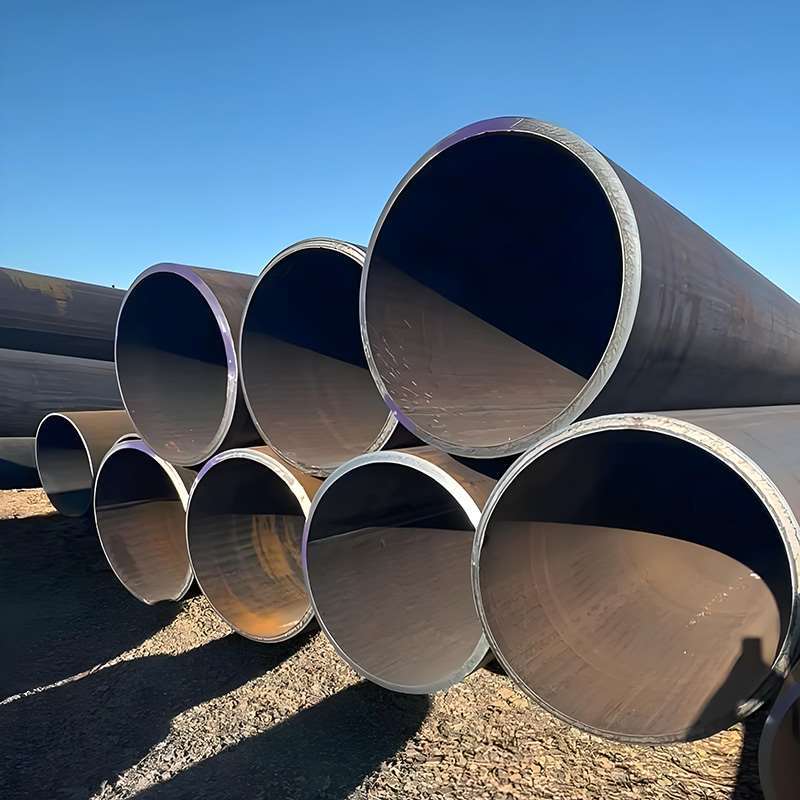
ASTM A53 is a carbon steel pipe standard established by ASTM International, applicable to both seamless and welded steel pipes. It is primarily used for conveying water, gas, steam, and structural applications.
This standard is divided into two grades: Grade A and Grade B. Grade B offers higher strength and a broader range of applications.
| Item | Technical Requirement | Description |
|---|---|---|
| Standard | ASTM A53 / ASME SA53 | Applicable to black and hot-dipped galvanized pipe |
| Manufacturing Type | Seamless, Welded (ERW, SAW) | ERW (resistance welded) is the most common |
| Steel Grade | Grade A / Grade B | Grade B offers higher strength and wider application |
| Size Range | NPS 1/8" – 26" | Can be customized per ASTM or customer requirements |
| Wall Thickness Range | SCH 10 – SCH 160 / XXS | Per ASME B36.10M dimension series |
| Length | 5.8 m / 6 m / 12 m or fixed length | Tolerance ±50 mm allowed |
| Surface Condition | Black, hot-dip galvanized, painted or anti-corrosion coating | Can be customized per application |
| Chemical Composition (%) | C ≤ 0.30, Mn 0.29–1.20, P ≤ 0.05, S ≤ 0.045 | Values shown for Grade B |
| Tensile Strength | ≥ 415 MPa (Grade B) | ≥ 330 MPa for Grade A |
| Yield Strength | ≥ 240 MPa (Grade B) | ≥ 205 MPa for Grade A |
| Elongation | ≥ 20 % | Adjusted according to wall thickness |
| Hydrostatic Test | No leakage | Each pipe must pass the test |
| NDT | Electromagnetic or ultrasonic inspection | To verify weld integrity |
| End Finish | Plain Ends (PE), Beveled Ends (BE), Threaded (TH) | Optional caps or threaded couplings available |
| Application | Conveyance of water, steam, gas and structural use | Suitable for medium- and low-pressure systems |
| Item | Grade A | Grade B | Difference Description |
|---|---|---|---|
| Carbon Content (C) | ≤ 0.25% | ≤ 0.30% | Grade B has slightly higher carbon for increased strength |
| Manganese Content (Mn) | 0.27–0.93% | 0.29–1.20% | Grade B contains more manganese to improve toughness and strength |
| Tensile Strength | ≥ 330 MPa | ≥ 415 MPa | Grade B is stronger and suitable for high-pressure systems |
| Yield Strength | ≥ 205 MPa | ≥ 240 MPa | Grade B offers higher load-bearing capacity |
| Typical Application | Low-pressure fluids, structural support | Medium- & high-pressure transmission, industrial & energy pipelines | Different application scopes |
| Price Difference | Lower | Slightly higher | Grade B provides better cost-performance ratio |
| Recommended Scenario | General construction, building structures | Oil, natural gas, steam transmission | Select according to pressure and environment |
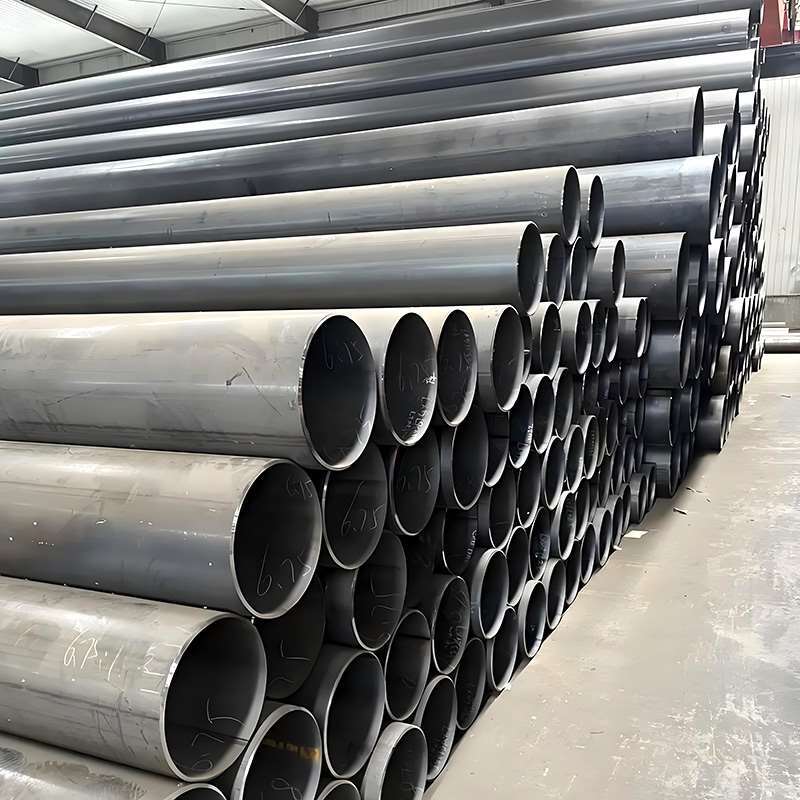
Hot-dip galvanizing involves immersing steel pipes in molten zinc to form a dense zinc coating, effectively preventing oxidation and rust.
Applications: Outdoor exposed environments, building structures, standard water supply and drainage systems.
Advantages: Easy application, low cost.
Procurement Note: Suitable for pipelines in low-corrosion environments; additional protection may be required for long-term burial or high-humidity conditions.
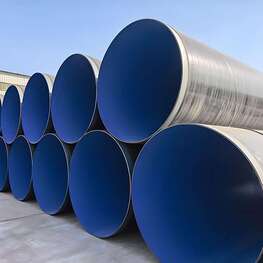
FBE coating employs thermosetting epoxy powder sprayed and cured at high temperatures to form a robust, adherent protective layer.
Suitable Scenarios: Oil, gas, and chemical pipelines.
Advantages: Chemical corrosion resistance, high-temperature tolerance, strong adhesion.
Procurement Note: Suitable for medium-to-high-pressure transmission pipelines; verify coating thickness and adhesion standards during selection.
The 3PE anti-corrosion coating consists of an epoxy primer layer, an adhesive layer, and a polyethylene outer layer, making it the preferred choice for long-term projects.
Suitable Scenarios: Underground pipelines, subsea pipelines, long-distance oil and gas transmission lines.
Advantages: Corrosion resistance, impact resistance, extended service life.
Procurement Tip: Ideal for long-term operational projects, reducing maintenance costs.
Formed by coating steel pipes with a mixture of epoxy resin and coal tar, creating a waterproof and anti-corrosion layer.
Suitable for: Municipal drainage and sewage networks.
Advantages: Low cost, easy application, excellent waterproofing.
Procurement Note: Suitable for projects with limited budgets and low corrosion levels.
Polyurethane coatings offer wear resistance, aging resistance, and a smooth surface, providing additional pipeline protection.
Suitable for: Industrial pipelines, external walls of buried pipelines.
Advantages: Impact resistance, long service life, easy-to-clean surface.
Procurement Tip: Suitable for environments requiring long-term stable operation or high mechanical wear.
Pipes must comply with ASTM A53 / ASME SA53 standards.
Distinguish from other standards (e.g., ASTM A106, API 5L) to avoid confusion.
Grade A: Low-pressure or general structural applications.
Grade B: Medium-to-high-pressure transmission or industrial applications requiring higher strength.
Select the appropriate grade based on project pressure and operating environment.
Verify that the outer diameter, wall thickness, and length meet design requirements.
Common wall thickness series: SCH 10–SCH 160; standard lengths are typically 6m or 12m.
Tolerance deviations may affect installation and fitting compatibility.
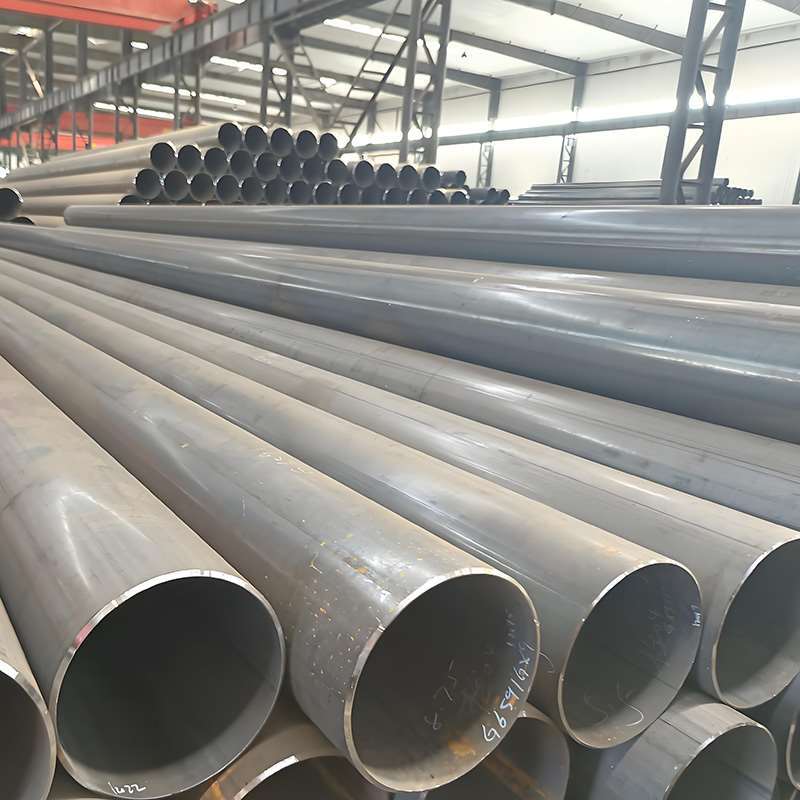
Common processes: ERW (Electric Resistance Welded), SAW (Submerged Arc Welded).
For pressure-bearing pipelines, select welded pipes that have undergone non-destructive testing (UT/RT).
Common methods: hot-dip galvanizing, FBE, 3PE, polyurethane.
Select based on environmental conditions to ensure long-term pipeline corrosion resistance.
Request Material Test Certificate (MTC) to verify chemical composition and mechanical properties.
For critical projects, third-party inspection reports may be required.
Confirm supply lead times and inventory status to prevent construction delays.
Protect anti-corrosion coatings and pipe ends during transportation and storage.
Grade B offers superior performance and broader applicability, providing greater value despite slightly higher pricing.
Evaluate not only unit cost but also anti-corrosion treatment, inspection, and service support.
Q1: What is the difference between ASTM A53 and ASTM A106?
A1: ASTM A53 is suitable for low-to-medium pressure fluid conveyance and structural applications, available in welded or seamless forms; ASTM A106 is primarily used for high-temperature, high-pressure pipelines, typically in seamless pipe form. Select the standard based on pressure, temperature, and intended use during procurement.
Q2: How to choose between welded and seamless steel pipes?
A2: Welded pipes are suitable for large-diameter, long-distance pipelines due to their lower cost; seamless pipes offer high strength and excellent pressure resistance, making them ideal for high-temperature, high-pressure, or critical systems.
Q3: What dimensions and tolerances should be considered during procurement?
A3: Verify that the pipe's outer diameter, wall thickness, length, and tolerances meet design specifications to prevent installation difficulties or mismatched fittings.
Q4: How can weld quality be verified?
A4: For pressure-bearing pipelines, select welded pipes that have undergone non-destructive testing (UT/RT) to ensure weld strength and sealing meet standards.
Q5: What should be considered for pipeline delivery and inventory?
A5: Confirm supply lead times and inventory levels to ensure construction progress. During transportation and storage, protect the anti-corrosion coating and pipe ends to prevent damage.
 WeChat
 Scan wechat
WhatsApp:+86 15383177997
E-mail:wr@insulatedpipeline.com
E-mail:
Address:Development Zone, Cangzhou, Hebei Province, China
技术支持:沧州利畅网络
.jpg)
.jpg)