EMAIL:
wr@insulatedpipeline.com


Published:2025-09-08 | Last Updated: 2025-09-08 Views: 142
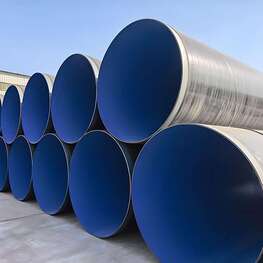
Powder-coated pipes are a technology that uses powder coatings to protect pipes from corrosion, and are widely used in the petroleum, natural gas, water supply, and chemical industries. Their main features are dense coatings, strong adhesion, and excellent corrosion resistance.

(1) Commonly used international standards
| Standard Number | Standard Title | Coating Type | Main Content |
|---|---|---|---|
| ISO 21809-2 | Petroleum and natural gas industries — External coatings for buried or submerged pipelines | Single-layer / Dual-layer FBE | Coating thickness, adhesion, impact resistance, cathodic disbondment, chemical corrosion resistance, etc. |
| AWWA C213 | Fusion-Bonded Epoxy Coating for Steel Water Pipelines | FBE | Anti-corrosion performance, coating uniformity, thickness requirements |
| CSA Z245.20 | Fusion-bonded epoxy coating | FBE | External anti-corrosion standard for oil & gas pipelines: adhesion, impact resistance, disbondment resistance, etc. |
(2) Commonly used domestic standards
| Standard Number | Standard Title | Coating Type | Main Content |
|---|---|---|---|
| GB/T 23257-2017 | Technical standard for external anti-corrosion coatings of buried steel pipelines | Single-layer / dual-layer FBE | Coating thickness, adhesion, pinhole detection, temperature resistance, corrosion resistance |
| SY/T 0315-2013 | External anti-corrosion construction and inspection standard for petroleum and natural gas pipelines | FBE | Construction technology, test methods, acceptance criteria |
(3) Key detection indicators
| Test Item | Test Method | Primary Requirement | Explanation |
|---|---|---|---|
| Coating Thickness | Magnetic thickness gauge | Single-layer FBE: 250–500 µm; dual-layer or 3PE: 500–700 µm | Ensure effective corrosion protection |
| Adhesion | Pull-off test | ≥ 9 N/mm² | Secure bonding between coating and steel pipe |
| Impact Test | Impact hammer | ≥ 3 J | Simulate transportation and construction impacts |
| Holiday (Pinhole) Detection | High-voltage spark test | No holidays (pinholes) | Verify coating integrity |
| Cathodic Disbondment | Constant-temperature bath + current | ≤ 12 mm at 65 °C for 48 h | Evaluate resistance to disbondment under cathodic protection |
| Temperature Resistance | Heating test | –20 °C to +80 °C (FBE) | Ensure stable performance within operating temperature range |
| Chemical Corrosion Resistance | Immersion test | No blistering or detachment | Assess resistance to acids, alkalis, salt water, and other media |
| Surface Roughness | ISO 8501-1 | Sa 2.5 | Ensure adhesion; required blast-cleaning grade |
(1) Corrosion Resistance
The coating is dense and uniform, waterproof, and resistant to oxidation, capable of withstanding corrosion from acids, alkalis, and saltwater.
(2) Wear and Impact Resistance
High hardness ensures the coating does not peel off or crack during transportation, installation, or construction.
(3) Strong Adhesion
The powder adheres tightly to the pipe and is unlikely to peel off.
(4) Environmental Safety
Solvent-free and does not emit harmful gases, meeting environmental protection requirements.
(5) Easy to Apply
Can be factory-applied or applied on-site for repairs, suitable for pipes of various specifications.
(6) Excellent Temperature Resistance
Can be used stably in environments ranging from -20°C to +80°C (with slight variations depending on the type of coating).
Oil and gas transmission pipes: Used for long-distance transmission of oil and gas to prevent corrosion and extend pipe life.
Water supply and drainage pipes: Used in urban water supply and drainage systems to ensure water quality safety.
Chemical pipes: Used to transport chemical media to prevent corrosion damage to pipes.
Electric power industry: Used in cooling system pipes for electric power facilities to prevent corrosion from affecting equipment operation.
Advantages
Cost-effective: Compared to traditional liquid coatings, powder coatings have high utilization rates, minimal waste, and reduce production costs.
Good coating uniformity: Powder coatings melt and flow evenly at high temperatures, forming a uniform coating that ensures corrosion protection.
High adaptability: Suitable for pipes of various specifications and shapes, meeting diverse requirements.
Disadvantages
High equipment requirements: Specialized spraying equipment and curing ovens are required, resulting in significant initial investment.
Strict operational requirements: Process parameters must be precisely controlled; otherwise, coating quality may be affected.
High environmental requirements: The construction environment must be kept clean to avoid dust or other contaminants affecting coating quality.
 WeChat
 Scan wechat
WhatsApp:+86 15383177997
E-mail:wr@insulatedpipeline.com
E-mail:
Address:Development Zone, Cangzhou, Hebei Province, China
技术支持:沧州利畅网络