EMAIL:
wr@insulatedpipeline.com


Published:2025-10-13 | Last Updated: 2025-10-13 Views: 112
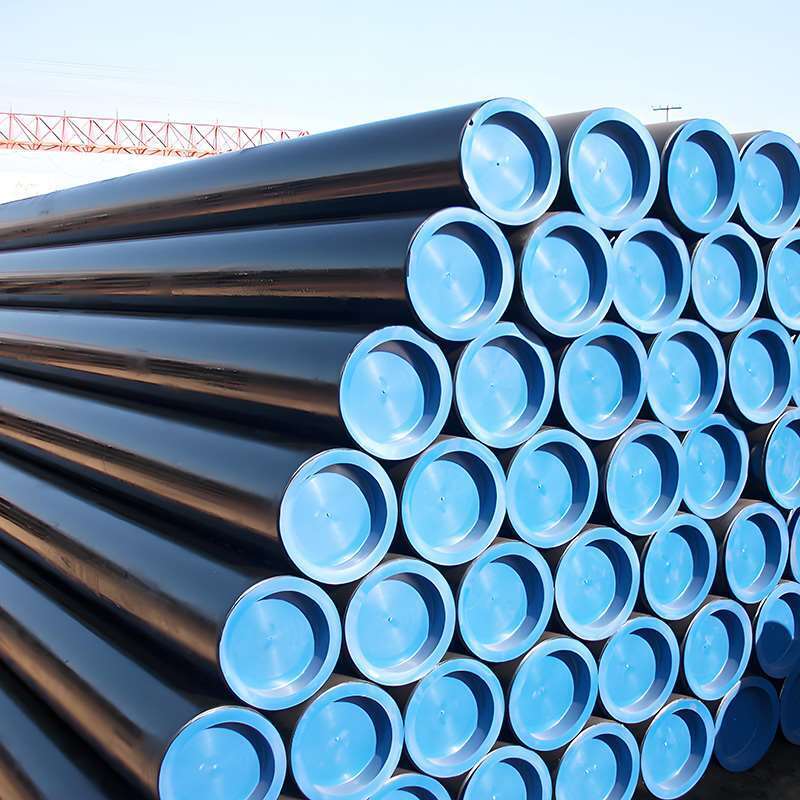
API 5L X52 seamless steel pipe is a medium-to-high-strength carbon steel pipe manufactured according to the API (American Petroleum Institute) 5L standard. It is primarily used for the transportation of petroleum, natural gas, water, and other fluids.
The designation “X52” indicates the steel grade, signifying a minimum yield strength of 52,000 psi (approximately 360 MPa). Within the X42, X46, X52, X56, X60, X65, X70 series, it represents a medium-strength grade.
API 5L X52 pipes offer excellent mechanical properties, corrosion resistance, and weldability, making them commonly used in onshore and subsea transportation systems, oil and gas pipeline networks, and high-pressure industrial pipeline projects.
| Parameter Item | Standard Requirement / Typical Value | Description |
|---|---|---|
| Executive Standard | API 5L / ISO 3183 | American Petroleum Institute standard |
| Product Grade | X52 (PSL1 / PSL2) | Minimum yield strength 52,000 psi |
| Manufacturing Method | Seamless (SMLS) | Hot-rolled or cold-drawn forming |
| Outside Diameter Range | 10.3 mm – 660 mm (1/8" – 26") | Large diameters customizable |
| Wall Thickness Range | 2 mm – 60 mm | Per SCH 10–SCH 160 |
| Length | 5.8 m, 6 m, 11.8 m, 12 m or fixed length | Double-end beveled or plain ends |
| End Finish | Plain Ends / Beveled Ends / Threaded | Customized per project requirement |
| Surface Treatment | Black, varnish, anti-rust oil, galvanized, 3PE / FBE coating | Multiple anti-corrosion options available |
| Yield Strength | ≥ 360 MPa (52,000 psi) | Minimum yield strength |
| Tensile Strength | 460–630 MPa | Tensile property requirement |
| Elongation | ≥ 23 % | Higher required for PSL2 |
| Impact Energy | ≥ 27 J (0 °C) | Required by PSL2 |
| Hydrostatic Test | No leakage, no deformation | Performed on every pipe before shipment |
| Chemical Composition | C ≤ 0.26 %, Mn ≤ 1.40 %, P ≤ 0.030 %, S ≤ 0.030 %, Si ≤ 0.45 % | Typical chemical range |
| NDT Non-destructive Testing | UT / ET / MT | Per API 5L annex requirements |
| Dimensional Tolerance | OD ±1 %, WT ±12.5 % | Per API 5L / ISO 3183 |
| Application Fields | Oil, natural gas, water transmission pipelines, industrial fluid piping | Onshore & offshore pipeline systems |
API 5L is the most widely used international standard for oil and gas transmission pipes, with steel grades ranging from X42 to X120, classified by increasing yield strength.
| Steel Grade | Min Yield Strength (MPa) | Min Tensile Strength (MPa) | Equivalent Yield Strength (psi) | Typical Application |
|---|---|---|---|---|
| A / B | A: ≥207 B: ≥241 | A: ≥331 B: ≥414 | A: 30,000 B: 35,000 | Low-pressure transmission, structural pipe |
| X42 | ≥290 | ≥414 | 42,000 | Medium- and low-pressure oil & gas transmission |
| X46 | ≥317 | ≥434 | 46,000 | Natural-gas lines, industrial piping |
| X52 | ≥359 | ≥460 | 52,000 | Onshore oil & gas networks, water conveyance |
| X56 | ≥386 | ≥490 | 56,000 | Long-distance oil & gas pipelines |
| X60 | ≥414 | ≥517 | 60,000 | High-pressure oil & gas lines |
| X65 | ≥448 | ≥531 | 65,000 | Subsea pipelines, long-haul transmission |
| X70 | ≥483 | ≥565 | 70,000 | Cross-country long-distance projects |
| X80 | ≥552 | ≥621 | 80,000 | High-pressure transmission, gas trunk lines |
| X90 | ≥620 | ≥690 | 90,000 | Ultra-high-pressure natural-gas projects |
| X100 | ≥690 | ≥760 | 100,000 | Special high-pressure systems |
| X120 | ≥830 | ≥915 | 120,000 | Extreme-high-pressure, long-distance transmission |
| Comparison Dimension | Difference Description |
|---|---|
| Strength Grade | Yield strength increases stepwise from X42 to X120, enhancing pressure-bearing capacity. |
| Alloy Composition | Higher-grade pipes contain more strengthening elements such as Mn, Nb, V, Mo. |
| Toughness Requirement | Grades X70 and above require superior low-temperature impact toughness. |
| Weldability | As grade rises, welding control becomes stricter and heat-affected-zone demands increase. |
| Application Scenarios | X42–X56: onshore pipelines; X60–X70: subsea/long-distance lines; X80+: ultra-high-pressure projects. |
| Cost & Manufacturing Difficulty | Higher grades bring higher production costs and more advanced technical requirements. |
Summary Recommendations:
For conventional oil and gas transportation, API 5L X52/X56 may be selected;
For high-pressure or long-distance pipelines, X65/X70 is recommended;
If the project requires extremely high strength and pressure resistance, consider X80 and above grades.
Q1: What applications are API 5L X52 seamless steel pipes suitable for?
A: X52 seamless steel pipes are widely used for transporting petroleum, natural gas, water, and other industrial fluids. They can be employed in onshore pipelines, subsea pipelines, and high-pressure transmission systems. The PSL2 grade is suitable for oil and gas projects with higher requirements.
Q2: Should I choose PSL1 or PSL2 when purchasing?
A:
PSL1: Suitable for general industrial pipelines and low-pressure water or gas transmission.
PSL2: Suitable for high-pressure oil and gas pipelines, subsea pipelines, or projects with stringent safety requirements. Features stricter inspection standards and higher toughness.
Q3: What key technical parameters should be focused on during purchase?
A:
Yield strength: ≥ 360 MPa
Tensile strength: 460–630 MPa
Chemical composition: C ≤ 0.26%, Mn ≤ 1.40%, P ≤ 0.030%, S ≤ 0.030%
Elongation: ≥ 23%
Inspection Methods: Hydrostatic testing, ultrasonic or eddy current non-destructive testing
Q4: How can I verify the reliability of steel pipe quality?
A:
Request API 5L certification (API Monogram)
Obtain material test certificate (Mill Test Certificate, MTC 3.1)
Review non-destructive testing reports and hydrostatic test records
If anti-corrosion requirements exist, request anti-corrosion coating inspection reports
Q5: Which end form and corrosion protection type should be selected?
A:
End form: Butt (PE), beveled (BE), or threaded (NPT), selected based on welding or disassembly requirements.
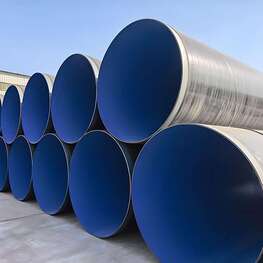
Anti-corrosion Type: Bare pipe, FBE/3PE coating, epoxy coating, etc. Anti-corrosion pipes are recommended for buried or subsea applications.
Q6: What packaging and transportation considerations apply to X52 pipes during procurement?
A:
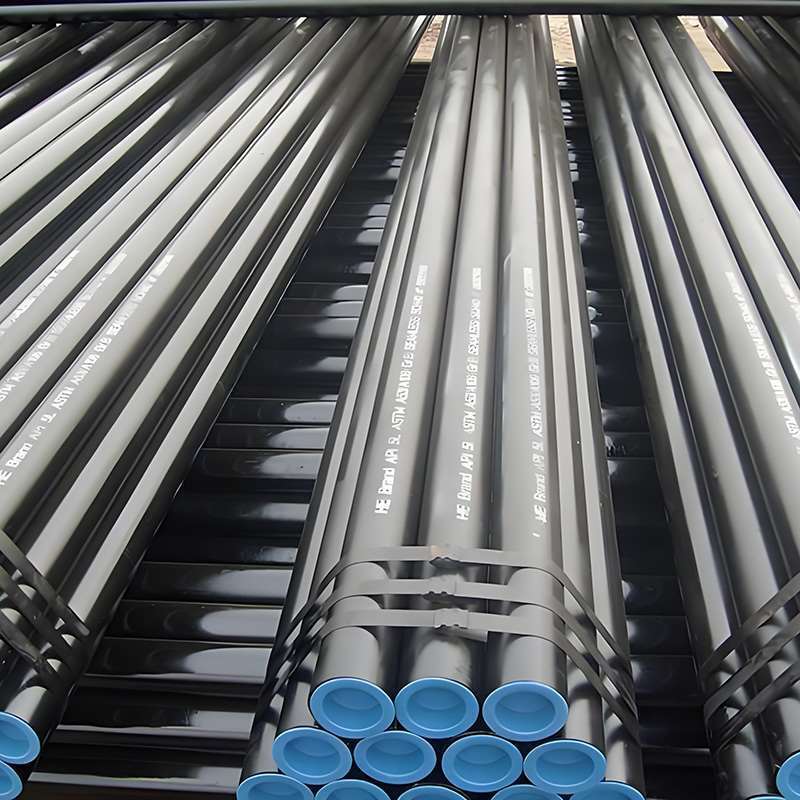
Export pipes should be packaged with waterproofing, shrink wrapping, rust-preventive oil, and steel strapping.
Third-party inspection (e.g., SGS, BV) may be selected to ensure transport safety.
Q7: Is X52 suitable for high-pressure or long-distance pipelines?
A:
X52 falls within the medium-to-high strength grade range, making it suitable for most oil and gas transmission projects.
For ultra-high pressure or special environments, higher steel grades such as X60, X65, or X70 may be selected.
 WeChat
 Scan wechat
WhatsApp:+86 15383177997
E-mail:wr@insulatedpipeline.com
E-mail:
Address:Development Zone, Cangzhou, Hebei Province, China
技术支持:沧州利畅网络
.jpg)
.jpg)