EMAIL:
wr@insulatedpipeline.com


Published:2026-08-13 | Last Updated: 2026-08-13 Views: 51
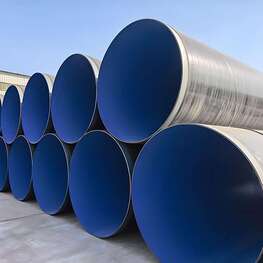
Three-layer polyethylene anticorrosive steel pipe is a high-performance corrosion-resistant pipe, utilizing three layers of protection: epoxy powder primer, adhesive, and a high-density polyethylene outer layer.
API 5L X52 designation indicates that the pipe is a low-alloy, high-strength carbon steel pipe with a yield strength of approximately 52 ksi (approximately 360 MPa). This designation combines high strength with excellent toughness, making it suitable for medium- and high-pressure transmission systems.
This pipe forms a solid anticorrosive coating on the steel pipe surface, offering corrosion resistance, wear resistance, high temperature resistance, and a long service life. It is widely used in pipeline projects in the oil, natural gas, water supply, and chemical industries.
.jpg "3PE Anti-Corrosion Steel Pipe API 5L X52")
| Parameter Name | Typical Value / Description |
|---|---|
| Standard | API 5L / ISO 21809-1 |
| Steel Grade | X52 |
| Outer Diameter Range | 60 mm – 1420 mm |
| Wall Thickness Range | 3.0 mm – 25 mm |
| Nominal Pressure | 1.6 MPa – 12.5 MPa (depending on wall thickness and diameter) |
| Yield Strength | ≥ 360 MPa |
| Tensile Strength | 450 – 620 MPa |
| Elongation | ≥ 20% |
| Anti-corrosion Structure | 3PE (Fusion-bonded epoxy primer + Adhesive layer + High-density polyethylene outer layer) |
| Primer Thickness | 150 – 250 μm |
| Adhesive Layer Thickness | 100 – 150 μm |
| PE Outer Layer Thickness | 2.0 – 3.0 mm |
| Operating Temperature Range | -40°C ~ 80°C |
| Applicable Medium | Oil, Natural Gas, Municipal Water Supply, Chemical Fluids |
| Connection Type | Butt Weld, Socket Weld, Flanged Connection |
| Testing Standards | Hydrostatic Test, Coating Adhesion Test, Bending Test, Impact Test |
| Steel Grade | Yield Strength σy (MPa) | Tensile Strength σb (MPa) | Elongation A% | Typical Application |
|---|---|---|---|---|
| X42 | ≥ 290 | 415 – 540 | ≥ 24 | Medium and low-pressure oil and gas pipelines |
| X46 | ≥ 320 | 450 – 580 | ≥ 22 | Medium-pressure oil and gas pipelines |
| X52 | ≥ 360 | 450 – 620 | ≥ 20 | Medium and high-pressure oil and gas pipelines |
| X56 | ≥ 390 | 500 – 630 | ≥ 18 | High-pressure oil and gas pipelines |
| X60 | ≥ 414 | 515 – 660 | ≥ 18 | High-pressure oil, gas, and chemical pipelines |
.jpg "3PE Anti-Corrosion Steel Pipe API 5L X52")
| Application Field | Selection Key Points | Recommended Pipe Specification & Coating Requirement |
|---|---|---|
| Oil Pipeline | Needs to withstand medium to high pressure oil transmission; long-distance pipeline; requires durable anti-corrosion performance and leak prevention. | Grade X52, DN 100–1219 mm, wall thickness 6–25 mm, 3PE coating |
| Gas Pipeline | Used for natural gas and industrial gas transport; high requirements for pressure resistance and toughness; needs wear-resistant and anti-corrosion coating. | Grade X52, DN 60–1219 mm, wall thickness 4–22 mm, 3PE coating |
| Municipal Water Supply Pipeline | Low-pressure water transport; requires corrosion resistance and aging resistance; commonly used for buried installation. | Grade X52, DN 60–500 mm, wall thickness 3–12 mm, 3PE coating |
| Petrochemical and Chemical Pipeline | Transports corrosive liquids or gases; requires coating with strong chemical resistance. | Grade X52, DN 60–800 mm, wall thickness 5–20 mm, 3PE coating |
| Long-Distance Transmission Line (Complex Terrain) | Large diameter and high-pressure pipeline; requires long coating life and strong anti-deformation capacity in complex installation conditions. | Grade X52, DN 400–1420 mm, wall thickness 10–25 mm, 3PE coating, enhanced compression resistance |
| Low-Temperature Liquid Transport (Above -40°C) | Requires excellent low-temperature toughness and coating flexibility to prevent cracking. | Grade X52, 3PE coating, moderate wall thickness to ensure strength and ductility |
Selection Guidelines
1. Select the steel grade based on the medium being transported: X52 is recommended for medium- and high-pressure oil and gas transmission, while lower grades are recommended for low-pressure water supply or short-distance pipelines.
2. Select the wall thickness based on the operating pressure and pipe diameter: For larger diameters and higher pressures, the wall thickness should be increased; for small diameters and low pressures, thinner-walled pipes can be used.
3. Select the anti-corrosion coating thickness based on the environment: For direct underground burial, humid environments, or acidic or alkaline environments, the PE outer layer should be 2–3 mm thick, and the primer thickness should be 150–250 μm.
4. Consider the construction method: For long-distance pipelines, consideration must be given to welding, bend radius, and the integrity of the anti-corrosion protection.
5. Low temperatures or cold environments: Steel toughness is crucial; X52 is selected to ensure resistance to cracking under low-temperature impact.
.jpg "3PE Anti-Corrosion Steel Pipe API 5L X52")
A: Pipe wall thickness depends on the pressure of the conveying medium, pipe diameter, and pipe length.
Generally speaking, larger pipe diameters or higher conveying pressures require increased wall thickness. During design, the allowable working pressure of the steel pipe and the engineering safety factor should be calculated, and the appropriate wall thickness should be selected in conjunction with the steel grade to ensure the pipe does not experience plastic deformation or rupture during long-term operation.
A: Steel grade determines the yield strength and toughness of the pipe. X52 steel grade is suitable for medium- and high-pressure transmission systems, offering strong pressure-bearing capacity and excellent low-temperature toughness.
For low-pressure water supply or short-distance pipelines, lower steel grades (such as X42 and X46) can be selected to save costs. Higher steel grades increase pipe price and installation complexity.
A: 3PE anticorrosive pipe consists of an epoxy powder primer, a binder, and a polyethylene outer layer. For direct underground burial or highly corrosive environments, a PE outer layer thickness of 2–3 mm, a primer of 150–250 μm, and an adhesive of 100–150 μm is recommended.
The thicker the anti-corrosion coating, the stronger the corrosion resistance, but also increases the difficulty and cost of installation. FBE or single-layer epoxy anti-corrosion coatings are suitable for pipelines with low pressure and low corrosion.
A: X52 steel has excellent low-temperature toughness and can operate safely in environments above -40°C. The 3PE anti-corrosion coating will not crack at low temperatures and can maintain its corrosion resistance for a long time even in high-temperature environments (≤ 80°C).
For extreme temperatures, the appropriate steel grade and anti-corrosion solution should be selected based on the specific medium.
A: The construction method can affect the integrity of the anti-corrosion coating. Butt welding is suitable for long-distance installations, while flange or socket welding is suitable for short-distance or commissioning sections. After construction, the integrity of the anti-corrosion coating should be inspected to ensure continuous corrosion protection at welds, elbows, and other locations to prevent corrosion pits.
A: 3PE anti-corrosion pipes typically have a service life of 30–50 years in direct underground burial environments. The actual service life is affected by soil corrosivity, construction quality, and media properties.
Regular inspections are recommended every 3–5 years, focusing on the integrity of the anti-corrosion coating at elbows, welds, and joints.
A: The transport length and bend radius of the pipeline should be selected based on the diameter and wall thickness of the steel pipe to avoid deformation during transportation or lifting. When laying pipes in complex terrain or across rivers, the pipeline length, support, and construction plan should be designed in advance to ensure that the anti-corrosion coating is not damaged.
 WeChat
 Scan wechat
WhatsApp:+86 15383177997
E-mail:wr@insulatedpipeline.com
E-mail:
Address:Development Zone, Cangzhou, Hebei Province, China
技术支持:沧州利畅网络
.jpg)