EMAIL:
wr@insulatedpipeline.com


Published:2026-08-13 | Last Updated: 2026-08-13 Views: 75
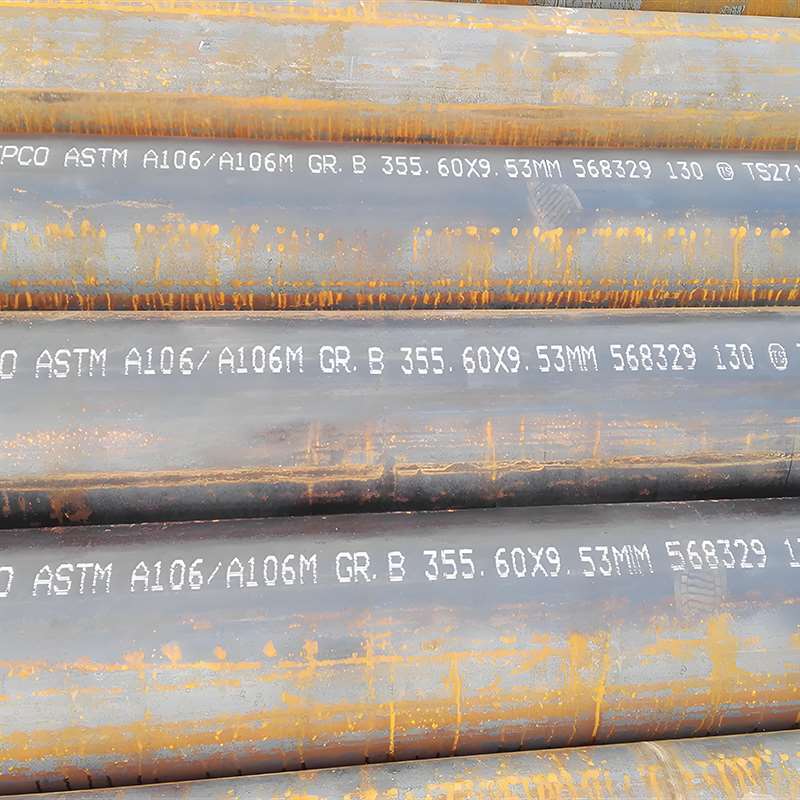
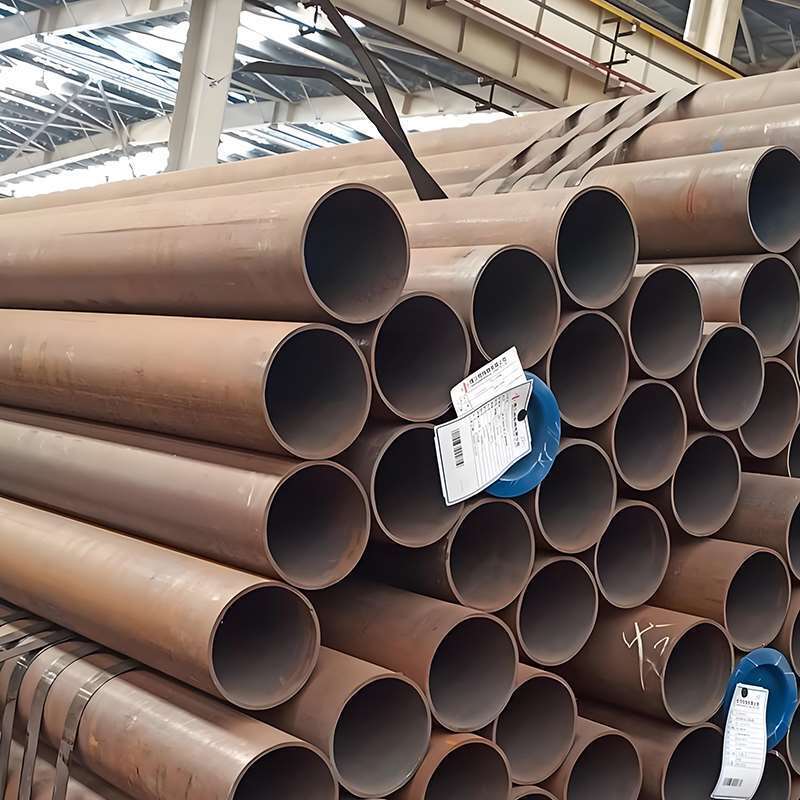
ASTM A106 Grade B seamless steel pipe is ideal for high-temperature and high-pressure piping. Adhering to the ASTM A106 standard, Grade B ensures reliable strength and corrosion resistance. Widely used in oil, gas, water transportation, and industrial piping systems, it offers stable performance and safety.
| Parameter | Description |
|---|---|
| Standard | ASTM A106 |
| Grade | Grade B |
| Material | Carbon Steel |
| Pipe Type | Seamless Steel Pipe |
| Nominal Size (NPS) | 1/2" – 48" (common sizes) |
| Outer Diameter (OD) | Varies according to nominal size, e.g., 1/2" corresponds to 21.3mm |
| Wall Thickness | SCH 40, SCH 80, or customizable |
| Applicable Pressure | Medium to High Pressure |
| Operating Temperature | Up to approximately 450°C |
| Typical Applications | Oil, gas, and water pipelines; boilers; industrial systems |
| Surface Treatment | Pickled, oiled, or black |
| Pipe Length | 6 meters, 12 meters, or customized |
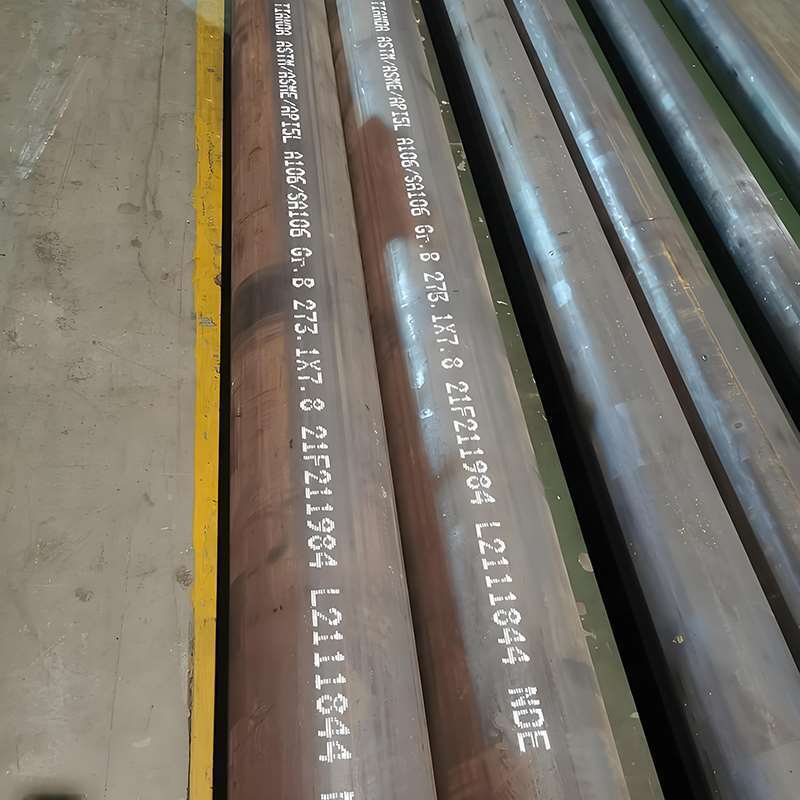
The ASTM A106 standard primarily includes three grades: Grade A, Grade B, and Grade C.
| Grade | Carbon Content | Strength Characteristics | Applicable Temperature | Common Wall Thickness (mm) | Applicable Pressure (MPa) | Typical Applications |
|---|---|---|---|---|---|---|
| Grade A | 0.25% | Lower strength | ≤ 400°C | SCH 40 / SCH 80 | Medium to low pressure | General low-pressure water and steam pipelines |
| Grade B | 0.30% | Moderate strength | ≤ 450°C | SCH 40 / SCH 80 | Medium to high pressure | Oil, gas, water, and industrial pipelines |
| Grade C | 0.35% | Higher strength | ≤ 450°C | SCH 40 / SCH 80 | High pressure | High-temperature, high-pressure oil and gas main pipelines |
Description:
Wall Thickness (Schedule): SCH 40 and SCH 80 are commonly used, but can be customized based on project requirements.
Applicable Pressure: The higher the grade, the higher the applicable pressure. Grade C is primarily used in high-pressure environments.
Typical Applications: Grade B is the most commonly used grade, offering high cost-effectiveness and wide application.
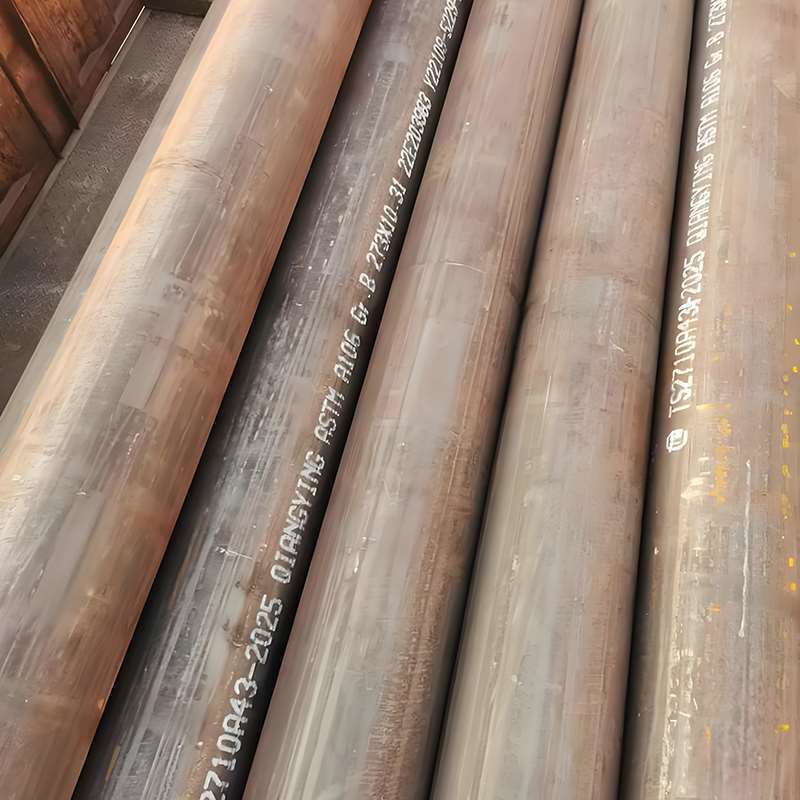
Use high-quality carbon steel round bars or billets with strictly controlled chemical composition to ensure the pipe has stable strength and toughness.
Selection reference: When high strength requirements are required or when transporting high-temperature media, it is necessary to confirm that the supplier uses raw materials that comply with ASTM A106 Grade B.
The steel billet is heated to a high temperature (approximately 1100°C) and then hot rolled or pierced to form the pipe. The weld-free structure ensures the pipe's pressure-bearing capacity.
Selection reference: The seamless structure is suitable for high-pressure or high-temperature pipelines, avoiding the potential weaknesses of welds.
The pipe is annealed or normalized to eliminate internal stress, improve toughness and pressure resistance, and at the same time, it is passed through a straightening machine to ensure straightness.
Selection reference: For projects with high bending or precision requirements, pipes that have undergone strict straightening and heat treatment should be selected.
The surface of the pipe can be treated with pickling, oiling or black rust-proofing to facilitate transportation and installation.
Selection reference: When transporting media such as water, oil, and gas, the appropriate surface treatment method can be selected according to the corrosive environment.
The pipe is tested for outer diameter, wall thickness, and mechanical properties, and can undergo non-destructive testing (ultrasonic or X-ray) to ensure safety and reliability.
Selection reference: When the project has high requirements for pressure, temperature or safety, it is recommended to select pipes that have undergone strict non-destructive testing.
Qualified pipes are neatly packaged and the length and quantity can be customized according to project requirements to ensure transportation safety.
Selection reference: When selecting the project, the pipe length, wall thickness and quantity can be confirmed in advance to accurately match the pipeline design.
| Nominal Size (NPS) | Outer Diameter (mm) | Wall Thickness (mm) | Schedule | Applicable Pressure (MPa) | Operating Temperature (°C) | Typical Applications |
|---|---|---|---|---|---|---|
| 1/2" | 21.3 | 2.77 | SCH 40 | ≤4.0 | ≤450 | Medium-pressure water, gas pipe |
| 1/2" | 21.3 | 3.91 | SCH 80 | ≤6.0 | ≤450 | High-pressure gas pipe |
| 3/4" | 26.7 | 2.87 | SCH 40 | ≤4.0 | ≤450 | Medium-pressure water, natural gas pipe |
| 3/4" | 26.7 | 3.91 | SCH 80 | ≤6.0 | ≤450 | High-pressure gas pipeline |
| 1" | 33.4 | 3.38 | SCH 40 | ≤4.0 | ≤450 | City water supply, industrial pipeline |
| 1" | 33.4 | 4.55 | SCH 80 | ≤6.0 | ≤450 | High-pressure oil & gas transport |
| 2" | 60.3 | 3.91 | SCH 40 | ≤4.0 | ≤450 | Medium-pressure water, gas pipe |
| 2" | 60.3 | 6.02 | SCH 80 | ≤6.0 | ≤450 | High-pressure oil & gas transport |
| 4" | 114.3 | 6.02 | SCH 40 | ≤4.0 | ≤450 | City water supply, natural gas |
| 4" | 114.3 | 9.27 | SCH 80 | ≤6.0 | ≤450 | High-pressure oil & gas pipeline |
| 6" | 168.3 | 7.11 | SCH 40 | ≤4.0 | ≤450 | Medium-pressure fluid transport |
| 6" | 168.3 | 11.13 | SCH 80 | ≤6.0 | ≤450 | High-pressure main pipeline |
| 8" | 219.1 | 8.18 | SCH 40 | ≤4.0 | ≤450 | Medium-pressure industrial pipeline |
| 8" | 219.1 | 12.70 | SCH 80 | ≤6.0 | ≤450 | High-pressure oil transport |
| 10" | 273.0 | 9.27 | SCH 40 | ≤4.0 | ≤450 | Medium-pressure water transport |
| 10" | 273.0 | 14.27 | SCH 80 | ≤6.0 | ≤450 | High-pressure gas pipeline |
| 12" | 323.9 | 9.53 | SCH 40 | ≤4.0 | ≤450 | Medium-pressure industrial pipeline |
| 12" | 323.9 | 15.09 | SCH 80 | ≤6.0 | ≤450 | High-pressure oil & gas pipeline |
| Test Item | ASTM A106 Standard Requirement | Typical Test Data |
|---|---|---|
| Chemical Composition: Carbon (C) | ≤0.30% | 0.28% |
| Chemical Composition: Manganese (Mn) | 0.29–1.06% | 0.95% |
| Chemical Composition: Sulfur (S) | ≤0.035% | 0.025% |
| Chemical Composition: Phosphorus (P) | ≤0.035% | 0.020% |
| Yield Strength (MPa) | ≥205 | 230 |
| Tensile Strength (MPa) | 415–550 | 480 |
| Elongation (%) | ≥30 | 32 |
| Hydrostatic Test | The pipe shall withstand test pressure without rupture | Pass |
| Squareness / Straightness | Allowable deviation ≤0.5% | Pass |
| Ultrasonic Testing (UT) | Detect welding defects and internal cracks | Pass |
| Outer Diameter Deviation (mm) | ±1% | ±0.8% |
| Wall Thickness Deviation (mm) | ±12.5% | ±10% |
| Hardness (HB) | ≤187 | 175 |
Note:
The "Typical Test Data Examples" in the table represent common factory test values and are for reference only. Values may vary slightly between manufacturers.
Mechanical properties such as yield strength, tensile strength, and elongation are key selection criteria, directly impacting the pipe's pressure-bearing capacity and applicable temperature range.
Ultrasonic testing or hydrostatic testing ensures the pipe is free of cracks, pores, or defects, ensuring project safety.
 WeChat
 Scan wechat
WhatsApp:+86 15383177997
E-mail:wr@insulatedpipeline.com
E-mail:
Address:Development Zone, Cangzhou, Hebei Province, China
技术支持:沧州利畅网络
.jpg)
.jpg)