EMAIL:
wr@insulatedpipeline.com


Published:2025-08-25 | Last Updated: 2026-04-22 Views: 198
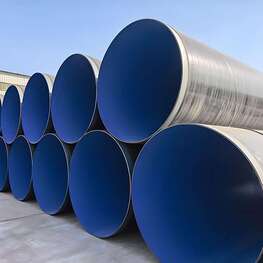
Epoxy Coated Carbon Steel Pipe is a widely used anti-corrosion piping solution designed to protect carbon steel from rust, chemical attack, and moisture across a wide range of industrial applications. It typically utilizes epoxy coating technology to create a durable protective barrier on the pipe surface, ensuring long service life and stable performance in demanding environments such as water supply systems, oil and gas transmission, and industrial piping networks.
In certain applications, epoxy lined steel pipe is used for internal corrosion protection, particularly in fluid transport systems where resistance to internal media is essential. Compared with standard steel pipes, epoxy coated carbon steel pipe offers significantly enhanced durability, lower maintenance requirements, and improved overall reliability in long-distance pipeline projects.
.jpg "Epoxy Coated Carbon Steel Pipe")
| No. | Parameter | Description / Unit | Common Range |
|---|---|---|---|
| 1 | Outside Diameter (OD) | Pipe outside diameter, mm | 21.3 – 1219 |
| 2 | Wall Thickness (WT) | Steel wall thickness, mm | 2.0 – 25 |
| 3 | Nominal Diameter (DN) | Standard pipe size, mm | DN15 – DN1200 |
| 4 | Length | Single pipe length, m | 6 – 12 (customizable to 18) |
| 5 | Material | Carbon steel grade | Q235, Q345, API 5L B/X52/X60 |
| 6 | Coating Type | Epoxy coating | Single FBE / Dual FBE + PE or PP |
| 7 | Coating Thickness | μm | 200 – 500 |
| 8 | Coating Adhesion | MPa | ≥ 15 |
| 9 | Corrosion Protection Level | Standard | ISO 21809 / GB/T 25119 |
| 10 | Operating Pressure | MPa | 0.6 – 10 |
| 11 | Design Temperature | °C | –20 – 80 (single FBE); –40 – 120 (dual layer) |
| 12 | Medium Type | Water, potable water, petroleum, natural gas, chemical liquids | |
| 13 | Bending Performance | Allowable bending radius | 20 × OD (mild bending) |
| 14 | Corrosion Resistance | Salt spray test | ≥ 500 h (no red rust) |
| 15 | Surface Roughness | μm | Ra 50 – 75 (after blasting) |
| 16 | Connection Method | Welded, flanged, socket joint | |
| 17 | Internal & External Coating | Both sides coated / single side coated (as required) | |
| 18 | Transport Packaging | Bundle, wooden frame, or loose | |
| 19 | Weight | Single pipe weight, kg | 10 – 2500 (depending on length & OD) |
| 20 | Standard | Applicable standard | GB/T 9711, API 5L, ISO 21809 |
The epoxy coating forms a dense, continuous protective film on the steel pipe surface.
Functions:
Isolates moisture, oxygen, and salt.
Prevents corrosive media from penetrating the steel surface.
Epoxy powder itself possesses:
Acid and alkali resistance
Salt spray resistance
Chemical media resistance
Even in corrosive environments, it is not prone to chemical reactions.
The epoxy coating forms a high-strength bond with the steel pipe surface:
It is not easily peeled off
It is not easily blistered
It is not easily detached
Ensuring long-term protective effects.
In some projects (especially buried pipelines):
Epoxy coating + cathodic protection system are used together.
Functions:
The coating is responsible for "isolation".
Cathode protection is responsible for "preventing the spread of localized corrosion."
i. Excellent Corrosion Resistance
The high-density coating on the surface of plastic coated composite steel pipe effectively blocks water, oxygen, and various chemical media.
This structure prevents internal and external corrosion, ensuring long-term stable operation.
ii. Long Service Life
Epoxy coated steel pipe offers excellent adhesion and wear resistance.
The coating remains strong even under impact and abrasive conditions, reducing maintenance and replacement frequency.
iii. Wide Applications
FBE coated carbon steel pipe is suitable for a variety of environments, including water treatment, oil and gas transportation, the chemical industry, and underground pipelines.
This wide range of applications makes it an excellent choice for engineering projects.
iv. Economical and Efficient
Coated carbon steel pipe reduces corrosion-related maintenance costs.
It also extends the overall service life of the pipe, saving significant investment for projects.
v. Environmentally Friendly and Safe
The coating material is non-toxic and does not affect the quality of the transported media, meeting modern environmental standards.
| Type | Structure | Corrosion Protection Area | Process Characteristics | Main Applications |
|---|---|---|---|---|
| Single-layer FBE coated steel pipe | Single-layer fusion bonded epoxy powder coating | External corrosion protection | High-temperature electrostatic spraying and curing | Oil, gas, and water pipelines |
| Double-layer FBE steel pipe | FBE + modified FBE layer | Internal / external corrosion protection | Dual-layer reinforced structure | Highly corrosive environments pipelines |
| Internal epoxy powder coated steel pipe | FBE coating on inner wall | Internal corrosion protection | Internal spraying + high-temperature curing | Water supply, wastewater, chemical fluids |
| Internal and external epoxy powder coated steel pipe | FBE coating on both inner and outer surfaces | Internal and external corrosion protection | Double-sided coating process | Chemical industry, highly corrosive transport systems |
| Heavy-duty FBE coated steel pipe | Thickened FBE coating (300–500 μm) | External corrosion protection | Increased coating thickness for enhanced protection | Long-distance pipelines, buried pipeline projects |
| Modified epoxy powder coated steel pipe | Modified FBE material | Internal / external corrosion protection | Added wear-resistant and heat-resistant additives | High-temperature and high-wear media applications |
Applicable Scenarios:
Tap water delivery pipelines
Urban water supply networks
Sewage treatment systems
Why they are suitable:
Epoxy coating prevents water corrosion of steel pipes
Smooth inner wall, less prone to scaling
Relatively safe for drinking water (when meeting relevant standards)
Applicable Scenarios:
Chemical liquid transportation
Plant circulating water systems
Cooling water systems
Functions:
Resistant to corrosion from weak acids, weak alkalis, and industrial water
Extends pipeline service life
Note:
Not suitable for highly corrosive media (requires special lining)
Conclusion: Suitable for moderately corrosive environments
Applicable Scenarios:
Oilfield water injection pipelines
Non-main trunk transportation systems
Auxiliary transportation pipelines
Advantages:
Lower cost than 3PE
Easy construction
Stable corrosion resistance
Conclusion: Suitable for medium and low pressure auxiliary systems
Applicable Scenarios:
Industrial park pipeline networks
Small-scale transmission and distribution pipelines
Underground building pipelines
Advantages:
Moisture-proof, resistant to soil corrosion
Much longer lifespan than ordinary steel pipes
Conclusion: Suitable for general buried projects
High-pressure long-distance oil and gas trunk lines
Strongly corrosive chemical media (strong acids/alkalis)
Submarine pipelines or extreme environments
For these scenarios, it is recommended to use:
3PE anti-corrosion steel pipes
or special composite anti-corrosion structures
| Inspection Item | Test Method | Standard Requirement | Purpose / Function |
|---|---|---|---|
| Appearance Quality | Visual inspection | Uniform coating, no bubbles, no cracks, no exposed steel | Ensure surface quality and construction appearance |
| Coating Thickness | Magnetic thickness gauge | Internal coating: 250–500 μm; External coating: 350–1000 μm | Ensure effective corrosion protection performance |
| Adhesion Test | Cross-cut test / Pull-off test | ≥ Grade 1 or meet standard requirements | Prevent coating detachment and ensure service life |
| Impact Strength | Impact test (specified energy) | No cracking, no peeling | Evaluate mechanical damage resistance |
| Holiday Detection | Spark holiday detector | No breakthrough points (no pinholes) | Detect coating defects such as pinholes |
| Corrosion Resistance Test | Salt spray / Acid-alkali / Immersion test | No blistering, no rust propagation | Verify long-term corrosion resistance |
| Bending Performance | Bending test | No cracking, no peeling | Evaluate installation adaptability |
| Hydrostatic Pressure Test | Water pressure test / Burst test | No leakage, meets design pressure requirements | Ensure pipe body safety |
Epoxy lined steel pipe is mainly used for internal corrosion protection in water transportation and light chemical fluid systems. It is suitable for projects where the main concern is preventing rust and scaling inside the pipe, especially in drinking water and industrial water pipelines.
Epoxy lined carbon steel pipe is commonly used in potable water systems because the internal epoxy lining creates a smooth, non-toxic, and corrosion-resistant surface. It helps maintain water quality and reduces bacterial growth inside the pipeline.
Epoxy coated pipe refers to steel pipes protected with an external or internal epoxy layer, providing resistance against moisture, soil corrosion, and mild chemicals. It is widely used in municipal and industrial pipeline projects where moderate corrosion protection is required.
Epoxy coated carbon steel pipe is suitable for projects requiring durable corrosion protection in water supply, oilfield auxiliary pipelines, and industrial fluid transport. It is a cost-effective solution compared to multi-layer coatings like 3PE in moderate environments.
When selecting epoxy coated pipe suppliers or an epoxy coated steel pipe supplier, you should check factory certification, coating inspection reports, production standards (such as ISO or API), and whether they can provide third-party testing like SGS or BV for quality assurance.
A professional epoxy coated steel pipe manufacturer usually provides better quality control, stable coating thickness, and stricter testing standards compared to traders. Direct manufacturers also offer more customized sizes, coating types, and competitive pricing for engineering projects.
 WeChat
 Scan wechat
WhatsApp:+86 15383177997
E-mail:wr@insulatedpipeline.com
E-mail:
Address:Development Zone, Cangzhou, Hebei Province, China
技术支持:沧州利畅网络
.jpg)
.jpg)