EMAIL:
wr@insulatedpipeline.com



Number of visits:4 seconds Update time:2026-07-21
When faced with long-distance water supply, natural gas transmission, or industrial wastewater discharge projects, buyers are primarily concerned with two things when selecting pipe materials: first, they want to avoid rust and leaks that require constant digging and repairs; second, they hope to purchase durable, cost-effective pipes that fit within their budget.
This guide avoids obscure academic formulas and uses plain, down-to-earth language to help you understand the core value of internally and externally epoxy-coated steel pipes (commonly known in the industry as TPEP-coated steel pipes) at a glance, so you can avoid pitfalls during the procurement process.
Traditional corrosion-resistant pipes either focus solely on protecting the outer wall, neglecting erosion on the inner wall, or are coated with only a thin layer of paint—which gets scraped through by sand and gravel and begins to rust within a few years of being buried in the ground.
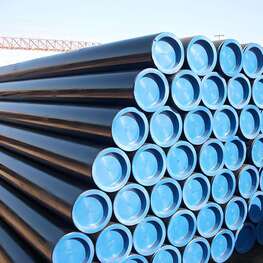
Epoxy-coated steel pipes (internal and external) are currently the “high-end, custom-made” solution for long-lasting pipeline networks. Their key feature lies in comprehensive protection of both the interior and exterior:
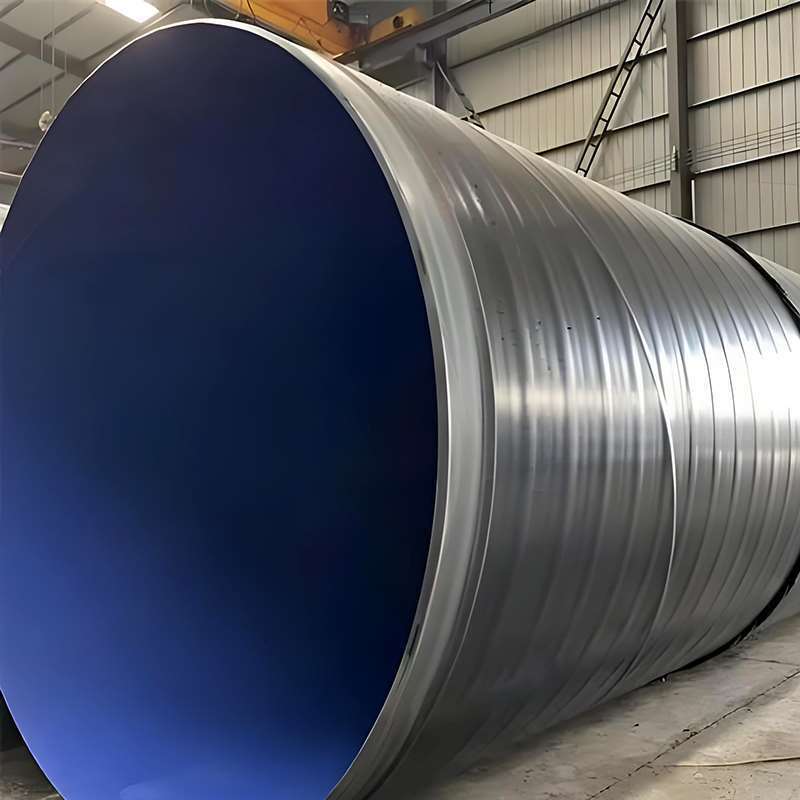
Inner Wall: Melted epoxy powder (FBE) is applied. This coating is sintered onto the inner wall of the steel pipe at high temperatures, and once cured, its surface becomes as smooth as ceramic. Not only is it non-toxic, but it is also inherently resistant to the constant erosion caused by day-and-night water flow.
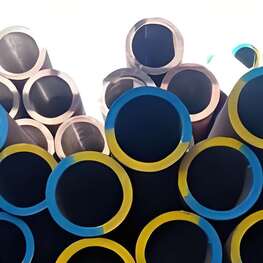
Outer Wall: Features the classic “3PE anti-corrosion” structure. This consists of three layers—an epoxy powder primer, an adhesive, and a high-density polyethylene (HDPE) hard shell—firmly bonded together. This thick plastic outer shell is specifically designed to withstand underground moisture, acidic or alkaline soil, and rough handling during construction.
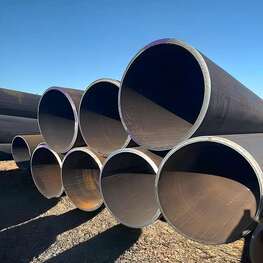
In large-diameter water or gas transmission trunk lines, this process typically uses spiral-welded steel pipes as the base pipe. Spiral-welded steel pipes inherently possess high tensile strength and excellent pressure-bearing capacity. Combined with dual internal and external corrosion protection—and the fact that the pipe body itself never comes into contact with water or soil—this is the secret behind their ability to remain intact for 50 years underground.
When purchasing corrosion-resistant steel pipes, you shouldn’t just look at the “initial cost” of the pipes; you must also calculate the “overall costs” over the next few decades of operation. Choosing TPEP steel pipes actually helps your project save in three major ways:
1. Ultra-Low Resistance Saves on Electricity Bills
Many people don’t realize that water flowing through pipes encounters friction. Traditional pipes have rough interiors and can even accumulate scale or moss, forcing water pumps to work harder to push the water through—resulting in staggering electricity bills. In contrast, the smooth epoxy powder lining has a low hydraulic resistance coefficient, allowing pipes of the same diameter to transport more water. Over the years, this saves operators a huge amount on electricity costs.
2. Save on “maintenance costs” from frequent road excavation and repairs
Ordinary corrosion-resistant pipes may start leaking due to internal rust after 10 to 20 years of use. At that point, the pipes must be excavated from several meters underground for repairs, resulting in incalculable costs for road excavation, labor, and losses from water and gas service interruptions. The design life of this new type of composite pipe generally exceeds 50 years.
3. Reduced labor costs from construction rework
Conventional corrosion-resistant pipes are particularly delicate during transportation and hoisting; even a small chip in the coating requires on-site work stoppage for touch-up painting. In contrast, the outer layer of this pipe is made of hard, high-density plastic that is highly wear-resistant. Construction crews do not need to proceed with extreme caution when working in trenches or backfilling, which accelerates the construction schedule.
To help you make an informed decision, we’ve provided a side-by-side comparison of internally and externally epoxy-coated steel pipes with traditional pipe materials commonly found on the market:
| Comparison Aspect | Traditional Single-Layer Anti-Corrosion Steel Pipe / Cement-Lined Pipe | TPEP Coated Steel Pipe (Using Spiral Steel Pipes as the Base Pipe) | Buyer Decision Reference |
|---|---|---|---|
| Internal Water Flow Resistance | The inner surface is relatively rough, making it prone to scaling and increasing water flow resistance. | The inner surface is as smooth as ceramic, preventing scaling and algae growth. | Significantly reduces pumping energy consumption during long-term operation. |
| External Impact Resistance | The anti-corrosion layer is thin and easily damaged by scratches during transportation, handling, and backfilling. | The outer layer contains a 2–3 mm high-density polyethylene protective shell with excellent resistance to impact and abrasion. | Reduces on-site coating repair work and lowers installation difficulty. |
| Water Quality Safety | May release rust particles and cause secondary contamination of transported water. | Meets national drinking water hygiene requirements and is non-toxic and odorless. | The preferred solution for municipal water supply and water diversion projects. |
| Overall Service Life | Large-scale corrosion problems may occur after approximately 15–20 years of service. | More than 50 years under proper operating conditions. | Ideal for critical infrastructure projects where frequent excavation and maintenance are unacceptable. |
Don’t blindly chase low prices; check the coating thickness: Some unscrupulous small manufacturers on the market intentionally apply very thin layers of polyethylene plastic on the outer surface or epoxy powder on the inner wall to engage in price wars. When purchasing, be sure to ask the manufacturer to provide a third-party test report and strictly verify the actual thickness of the inner and outer coatings in micrometers.
Pay Attention to the Details of the Uncoated Ends: Since on-site pipe welding generates temperatures in the hundreds of degrees, if the anti-corrosion coating is too close to the pipe ends, it will be directly scorched and destroyed. Reputable manufacturers intentionally leave 10–15 centimeters of the pipe ends uncoated before shipment to facilitate on-site welding by workers. After welding is complete, specialized joint-sealing materials are used to apply anti-corrosion protection to these areas.
Match the project’s pressure requirements: The anti-corrosion coating determines the service life of the pipe, while the thickness of the steel pipe—which serves as the core structure—determines the pressure the pipe can withstand. When purchasing, be sure to clearly inform the manufacturer of the project’s design pressure (e.g., 1.6 MPa or 2.5 MPa) to ensure the precise selection of the appropriate spiral steel pipe wall thickness.
 WeChat
 Scan wechat
WhatsApp:+86 15383177997
E-mail:wr@insulatedpipeline.com
E-mail:
Address:Development Zone, Cangzhou, Hebei Province, China
技术支持:沧州利畅网络