EMAIL:
wr@insulatedpipeline.com


Published:2025-09-04 | Last Updated: 2025-09-04 Views: 172
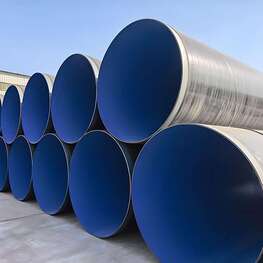
During the transportation of oil, natural gas, water, and chemical media, pipelines are exposed to humid, soil, electrochemical corrosion, and chemical erosion environments for long periods of time, causing metals to gradually rust and even perforate. In order to extend the service life of pipelines, ensure transportation safety, and reduce maintenance costs, it is necessary to apply anti-corrosion coatings to the surface of pipelines.
.jpg "Anti-corrosion Pipe Coating")
(1) Fusion-bonded Epoxy Powder Coating (FBE)
Process:
Steel pipes that have undergone sandblasting rust removal (Sa 2.5 grade) are heated to approximately 220°C, then coated with epoxy powder. The powder melts and cures at high temperatures to form a dense coating.
Features:
Excellent adhesion and corrosion resistance
Resistant to chemical corrosion and cathodic delamination
Temperature range generally -20°C to +80°C
Uniform coating thickness and high construction efficiency
Applications:
Oil and natural gas long-distance pipelines
Drinking water transmission pipelines
External corrosion protection for highly corrosive industrial pipelines
(2) Three-layer polyethylene coating (3PE)
Process:
First layer: Spray epoxy powder (FBE) as a primer to enhance adhesion to the steel pipe
Second layer: Apply special adhesive (AD)
Third layer: Extruded high-density polyethylene (PE) protective layer for mechanical protection
Features:
Excellent corrosion resistance and mechanical protection performance
Impact-resistant, wear-resistant, and resistant to humid heat
Long service life, up to 30 years or more
Strong construction adaptability, suitable for large-diameter pipelines
Applications:
Buried oil and gas long-distance transmission pipelines
Water transmission pipelines in highly corrosive soil environments
(3) Double-layer polyethylene coating (2PE)
Process:
First layer: Spray epoxy powder or liquid epoxy as the base layer
Second layer: Extruded polyethylene protective layer
(Compared to 3PE, the adhesive layer is omitted)
Features:
Simple process, lower cost
Good corrosion resistance, but slightly lower peel resistance than 3PE
High mechanical strength and impact resistance
Applications:
Medium- and short-distance water and oil pipelines
Buried pipelines in general corrosion environments
(4) Polyurethane coating
Process:
Apply two-component or single-component polyurethane materials to the pipe surface via spraying, brushing, or other methods to form a highly flexible coating.
Features:
Excellent flexibility, wear resistance, and impact resistance
Superior waterproof performance, adaptable to structural deformation
Good adhesion to various substrates such as metal and concrete
Applications:
Marine engineering pipelines
Chemical storage tanks and piping
Pipeline outer walls in high-wear conditions
(5) Epoxy coal tar coating
Process:
Mix epoxy resin with coal tar and fillers, add a curing agent, and apply to the pipe surface to form a thick film coating.
Features:
Good water resistance, resistant to soil corrosion
Low cost, simple construction
Poor environmental performance, use restricted in some areas
Applications:
Buried water supply pipes
General industrial water pipelines
Temporary or economical anti-corrosion projects
| Coating Type | Process | Corrosion Resistance | Mechanical Properties | Operating Temperature | Typical Applications |
|---|---|---|---|---|---|
| FBE (Fusion-Bonded Epoxy) | Pipe blasting → pre-heating → epoxy powder spraying → curing | ★★★★ | ★★★ | -20 °C to +80 °C | Long-distance oil & gas pipelines, potable water pipelines |
| 3PE (Three-Layer Polyethylene) | FBE primer → adhesive layer → PE outer sheath | ★★★★★ | ★★★★★ | -20 °C to +60 °C | Buried long-distance oil & gas pipelines, highly corrosive environments |
| 2PE (Two-Layer Polyethylene) | Epoxy primer → PE outer layer | ★★★★ | ★★★★ | -20 °C to +60 °C | Medium- & short-distance water & oil pipelines |
| Polyurethane Coating | Spray or brush-applied polyurethane | ★★★★ | ★★★★★ | -30 °C to +90 °C | Offshore pipelines, chemical tanks, high-abrasion service |
| Coal-Tar Epoxy Coating | Epoxy + coal tar + fillers → application → curing | ★★★ | ★★★ | -10 °C to +60 °C | Buried water pipelines, general industrial lines, cost-effective corrosion protection |
| Standard Number | Country / Region | Coating Types Covered | Main Content |
|---|---|---|---|
| ISO 21809-2 | International | Single- and dual-layer FBE | Technical requirements for external anti-corrosion coatings on steel pipes, including thickness, adhesion, impact resistance, cathodic disbondment, etc. |
| AWWA C213 | USA | FBE | Anti-corrosion requirements for water-supply and industrial-water pipelines, covering thickness, adhesion, and corrosion resistance. |
| CSA Z245.20 | Canada | FBE | Oil- and gas-pipeline anti-corrosion standard specifying coating thickness, adhesion, impact resistance, cathodic disbondment, and other metrics. |
| GB/T 23257-2017 | China | Single- and dual-layer FBE | Technical standard for external anti-corrosion coatings on buried steel pipelines, stipulating coating thickness, adhesion, holiday detection, temperature resistance, etc. |
| SY/T 0315-2013 | China (Petroleum & Natural Gas Industry) | FBE | Standard for external anti-corrosion construction and inspection of petroleum and natural-gas pipelines, including application technology, testing methods, and acceptance criteria. |
| Test Item | Test Method | Primary Requirement | Purpose |
|---|---|---|---|
| Coating Thickness | Magnetic thickness gauge | Single-layer FBE: 300–500 µm; 3PE: approx. 500–700 µm | Ensure uniform anti-corrosion layer and achieve designed service life |
| Coating Appearance | Visual inspection | Smooth, no pinholes, bubbles, or detachment | Identify application defects |
| Adhesion Test | Pull-off or shear test | ≥ 9 N/mm² | Guarantee strong bond between coating and steel |
| Impact Test | Impact hammer | ≥ 3 J | Simulate transportation and construction impacts to prevent coating rupture |
| Cathodic Disbondment | Constant-temperature bath + current | ≤ 12 mm (65 °C, 48 h) | Evaluate coating resistance to disbondment under cathodic protection |
| Holiday (Pinhole) Detection | High-voltage spark tester | No holidays | Check coating integrity |
| Temperature Resistance | Heating test | –20 °C to +80 °C (FBE) | Ensure coating stability within operating temperature range |
| Chemical Corrosion Resistance | Immersion test | No blistering, delamination, or color change | Assess resistance to acids, alkalis, saltwater, and other corrosive media |
| Surface Preparation Grade | Visual per ISO 8501-1 | Sa 2.5 | Ensure adequate coating adhesion |
| Bend Test | Bending apparatus | No cracks or delamination | Verify coating flexibility and suitability for field handling |
(1) Select Based on the Conveyed Medium
1) Water or Neutral Liquids
Options: FBE, 2PE, 3PE, cement mortar lining
Features: Corrosion-resistant, hygienic, cost-effective
2) Petroleum, Natural Gas, or Oil Products
Options: FBE, 3PE, 2PE
Features: Chemical corrosion resistance, resistance to cathodic剥离
3) Acidic, alkaline, or chemical liquids
Options: Double-layer FBE, polyurethane, liquid epoxy
Features: Strong corrosion resistance, material selection depends on medium concentration
(2) Select based on environmental conditions
1) Buried long-distance pipelines
Recommended: 3PE, FBE double-layer
Reason: Impact resistance, moisture and heat resistance, good mechanical protection
2) Underwater or marine environments
Recommended: Polyurethane coating, 3PE
Reason: Abrasion resistance, seawater corrosion resistance, good flexibility
3) Outdoor pipelines or high-temperature environments
Recommended: FBE high-temperature type, liquid epoxy, polyurethane
Reason: High-temperature resistance, UV resistance, strong adhesion
 WeChat
 Scan wechat
WhatsApp:+86 15383177997
E-mail:wr@insulatedpipeline.com
E-mail:
Address:Development Zone, Cangzhou, Hebei Province, China
技术支持:沧州利畅网络
.jpg)
.jpg)