EMAIL:
wr@insulatedpipeline.com


Published:2025-09-01 | Last Updated: 2025-09-01 Views: 152
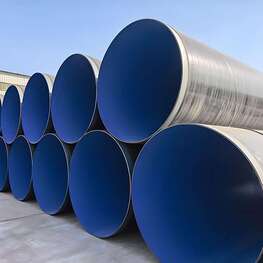
Fusion-bonded epoxy (FBE) coated pipes are a type of pipe product in which epoxy powder is applied to the surface of steel pipes and then cured at high temperatures to form a corrosion-resistant coating.
FBE pipes are widely used in the petroleum, natural gas, municipal water supply and drainage, and chemical industries due to their excellent corrosion resistance, wear resistance, and ease of installation.
The main features of FBE-coated pipes are a robust pipe body, a dense coating, and strong corrosion resistance, which significantly extend the service life of the pipes while reducing maintenance costs. The FBE coating uses a powder curing process, which is solvent-free, environmentally friendly, and safe, making it highly suitable for modern industrial and municipal pipeline projects.
.jpg "Fusion Bonded Epoxy (FBE) Coated Pipe")
| Standard | Country / Region | Primary Application | Core Content | Typical Technical Requirements |
|---|---|---|---|---|
| ISO 21809-2 | International | Buried or subsea pipelines | Single- or dual-layer FBE coating requirements | Thickness 300–500 µm; adhesion ≥ 9 N/mm²; operating temperature –20 °C to +80 °C |
| AWWA C213 | USA | Municipal water supply & industrial water | External FBE coating for steel pipes | Thickness 250–500 µm; suitable for potable-water conveyance |
| CSA Z245.20 | Canada | Oil & gas transmission pipelines | Coating performance & test methods | Impact strength ≥ 3 J; cathodic disbondment ≤ 12 mm |
| API RP 5L2 | USA | Oil & gas industry | External anti-corrosion guideline | Coating adhesion & impact-resistance requirements |
| GB/T 23257-2017 | China | Buried steel pipelines | Single- or dual-layer FBE technical requirements | Surface preparation Sa 2.5; thickness ≥ 300 µm |
| SY/T 0315-2013 | China | Oil & gas industry | FBE coating application & inspection | Uniform coating, free of pinholes & bubbles |
| Test Item | Test Method | Typical Requirement Range (Single FBE) | Purpose & Significance |
|---|---|---|---|
| Coating Thickness | Magnetic thickness gauge | 300–500 µm (some standards allow 250–600 µm) | Ensure uniform anti-corrosion layer and achieve design service life |
| Coating Appearance | Visual inspection | Smooth surface, no pinholes, no bubbles, no delamination | Directly identify application defects |
| Adhesion Test | Pull-off / shear test | ≥ 9 N/mm² at 23 °C | Verify strong bond between coating and steel |
| Impact Test | Impact hammer | ≥ 3 J without coating failure | Simulate handling and construction impacts |
| Cathodic Disbondment Test | Constant-temperature bath + current | ≤ 12 mm at 65 °C for 48 h | Evaluate resistance to disbondment under cathodic protection |
| Holiday (Pinhole) Detection | High-voltage spark tester | No holidays (test voltage 5 kV/mm) | Check coating integrity for pinholes |
| Temperature Resistance | Heating test | –20 °C to +80 °C (special formulations up to +100 °C) | Ensure coating stability within service temperature range |
| Chemical Resistance | Immersion in chemical media | No blistering, no delamination, no significant color change | Adapt to corrosive media such as acids, alkalis, and brines |
| Surface Preparation Grade | Visual per ISO 8501-1 | Sa 2.5 | Ensure strong adhesion between coating and substrate |
| Bend Test | Bending apparatus | No cracks, no delamination (bend radius 3 × pipe OD) | Verify coating flexibility |
(1) Storage requirements
Flat and dry site: Avoid muddy water, standing water, and chemical corrosive media to prevent the coating from becoming damp or contaminated.
Elevated storage: Use wooden blocks or rubber pads to isolate the pipes from the ground by ≥100 mm to prevent the coating from being compressed or scratched.
Layered stacking: Add soft pads between layers for isolation; stacking height should not exceed 3 layers (2 layers recommended for large diameters).
Avoid direct sunlight: Prolonged high temperatures can accelerate coating aging; use shade cloth or canopies as needed.
Maintain ventilation: Warehouses or storage yards should have good ventilation to prevent moisture buildup.
(2) Transportation requirements
Specialized support and securing: Use soft support pads and straps when loading onto vehicles to avoid direct contact with steel wires or chains.
Layered isolation: Insert wooden planks or rubber pads between upper and lower pipe layers to prevent rolling friction damage to the coating.
Gentle loading and unloading: Use slings or specialized lifting equipment; do not directly suspend pipes with steel wires.
Protective Sealing: Cover pipe openings with protective caps or plates to prevent debris or moisture from entering during transportation.
Avoid Severe Vibration: Choose smooth routes and avoid sudden braking or sharp turns during transportation.
(3) Special Notes
If coating damage is discovered during transportation or storage, mark the area immediately and repair before construction.
If stored for over 6 months, inspect the coating’s appearance and for pinholes, and confirm integrity before use.
(1) Focusing solely on price without considering standards
Many purchasers prioritize low prices while neglecting whether the product meets standards such as GB/T 23257 and ISO 21809-2, resulting in insufficient coating thickness and reduced service life.
(2) Ignoring coating thickness and performance testing
Some products are not tested for adhesion, impact resistance, or pinholes at the factory. If procurement specifications do not include acceptance criteria, it is easy to purchase non-compliant pipes.
(3) Neglecting transportation and storage conditions
Even if pipes are qualified at the factory, improper transportation or storage (scratches, exposure to sunlight, moisture) can significantly reduce corrosion resistance.
(4) Ignoring construction compatibility
Some purchasers only buy pipes without considering配套 processes such as on-site welding and corrosion-resistant joint sealing, resulting in reduced overall corrosion resistance after installation.
(5) Blindly applying specifications from other projects
Different projects have significant differences in medium, temperature, pressure, and environmental corrosion resistance. Directly applying FBE specifications from other projects may result in insufficient performance or cost waste.
 WeChat
 Scan wechat
WhatsApp:+86 15383177997
E-mail:wr@insulatedpipeline.com
E-mail:
Address:Development Zone, Cangzhou, Hebei Province, China
技术支持:沧州利畅网络

.jpg)
.jpg)