EMAIL:
wr@insulatedpipeline.com


Published:2025-10-27 | Last Updated: 2025-10-27 Views: 97
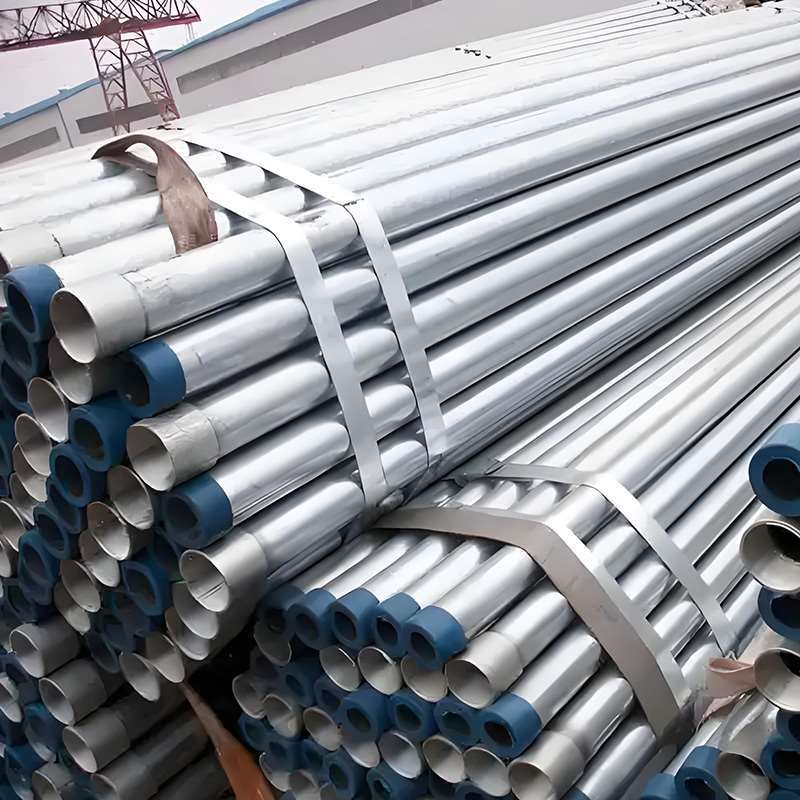
BS 1387 galvanized welded steel pipes are hot-dip galvanized steel pipes manufactured according to British Standard BS 1387:1985. They are widely used for low-pressure fluid conveyance in water supply, gas, air, and fire protection systems. This product utilizes welded steel pipes as the base tube, undergoes hot-dip galvanizing treatment, and offers excellent corrosion resistance and extended service life.
It features high dimensional accuracy, smooth inner and outer surfaces, and strong zinc coating adhesion. Installation is convenient, supporting both threaded and welded connections.
Commonly used in construction projects, scaffolding, machinery manufacturing, and water supply/drainage systems, it is a widely applied general-purpose galvanized steel pipe in international markets.
| Item | Parameter Range / Description |
|---|---|
| Standard | BS 1387:1985 (equivalent to EN 10255) |
| Nominal Bore | 1/2" – 6" |
| Outside Diameter | 21.3 mm – 168.3 mm |
| Wall Thickness | 2.0 mm – 5.4 mm |
| Length | 6 m (cut-to-length available on request) |
| Material | Q195 / Q235 / S195T / S235JR |
| Welding Method | ERW (high-frequency resistance welding) |
| Surface Finish | Hot-dip galvanized |
| Zinc Coating Mass | ≥ 200 g/m² (or as per customer requirement) |
| End Finish | Plain End / Threaded & Socketed |
| Thread Standard | BS 21 (BSPT) |
| Tolerance | OD ±1 %, WT ±10 % |
| Main Applications | Water & drainage lines, gas pipes, fire sprinkler systems, scaffolding, structural support |
Used for conveying cold and hot water in residential, commercial buildings, and municipal projects to prevent pipe corrosion and extend service life.
Widely used in main fire lines and branch sprinkler pipes, capable of withstanding high pressures while maintaining excellent corrosion resistance in humid environments.
Suitable for transporting compressed air, natural gas, and other non-corrosive gases; smooth inner walls minimize pressure loss.
Frequently employed in construction scaffolding, structural bracing, and temporary framing due to high strength and standardized dimensions.
Used in machinery manufacturing, equipment supports, warehouse shelving, agricultural greenhouses, and lightweight structural components.
With excellent corrosion resistance, commonly employed in outdoor fencing, railings, light poles, and landscaping structures, offering strong weather resistance and an attractive appearance.
| Type | Wall-Thickness Feature | Working Pressure | Common Applications |
|---|---|---|---|
| Light (Light-weight) | Thin wall, low mass | Low pressure or temporary lines | Temporary water piping, scaffolding, fencing |
| Medium (Medium-weight) | Medium wall, general purpose | Standard pressure systems | Building water & drainage, gas distribution, HVAC lines |
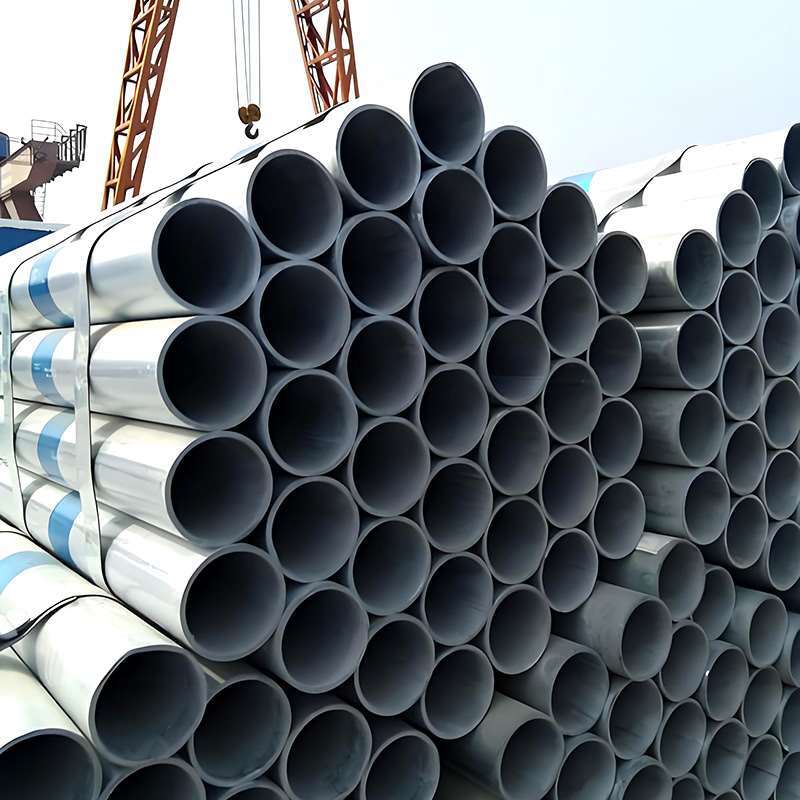
| Heavy (Heavy-weight) | Thick wall, high strength | High pressure or long-term service | Fire-sprinkler mains, industrial compressed-air lines, trunk mains |
Steel strip uncoiling → Forming → High-frequency welding → Straightening → Cutting → Cleaning → Hot-dip galvanizing → Inspection → Packaging
Through rigorous weld flaw detection and galvanized coating adhesion testing, the corrosion resistance and dimensional accuracy of each steel pipe are ensured.
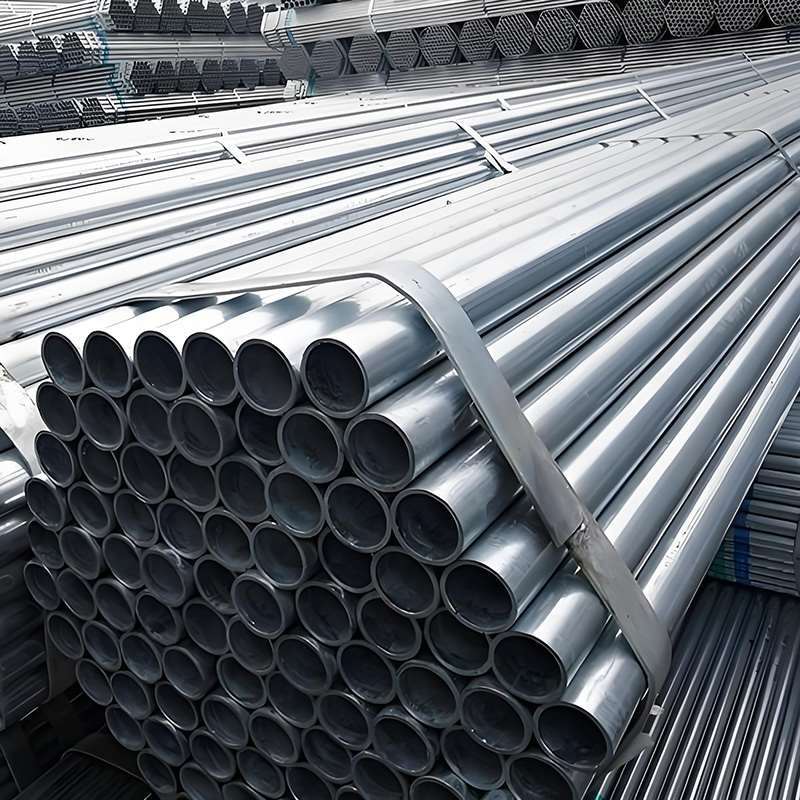
Pipes are typically bundled in groups of 6–8 using steel strapping.
Bundles must be securely fastened to prevent loosening or damage during handling and loading/unloading.
Outer layers are covered with moisture-proof plastic sheeting or woven fabric to prevent water and dust ingress.
Plastic end caps may be added to protect threads or pipe ends from damage.
Each bundle is spray-printed or labeled with specifications, standards, batch numbers, and manufacturer information for easy identification and inspection.
Land Transport: Ship via truck or flatbed trailer with secure fastening to prevent shifting.
Sea Transport/Export: Load bundles into containers or ship in bulk, ensuring pipe ends and surfaces are protected.
Avoid contact with sharp objects to prevent scratching the galvanized coating.
Store in a well-ventilated, dry area to prevent rust from prolonged moisture exposure.
Answer: BS 1387 is a British standard, while EN 10255 is an EU standard. Both are largely compatible in terms of dimensions, wall thickness, and pressure ratings. Export customers often specify BS 1387 marking, but the actual products can simultaneously meet EN 10255 requirements.
Answer: They are categorized into Light, Medium, and Heavy.
Light: Suitable for temporary pipelines or non-pressure structures
Medium: Suitable for general building water supply/drainage and gas conveyance
Heavy: Suitable for fire protection, industrial main pipelines, and high-pressure systems
Answer: Galvanized coating thickness should be selected based on the usage environment. For indoor or dry environments, a medium coating thickness is sufficient; for outdoor or humid environments, a coating ≥ 200 g/m² offers greater durability.
Answer: Yes. Standard length is 6 meters, but custom lengths are available upon request. Ends can be threaded (BSPT) to meet on-site installation requirements.
Answer: Medium and heavy-duty pipes can withstand typical building and industrial pressures. However, they are unsuitable for high-pressure boiler piping or petroleum transmission. Specialized high-pressure steel pipes should be selected for such applications.
Answer: Each pipe undergoes inspection for appearance, dimensions, welds, and galvanized coating thickness to ensure compliance with BS 1387 standards. Inspection reports are available upon request.
Answer: The galvanized coating provides effective corrosion protection. However, in extremely humid or coastal environments, consider thicker galvanization or applying a protective coating to extend service life.
 WeChat
 Scan wechat
WhatsApp:+86 15383177997
E-mail:wr@insulatedpipeline.com
E-mail:
Address:Development Zone, Cangzhou, Hebei Province, China
技术支持:沧州利畅网络
.jpg)
.jpg)