
EMAIL:
wr@insulatedpipeline.com


.jpg "Steel Jacketed Preinsulated Pipe")
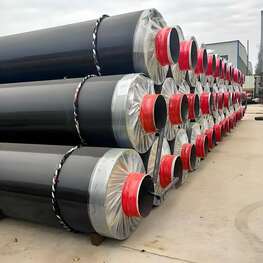


.jpg "Steel-in-Steel Steam Insulated Pipe")


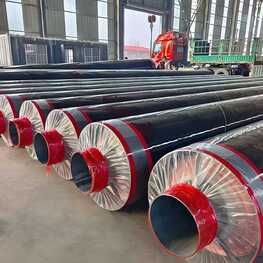


A Steel Jacketed Pre-Insulated Pipe (often structurally referred to as a "steel-in-steel" system) is a highly durable, multi-layered piping system designed to transport high-temperature or high-pressure fluids while minimizing heat loss.
Unlike standard pre-insulated pipes that use a plastic outer casing (like HDPE), this system utilizes a secondary outer steel pipe as a protective protective shield. This makes it exceptionally strong and uniquely suited for harsh environments, such as underground networks with high water tables or overhead steam distribution lines.
The working steel pipe is the pipeline that directly transports the medium, mainly used for transporting:
Steam
High-temperature hot water
Heat transfer oil
Chemical media
| Material | Features |
|---|---|
| Q235B | Suitable for conventional thermal transmission |
| 20# Seamless Steel Pipe | Good pressure resistance |
| ASTM A106 | Suitable for high-temperature pipelines |
| API 5L | Suitable for long-distance transportation |
Seamless steel pipe
Straight seam welded pipe
Spiral steel pipe
The insulation layer is located between the inner pipe and the outer steel pipe, and is used to reduce heat loss.
| Insulation Material | Features |
|---|---|
| Rock Wool | Excellent high-temperature resistance |
| Aluminum Silicate | Suitable for ultra-high-temperature steam |
| Polyurethane | Excellent thermal insulation performance |
| Composite Insulation Layer | Multi-layer structure with better energy-saving performance |
Reduce heat loss
Improve conveying efficiency
Prevent medium temperature drop
Save energy costs
The outer layer uses a steel pipe as a protective layer, forming a robust mechanical protection structure.
Prevents external impact
Improves pressure resistance
Prevents groundwater erosion
Extends pipeline lifespan
| Anti-Corrosion Method | Features |
|---|---|
| Coal Tar Epoxy Coating | Lower cost |
| 3PE Coating | Strong anti-corrosion performance |
| Epoxy Powder Coating | Excellent corrosion resistance |
The working steel pipe can slide due to thermal expansion.
The insulation layer is fixed inside the outer protective steel pipe.
Suitable for high-temperature steam transportation.
Strong thermal compensation capacity.
Long service life.
Suitable for long-distance pipeline networks.
The working steel pipe and insulation layer move as a whole.
The outer protective steel pipe is fixed.
Relatively simple structure
Easy construction
Lower cost
During steam transportation, temperatures can typically range from 150°C to over 350°C. Without effective pipeline insulation, heat continuously escapes into the surrounding air, soil, or environment. This constant thermal dissipation leads to massive energy waste, accompanied by a severe drop in both steam temperature and pressure, ultimately compromising overall system efficiency.
To mitigate these losses and maximize transportation efficiency, steam pipelines must utilize high-performance insulation systems designed to minimize heat transfer.
Pipe wall heat conduction loss
Air convection heat loss
External radiation heat loss
Heat loss due to damp underground environments
Lower steam temperature
Insufficient end-point heating
Increased energy consumption
Higher boiler operating costs
Condensation buildup in pipelines
This is a key reason why long-distance steam pipeline networks must use professionally insulated pipes.
Steel-jacketed insulated pipes fill the space between the working steel pipe and the outer protective steel pipe with insulation materials such as rock wool, aluminum silicate, or polyurethane.
These insulation materials have low thermal conductivity, effectively preventing heat transfer outwards.
Reducing the rate of heat conduction
Reducing convective heat loss due to airflow
Reducing heat radiation loss
Maintaining stable internal pipe temperature
High-quality insulation can significantly reduce heat loss, improve steam transport efficiency, and thus reduce overall operating costs.
Inner working steel pipe: responsible for transporting steam
Middle insulation layer: reduces heat loss
Outer protective steel pipe: protects the insulation layer and enhances overall strength
Waterproof performance
Pressure resistance
Mechanical impact resistance
Service life
Especially in underground direct burial projects, the outer protective steel pipe can effectively prevent groundwater from seeping into the insulation layer, avoiding moisture damage and insulation material failure.
| Advantages | Description |
|---|---|
| Low Heat Loss | Maintains higher temperature during long-distance transportation |
| Excellent Energy Saving Performance | Reduces fuel consumption and operating costs |
| Long Service Life | Typically lasts more than 30 years |
| Low Maintenance Cost | Stable pipeline structure with low failure rate |
| Suitable for Complex Environments | Can be used for underground direct burial, industrial parks, and other applications |
Raw material preparation → Inspection of working steel pipes → Rust removal of working steel pipes → Corrosion protection treatment of working steel pipes → Installation of supports and sliding devices → Filling with insulation layer → Outer steel pipe assembly → Welding and sealing → Corrosion protection treatment of outer steel pipes → Finished product inspection → Packaging and warehousing
1. Raw Material Preparation
Prepare the working steel pipe, outer protective steel pipe, insulation material, and anti-corrosion material.
2. Working Steel Pipe Inspection
Inspect the outer diameter, wall thickness, material, and surface quality of the steel pipe.
3. Working Steel Pipe Rust Removal
Remove rust and impurities from the steel pipe surface using sandblasting or shot blasting.
4. Working Steel Pipe Anti-corrosion Treatment
Apply an anti-corrosion coating to the inner working steel pipe to improve its corrosion resistance.
5. Install Supports and Sliding Devices
Install guide supports and sliding supports to reduce thermal expansion stress.
6. Fill the Insulation Layer
Fill the space between the inner pipe and the outer protective steel pipe with insulation material to reduce heat loss.
7. Outer Protective Steel Pipe Fitting
Fit the outer protective steel pipe to the outside of the insulation layer, forming a steel-clad steel structure.
8. Welding and Sealing
Weld and seal the joints to prevent moisture from entering the insulation layer.
9. Corrosion Protection Treatment of Outer Steel Pipe
Apply corrosion protection to the outer steel pipe to extend its service life.
10. Finished Product Inspection
Inspect the dimensions, welds, insulation layer, and pressure resistance to ensure they meet the required standards.
11. Packaging and Warehousing
Number and package the finished products for storage or shipment.
High-Pressure Steam Pipeline: In urban central heating and long-distance district heating networks, the temperature of saturated or superheated steam transported from power plants is typically 150°C to 350°C, or even higher. Ordinary high-density polyethylene (HDPE) outer sheaths cannot withstand such high temperatures, necessitating the use of steel-cased steel systems.
High-Temperature Hot Water Main Pipelines: Some heating systems use ultra-high temperature water (e.g., 130°C to 150°C) as the heat transfer medium. Their main pipelines and large-diameter inter-regional pipelines generally employ steel-cased steel structures to ensure system lifespan.
Industrial Centralized Heating: Industries such as textile printing and dyeing, papermaking, shipbuilding, rubber, and food processing require large amounts of steam in their production processes. Through steel-jacketed pipelines, the park's thermal power plant can safely transport steam across several kilometers to various enterprises.
Large Chemical Plants and Refineries: Petrochemical enterprises have intricate process pipelines that transport various high-temperature heavy oils, cracking media, chemical raw materials, or high-temperature by-product steam. Steel-jacketed pipelines provide an extremely high safety barrier, preventing chemical leaks and maintaining the temperature of the media.
High Groundwater Levels and Water-Rich Areas: In southern my country, coastal areas, and riverine regions, groundwater levels are high and soil is moist. The steel-clad steel outer sheath uses a fully welded seal, capable of withstanding the seepage pressure of groundwater and ensuring the internal insulation layer remains "absolutely dry," preventing water immersion failure.
High Traffic Load Areas (Crossing Roads): When pipelines need to be directly buried across main roads, railways, airport runways, or areas frequently traversed by heavy trucks, the excellent compressive strength and settlement resistance of the outer sheath protect the internal working pipe from compression and deformation.
Deep Burial Environments: In projects requiring deep burial (e.g., more than 3 meters underground) or tunneling through obstacles using pipe jacking, the outer sheath can withstand enormous deep soil lateral pressure.
Heavy Oil Thermal Recovery (Steam Injection Pipeline): In oil extraction, some crude oils have extremely high viscosity and cannot be pumped directly. High-pressure steam at temperatures as high as 300°C to 350°C needs to be injected from the surface into the well to "melt" the crude oil. Steel-jacketed insulated pipes are commonly used for the surface transportation pipeline from the steam generator to the wellhead.
Long-Distance Crude Oil Transportation: Some crude oils easily solidify at room temperature. To maintain their fluidity, long-distance oil transportation pipelines require heating and efficient insulation. Steel-jacketed pipelines can ensure temperature stability during long-distance transportation.
Steel-jacketed insulated steel pipes are mainly used in high-temperature steam, hot water, and heat energy transmission projects, and are particularly suitable for:
Urban centralized heating
Steam pipeline networks
Power plants
Petrochemical plants
Industrial park heating systems
| Comparison Item | Steel Jacketed Insulated Pipe | Polyurethane Insulated Pipe |
|---|---|---|
| Applicable Temperature | High-temperature steam | Hot water transportation |
| Insulation Material | Rock wool, aluminum silicate, etc. | Polyurethane |
| Outer Protective Structure | Steel pipe | HDPE outer casing |
| Compressive Strength | Stronger | Standard |
| Application Environment | High-temperature and complex working conditions | Conventional heating systems |
| Operating Temperature | Recommended Insulation Material |
|---|---|
| Below 120°C | Polyurethane |
| 120°C to 350°C | Rock Wool |
| Above 350°C | Aluminum Silicate |
Yes.
Steel-jacketed insulated steel pipes have strong compressive strength and waterproof capabilities, making them very suitable for direct underground burial.
However, in actual projects, the following factors need to be considered:
Groundwater environment
Soil corrosivity
Outer steel pipe corrosion resistance level
Thermal expansion compensation design
In humid areas, a 3PE reinforced anti-corrosion structure is generally recommended.
Under normal circumstances, the designed service life of steel-jacketed insulated steel pipes can reach over 30 years.
The main factors affecting service life include:
Corrosion protection quality
Insulation material quality
Operating temperature
Installation and construction quality
Underground environment
If corrosion protection and sealing are inadequate, groundwater entering the insulation layer may shorten the service life.
| Parameter | Function |
|---|---|
| Operating Temperature | Determines the type of insulation material |
| Working Pressure | Determines the steel pipe wall thickness |
| Transported Medium | Determines the anti-corrosion requirements |
| Transportation Distance | Determines the insulation thickness |
| Installation Method | Determines the structural design |
| Application Environment | Determines the external anti-corrosion grade |
 WeChat
 Scan wechat
WhatsApp:+86 15383177997
E-mail:wr@insulatedpipeline.com
E-mail:
Address:Development Zone, Cangzhou, Hebei Province, China
技术支持:沧州利畅网络