EMAIL:
wr@insulatedpipeline.com



Number of visits:5 seconds Update time:2026-07-17
In large- and medium-scale pipeline network projects, such as water and gas transmission systems, pipelines are buried underground and face two major challenges: internal erosion caused by the constant flow of fluids day and night, and external damage from the combined effects of moist soil and acidic or alkaline silt. Traditional single-layer anti-corrosion technology was like putting a “thin coat” on the pipeline; over time, it was prone to damage and leaks, leading to skyrocketing maintenance costs.
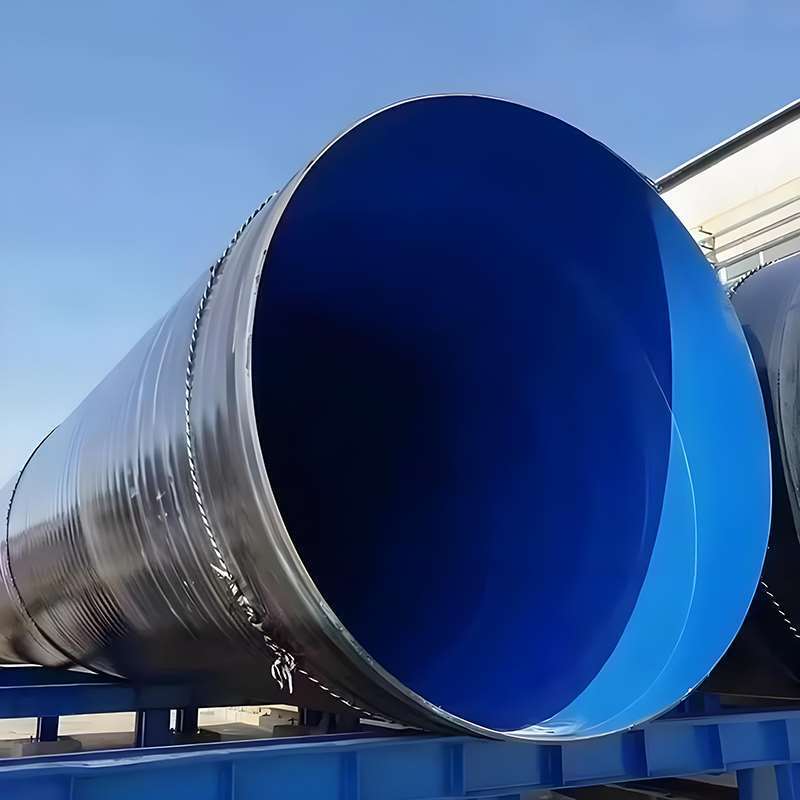
To thoroughly address the challenges faced by long-distance water, oil, and gas pipelines, TPEP-coated steel pipes were developed. Thanks to their unique internal and external corrosion-resistant structure, they have become the preferred choice for modern pipeline projects.
TPEP stands for “Three-layer Polyethylene and Epoxy Powder.” Its innovation lies in combining the outer corrosion protection (3PE) and inner corrosion protection (FBE) into a single pipe.
To help you better visualize how it’s made, let’s break it down from the outside in:
| Structural Layer | Material Name | Easy-to-Understand Role | Actual Function |
|---|---|---|---|
| Layer 1 (Outer Protective Layer) | High-Density Polyethylene (HDPE) | A tough plastic protective shell | The outermost layer of the external 3PE coating system. It directly contacts the surrounding soil and protects the pipeline against abrasion from sand, soil particles, and impact damage from rocks during underground service. |
| Layer 2 (Intermediate Adhesive Layer) | Copolymer Adhesive | A powerful bonding agent | The middle layer of the external 3PE coating system. It firmly bonds the outer polyethylene layer with the inner epoxy powder coating, ensuring strong adhesion between the coating layers. |
| Layer 3 (Outer Primer Layer) | Fusion Bonded Epoxy Powder (FBE) | Anti-corrosion primer for the pipe surface | The bottom layer of the external 3PE coating system. It is directly bonded to the steel surface and provides excellent electrochemical corrosion protection to prevent rust formation. |
| Layer 4 (Core Structural Layer) | Spiral Welded Steel Pipe (SSAW Steel Pipe) | The strong skeleton (base pipe) | The structural core of the pipeline. It withstands high internal water pressure or gas pressure, maintaining pipeline strength, stability, and resistance to deformation or rupture. |
| Layer 5 (Inner Protective Layer) | Fusion Bonded Epoxy Powder (FBE) | A smooth internal lining | The inner coating layer that directly contacts water or gas. Applied by high-temperature fusion bonding onto the internal pipe surface, it creates a smooth, ceramic-like protective lining that prevents corrosion, scaling, and contamination. |
As can be seen from this structure, the spiral steel pipe is actually sandwiched right in the middle. It is coated with 3PE on the outside and FBE on the inside; the pipe itself does not come into contact with soil or water and is fully protected in the safest possible position. This is the real reason why it can remain rust-free even after being buried underground for 50 years.
For engineering projects, using TPEP-coated steel pipes not only ensures technical acceptance but also delivers clear economic benefits:
Cost Reduction and Efficiency Improvement: The epoxy powder lining is extremely smooth, resulting in a low hydraulic resistance coefficient. This means that pipes of the same diameter can transport a greater volume of water; due to reduced friction, the thrust required by water pumps is lower, leading to significant long-term savings on electricity costs.
Extended Service Life: Traditional pipes often require major repairs after 10 to 15 years. TPEP technology, however, provides dual internal and external protection—resisting soil stress on the outside and fluid erosion on the inside—with a design service life generally exceeding 50 years.
Hassle-Free Installation: Traditional corrosion-resistant pipes are extremely delicate during transportation and hoisting—even a minor scratch can cause rust. The outer polyethylene layer of TPEP is wear- and impact-resistant, effectively withstanding rough handling at construction sites and accelerating the installation process.
Long-distance urban water conveyance and water supply networks: The eco-friendly epoxy powder coating on the inner wall prevents scaling and bacterial growth, ensuring that drinking water remains clean from the water treatment plant to the consumer’s doorstep. It serves as the backbone of municipal water supply systems.
Long-Distance Oil and Natural Gas Pipelines: Faced with high pressure underground, complex geology, and variable chemical corrosion environments, spiral steel pipes coated with TPEP ensure the safe and reliable transportation of energy.
Sewage Disposal and Industrial Recirculating Water Systems: Industrial wastewater and sewage often contain corrosive components such as acids, alkalis, and salts. TPEP’s exceptional chemical stability easily withstands these harsh media.
 WeChat
 Scan wechat
WhatsApp:+86 15383177997
E-mail:wr@insulatedpipeline.com
E-mail:
Address:Development Zone, Cangzhou, Hebei Province, China
技术支持:沧州利畅网络