EMAIL:
wr@insulatedpipeline.com


Published:2025-10-16 | Last Updated: 2025-10-16 Views: 117
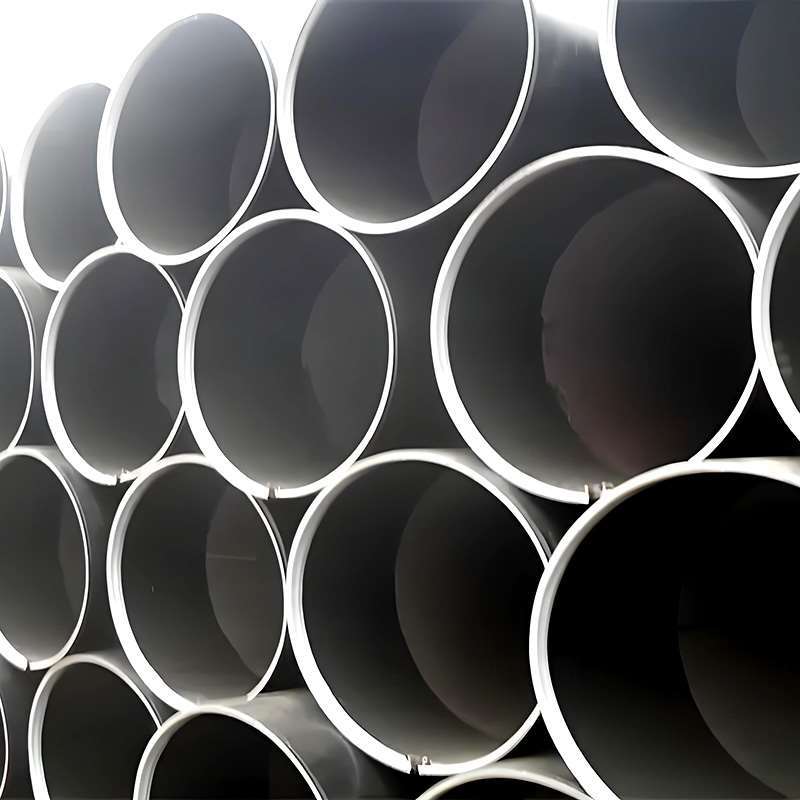
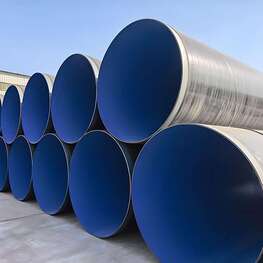
API 5L welded steel pipes are pipeline products manufactured according to the American Petroleum Institute (API) 5L standard, suitable for petroleum, natural gas, water, and other fluid transportation systems.
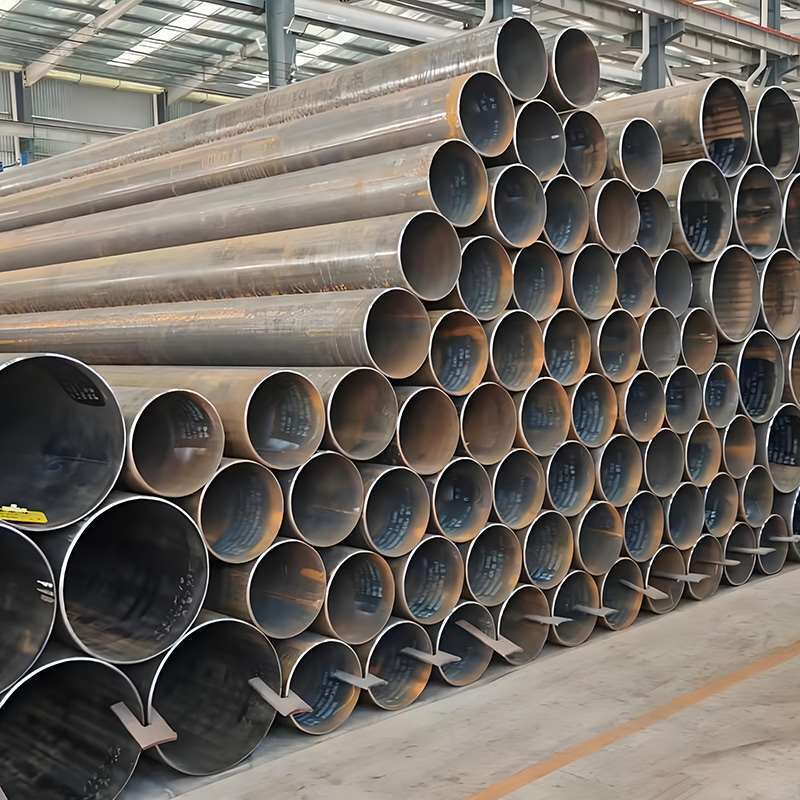
Compared to seamless steel pipes, welded steel pipes are formed by longitudinally or spirally welding steel strips or plates into pipe bodies. This process enables production of large diameters and long lengths while offering lower costs and shorter delivery cycles.
API 5L welded steel pipes are classified into grades such as X42, X46, X52, X56, X60, X65, and X70 based on strength and chemical composition, meeting diverse pressure and environmental requirements.
| Steel Grade | Min Yield Strength (MPa) | Min Tensile Strength (MPa) | Typical Application | Key Features & Differences |
|---|---|---|---|---|
| X42 | 290 | 414 | Medium- & low-pressure oil & gas transmission | Entry-level, economical pipe for conventional pressure service |
| X46 | 317 | 434 | Natural-gas lines, industrial piping | Slightly stronger than X42; suited for medium-pressure systems |
| X52 | 359 | 460 | Onshore oil & gas networks, water conveyance | Popular medium-strength grade with good weldability |
| X56 | 386 | 490 | Long-distance oil & gas pipelines | Higher strength, better corrosion & pressure resistance than X52 |
| X60 | 414 | 517 | High-pressure oil & gas lines | High strength for medium- to high-pressure projects |
| X65 | 448 | 531 | Subsea pipelines, long-haul transmission | High strength & pressure resistance for harsh environments |
| X70 | 483 | 565 | Cross-country long-distance projects | High-strength pipe with excellent low-temperature toughness |
| X80 | 552 | 621 | High-pressure transmission, gas trunk lines | Very high strength; demanding welding & fabrication requirements |
| X90 | 620 | 690 | Ultra-high-pressure natural-gas projects | Extremely high strength; difficult to manufacture |
| X100 | 690 | 760 | Special high-pressure systems | High-performance line-pipe steel for extreme service |
| X120 | 830 | 915 | Extreme-high-pressure, long-distance transmission | Top-tier pipe with ultra-high strength and high cost |
API 5L welded steel pipes are primarily manufactured using processes such as electric resistance welding (ERW), longitudinal submerged arc welding (LSAW), and spiral submerged arc welding (SSAW/HSAW). Different processes are suitable for varying pipe diameters, pressure ratings, and application scenarios. Selecting the appropriate welding process is critical for pipeline performance and construction cost.
Process Principle: Steel strip is cold-formed into a tube shape, then the seam is heated by high-frequency current and pressed together under pressure to form the pipe.
Application Scope: Small-diameter pipes (≤ 24"), thin to medium wall thicknesses, commonly used for low-to-medium pressure water and gas transportation.
Advantages:
Uniform weld seam with smooth surface
High dimensional accuracy
Low cost and high production efficiency
Considerations:
Not suitable for ultra-high pressure or thick-walled pipelines
High weld quality requirements; ultrasonic testing (UT) is recommended.
Process Principle: Steel plates are rolled into pipe blanks, longitudinally welded along the seam, then undergo heat treatment and straightening.
Application Scope: Large-diameter pipes (≥ 24"), medium to thick walls, suitable for high-pressure oil and natural gas pipelines.
Advantages:
High strength, excellent weld seam pressure-bearing capacity
Capable of manufacturing large-diameter long-distance pipelines
Suitable for both onshore and subsea pipelines
Considerations:
Longer manufacturing cycle
Higher cost than ERW
Weld seams require rigorous non-destructive testing (UT/RT)
Process Principle: Steel strip is coiled at a specific angle to form a spiral pipe blank, which is then helically welded. The final steps involve straightening and heat treatment.
Application Scope: Large-diameter, thick-walled pipes; long-distance oil and gas transmission pipelines.
Advantages:
Capable of producing ultra-large diameter pipes
Flexible wall thickness adjustment
Excellent weld seam pressure-bearing performance
Considerations:
The helical weld seam requires attention to stress distribution
Strict requirements for weld quality and surface defect control
| Pipe OD / Wall Thickness | Recommended Welding Process | Typical Application | Precautions |
|---|---|---|---|
| Small dia. (≤ 24"), thin wall | ERW | Municipal water, low-pressure gas | Ultrasonic inspection of weld seam required |
| Medium–large dia. (24"–48"), medium-heavy wall | LSAW | High-pressure oil & gas, onshore long-distance lines | Rigorous NDT of weld seam |
| Large dia. (≥ 48"), heavy wall | SSAW / HSAW | Long-distance pipelines, subsea lines | Pay attention to spiral-weld stresses; strict quality inspection |
Application Note: API 5L welded steel pipes are the most commonly used transmission pipelines in the oil and gas industry, employed for onshore oil and gas fields, long-distance trunk lines, and subsea pipelines.
Recommended Grades: X52, X60, X65, X70
Recommended Welding Process: LSAW or SSAW (suitable for high-pressure, long-distance projects)
Practical Tip: Select PSL2-rated pipe to ensure weld quality and corrosion resistance.
Application Description: Used for municipal water transmission, drainage, and reclaimed water reuse projects.
Recommended Steel Grades: X42, X46, X52
Recommended Welding Process: ERW or LSAW
Practical Tip: Opt for 3PE or epoxy anti-corrosion coatings to extend service life and reduce maintenance costs.
Application Description: Used in fluid conveyance systems for chemical media, steam, cooling water, etc.
Recommended Steel Grades: X52, X56, X60
Recommended Welding Process: LSAW
Practical Tip: For corrosive media, epoxy powder coating (FBE) or internally plastic-lined corrosion-resistant steel pipes are recommended.
Application Notes: Widely used in steel structure supports, bridges, pile foundations, columns, factory building supports, etc.
Recommended Steel Grades: X42, X46
Recommended Welding Processes: ERW or SSAW
Practical Tips: When selecting pipe types, focus on load-bearing capacity and weld strength, and ensure surface flatness meets architectural requirements.
Application Description: Used in highly corrosive environments such as offshore platforms and subsea oil/gas pipelines.
Recommended Steel Grades: X65, X70, X80
Recommended Welding Process: LSAW or SSAW
Practical Tip: Must employ high-grade corrosion protection systems (3LPE/3LPP) and ensure weld reliability through ultrasonic testing (UT) + radiographic testing (RT).
Application Description: Used in centralized heating, geothermal pipelines, and energy transmission systems.
Recommended Grades: X52, X60
Recommended Welding Process: ERW or LSAW
Practical Tip: Often used with insulated steel pipes to minimize energy loss.
| Application Field | Recommended Steel Grade | Common Process | Key Requirements |
|---|---|---|---|
| Oil & Gas Transmission | X52 – X70 | LSAW / SSAW | High pressure, corrosion resistant, strict weld inspection |
| Municipal Water & Drainage | X42 – X52 | ERW / LSAW | Excellent corrosion-protection performance |
| Chemical & Industrial | X52 – X60 | LSAW | Corrosion and leak-proof |
| Building & Structures | X42 – X46 | ERW / SSAW | High load-bearing capacity, smooth appearance |
| Subsea & Hostile Environments | X65 – X80 | LSAW / SSAW | High strength & corrosion resistance |
| District Heating | X52 – X60 | ERW / LSAW | Compatible with insulated pipe-in-pipe systems |
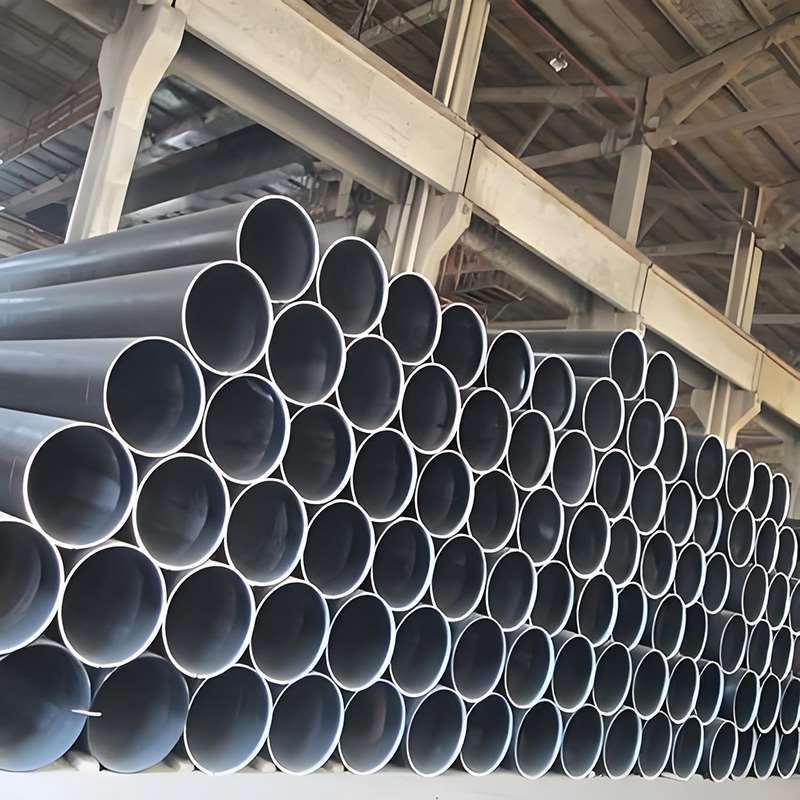
Common grades include X42, X46, X52, X56, X60, X65, X70, X80, etc.
Higher grades indicate greater yield strength, making them suitable for higher pressures or more demanding environments.
For example:
X42–X52: Commonly used for medium-to-low pressure transmission
X60–X70: Suitable for high-pressure oil and gas pipelines
X80 and above: Used for long-distance, high-pressure, or subsea pipelines
| Item | PSL1 | PSL2 |
|---|---|---|
| Chemical Composition Requirements | Basic requirements | More stringent |
| Mechanical Properties | Conventional | Higher impact toughness required |
| Inspection Items | Conventional testing | Additional NDT, impact testing, hardness testing, etc. |
| Typical Applications | General industrial transmission | High-pressure, long-distance or critical projects |
ERW (Electric Resistance Welded): Suitable for small-diameter, medium-to-low-pressure pipelines
LSAW (Longitudinal Submerged Arc Welded): Suitable for large-diameter, high-pressure pipelines
SSAW (Spiral Submerged Arc Welded): Suitable for large-diameter, long-distance transmission pipelines
Chemical composition analysis
Mechanical property testing (yield strength, tensile strength, impact toughness)
Non-destructive testing (UT, RT)
Hydrostatic Test
Dimensional and Visual Inspection
Yes, but products with high steel grades (e.g., X60, X65, X70) meeting PSL2 requirements must be selected, and all welds must undergo 100% inspection (UT/RT).
 WeChat
 Scan wechat
WhatsApp:+86 15383177997
E-mail:wr@insulatedpipeline.com
E-mail:
Address:Development Zone, Cangzhou, Hebei Province, China
技术支持:沧州利畅网络
.jpg)
.jpg)