
EMAIL:
wr@insulatedpipeline.com


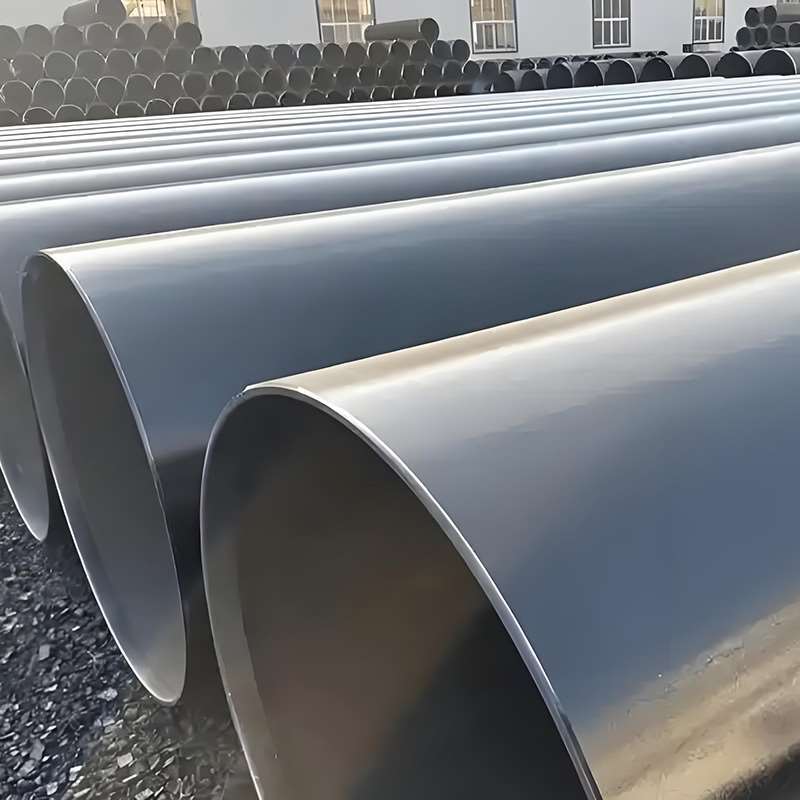
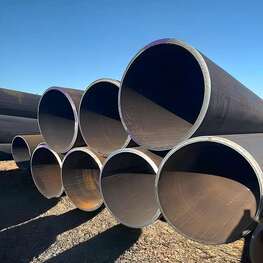
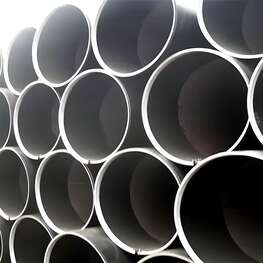
Welded steel pipes are one of the widely used types of steel pipes in modern industrial applications. They are manufactured by forming steel plates or steel coils into a cylindrical shape and then welding the seam longitudinally or spirally.
Compared with seamless steel pipes, welded steel pipes offer more cost-effective production, wider size ranges, and are suitable for large-scale infrastructure projects.
They are commonly used in oil and gas transmission, water supply systems, construction, piling projects, and structural engineering.
According to different manufacturing processes, welded steel pipes are mainly divided into three types:
ERW (Electric Resistance Welded Steel Pipe)
SSAW (Spiral Submerged Arc Welded Steel Pipe)
LSAW (Longitudinal Submerged Arc Welded Steel Pipe)
Each type has its own production method, performance characteristics, and application scenarios.
ERW steel pipes are manufactured using steel coils. The strip is first formed into a round shape, and then the edges are welded together using high-frequency electric resistance welding technology.
No filler material is used during the welding process, which ensures a clean and uniform weld seam.
High production efficiency
Tight dimensional tolerance
Smooth surface quality
Cost-effective solution
Suitable for small to medium diameters
ERW steel pipes are widely used in:
Water supply pipelines
Structural steel construction
Low and medium pressure fluid transportation
Scaffolding and mechanical structures
SSAW steel pipes are produced by continuously bending steel strip into a spiral shape and welding the seam using submerged arc welding technology.
This spiral forming method allows the production of large-diameter pipes from relatively narrow steel strips.
Suitable for large diameter pipes
Flexible diameter and thickness range
Cost-effective for long-distance pipelines
High material utilization rate
Strong adaptability to different project requirements
SSAW steel pipes are commonly used in:
Oil and gas transmission pipelines
Long-distance water transportation
Piling and foundation engineering
Structural support systems
LSAW steel pipes are made from steel plates, which are first formed into U-shape and then O-shape using processes such as UOE or JCOE. After forming, the longitudinal seam is welded using submerged arc welding.
High strength and pressure resistance
Excellent welding quality
Suitable for thick-walled pipes
High reliability for critical applications
Meets strict international standards
LSAW steel pipes are widely used in:
High-pressure oil and gas pipelines
Offshore pipeline systems
Large-scale infrastructure projects
Power plant and industrial pipelines
| Type | Raw Material | Diameter Range | Strength | Cost | Typical Application |
|---|---|---|---|---|---|
| ERW | Steel coil | Small to medium | Medium | Low | Water, structure |
| SSAW | Steel strip | Large diameter | Medium | Medium | Oil, gas, piling |
| LSAW | Steel plate | Medium to large | High | High | High-pressure pipelines |
Each type is designed for specific engineering requirements, and the selection depends on pressure, diameter, and project conditions.
Welded steel pipes are manufactured under strict international standards, such as:
API 5L (Pipeline steel standards)
ASTM A53 / A106
EN standards for European markets
Quality control processes typically include:
Hydrostatic testing
Ultrasonic testing (UT)
X-ray inspection (RT)
Dimensional and visual inspection
In addition, anti-corrosion coatings such as 3PE, FBE, and epoxy coatings are often applied to extend service life.
1. What is the difference between ERW and SSAW steel pipes?
ERW pipes are made from steel coils with straight seam welding, while SSAW pipes are formed in a spiral shape and welded along the spiral seam.
2. Which steel pipe is for oil and gas pipelines?
Both SSAW and LSAW pipes are commonly used, depending on pressure requirements and project specifications.
3. Is LSAW stronger than SSAW?
Yes, LSAW pipes generally have higher strength and are suitable for high-pressure applications.
4. What standards are used for welded steel pipes?
Common standards include API 5L, ASTM, and EN standards.
 WeChat
 Scan wechat
WhatsApp:+86 15383177997
E-mail:wr@insulatedpipeline.com
E-mail:
Address:Development Zone, Cangzhou, Hebei Province, China
技术支持:沧州利畅网络