EMAIL:
wr@insulatedpipeline.com


Published:2025-11-13 | Last Updated: 2026-04-22 Views: 100
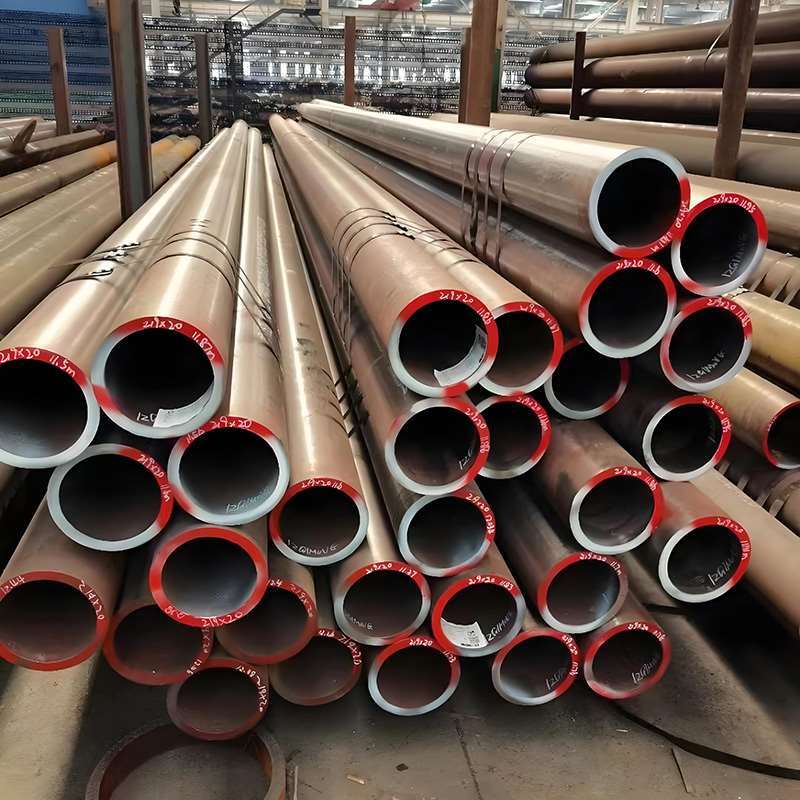
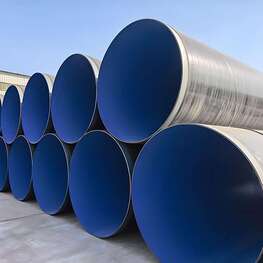
API 5L PSL1/PSL2 alloy steel pipes are seamless or welded steel pipes manufactured according to American Petroleum Institute standards for conveying petroleum, natural gas, and water media.
| Parameter Category | Content Description |
|---|---|
| Standard | API 5L (latest edition) |
| Grade | PSL1 / PSL2 |
| Steel Grade | B, X42, X46, X52, X56, X60, X65, X70, X80 |
| Manufacturing Process | Seamless, SSAW, LSAW/ERW |
| Outside Diameter (OD) | 21.3 mm – 1 422 mm (1/2" – 56") |
| Wall Thickness (WT) | 2 mm – 60 mm (customizable) |
| Length | 6 m / 12 m / fixed-length customization |
| Chemical Composition | Carbon, Manganese, Silicon, Phosphorus, Sulfur, Nickel, Chromium, Molybdenum, etc. (controlled per steel grade) |
| Mechanical Properties | Yield strength, tensile strength, and elongation meet API 5L requirements; PSL2 grades have low-temperature impact toughness requirements |
| Inspection Standards | Chemical composition analysis, tensile test, low-temperature impact test, UT/RT inspection, hydrostatic test, dimensional tolerance check |
| Anti-corrosion Types | Optional: 3PE, FBE, epoxy coating, hot-dip galvanizing, polyurethane insulation, etc. |
| Typical Applications | Oil pipelines, gas pipelines, LNG long-distance pipelines, refinery units, offshore pipelines, and critical pressure systems |
| Differentiating Point | PSL1 (Product Specification Level 1) | PSL2 (Product Specification Level 2) |
|---|---|---|
| Standard Requirements | Basic requirements, suitable for ordinary pipelines | More stringent requirements, suitable for critical or high-pressure pipelines |
| Chemical Composition | Relatively wide tolerance range | Strictly controlled; specific element contents are more precise to ensure stable performance |
| Mechanical Properties | Tensile and yield strengths meet basic standards | Higher requirements for tensile, yield strengths and impact toughness |
| Low-temperature Impact Test | Not mandatory or random sampling | Mandatory, especially significant for pipelines in low-temperature environments |
| Non-destructive Testing (NDT) | Sampling or per standard requirement | Full inspection, including Ultrasonic (UT), Radiographic (RT), etc. |
| Applicable Scenarios | General oil & gas transmission pipelines | High-pressure, long-distance or critical transmission pipelines, e.g., subsea lines, LNG, refinery systems |
| Cost | Lower | Higher (due to tight controls and full inspection) |
| Steel Grade | Yield Strength (MPa) | Typical Applications | Characteristics |
|---|---|---|---|
| X42 | 290 | Low- to medium-pressure oil & gas transmission pipelines | Moderate strength, low cost, suitable for conventional transport systems |
| X52 | 355 | Medium-pressure pipelines, city gas mains, oil lines | High cost-performance ratio; widely used for most oil & gas pipelines |
| X60 | 415 | High-pressure long-distance pipelines, LNG auxiliary lines | Higher strength, ideal for long-distance and higher-pressure service |
| X70 | 485 | High-pressure, long-distance pipelines, subsea lines | High-strength steel for complex environments and offshore projects |
| X80 | 550 | Ultra-high-pressure, deep-water or ultra-long-distance pipelines | Highest strength grade, suited for severe conditions and critical transport systems |
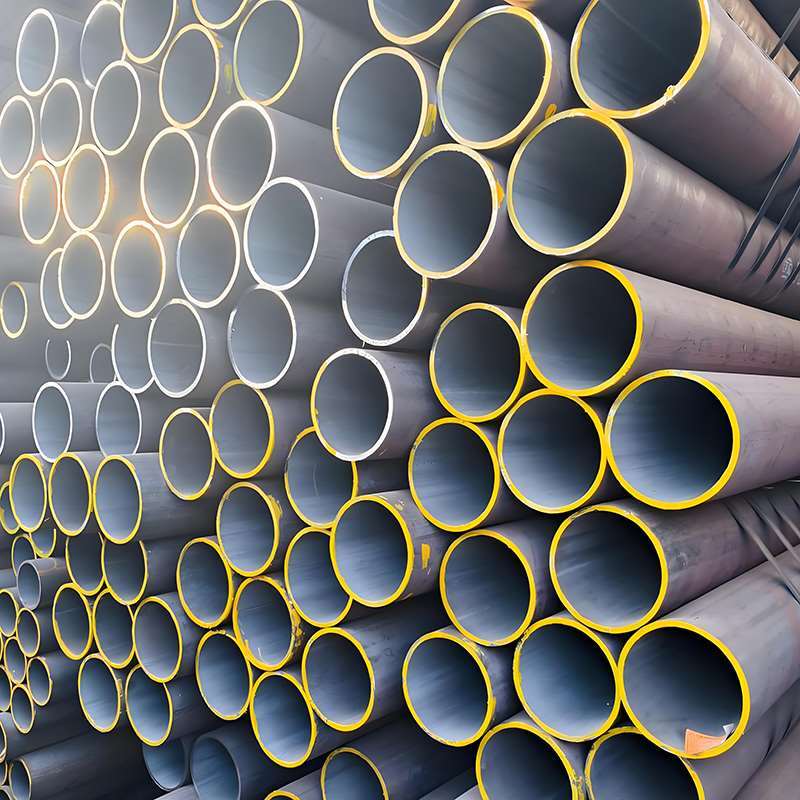
Hot rolling: Multi-pass rolling after high-temperature piercing at 1200°C, with outer diameter deviation controlled within ±0.75% (high-end manufacturers achieve ±0.5%), and wall thickness deviation ±12.5%.
Cold Drawing: Room-temperature drawing after acid pickling and phosphating achieves dimensional accuracy of OD ±0.1mm, wall thickness ±5%, and surface roughness Ra ≤0.8μm.
Heat Treatment: Normalizing (1040°C) + Tempering (760°C) to relieve residual stresses, with grain size controlled to ASTM Grade 8-10.
High-Frequency Resistance Welding (HFW): Heating pipe blank edges to plastic state via high-frequency current before forming under pressure, achieving O.D. variation <0.3mm.
Submerged Arc Welding (SAW): Multi-wire submerged arc welding combined with mechanical expansion technology enhances dimensional stability, with ovality deviation ≤0.6%.
Thermomechanical Rolling (TMCP): Refines grain size to 5-10μm, improving toughness.
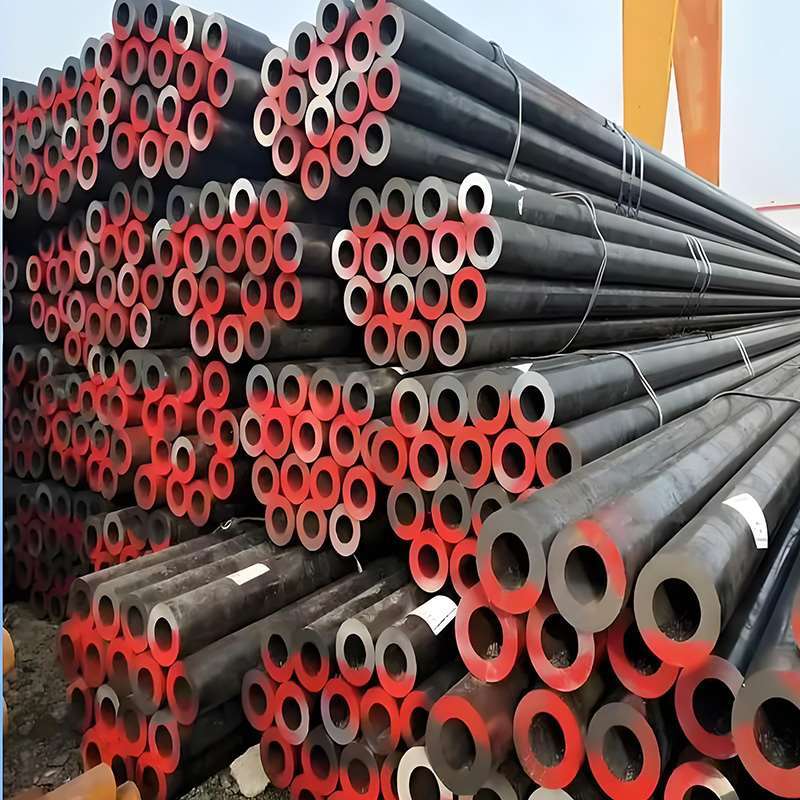
PSL1 Requirements
Carbon (C): Seamless pipe ≤0.28%, Welded pipe ≤0.26%.
Manganese (Mn): ≤1.40%.
Phosphorus (P): ≤0.030%.
Sulfur (S): ≤0.030%.
Addition of niobium (Nb), vanadium (V), or titanium (Ti) is permitted, but their combined content must not exceed 0.15%.
PSL2 Requirements
Carbon (C): ≤0.24%.
Manganese (Mn): ≤1.40%.
Phosphorus (P): ≤0.025%.
Sulfur (S): ≤0.015%.
Niobium (Nb) ≤0.05%, Vanadium (V) ≤0.10%, Titanium (Ti) ≤0.04%.
Carbon Equivalent Control is stricter: CEPcm ≤ 0.25 (when carbon content ≤ 0.12%), CEIIW ≤ 0.43 (when carbon content > 0.12%).
Analysis: PSL2 imposes stricter chemical composition limits, particularly for P, S content, and carbon equivalent, to reduce welding crack risk and enhance material toughness.
Tensile Properties
PSL1:
Yield Strength: X42 steel grade ≥290MPa, X65 steel grade ≥450MPa.
Tensile Strength: X42 steel grade 415-760MPa, X65 steel grade 535-760MPa.
Elongation: ≥21% (gauge length 50.8mm).
PSL2:
Narrower yield strength range (e.g., X42 grade 290–440 MPa), higher tensile strength upper limit (e.g., X42 grade ≥496 MPa).
Elongation requirements are identical to PSL1, but must be evaluated comprehensively with impact test results.
Impact Testing
PSL1: Impact performance testing is not required.
PSL2:
For all grades except X80 steel, full-scale longitudinal impact energy at 0°C ≥ 41J, transverse ≥ 27J.
X80 steel grade: Full-scale longitudinal impact energy at 0°C ≥ 101J, transverse ≥ 68J.
Test temperatures may extend down to -30°C (e.g., China-Russia Eastern Route Project).
Analysis: PSL2 employs impact testing to ensure material resistance to brittle fracture in low-temperature environments, making it suitable for extreme conditions such as polar regions or deep-sea applications.
PSL1: Individual NDE testing is not required; only sampling inspection is necessary.
PSL2:
Perform ultrasonic testing (UT) on each pipe, with defect rate ≤0.3%.
Optional magnetic particle testing (MT) or eddy current testing (ET) may supplement surface defect inspection.
Welded steel pipes require 100% radiographic testing (RT) or automated ultrasonic testing (AUT).
Analysis: PSL2's NDE requirements eliminate batch defects and are suitable for high-pressure, long-distance transmission pipelines.
Dimensional Tolerances
Outer Diameter Deviation:
PSL1: For outer diameters ≤60.3mm, deviation ±0.75%; for outer diameters >60.3mm, deviation ±1.0%.
PSL2: For outer diameter ≤ 168.3 mm, deviation ±0.4 mm; for outer diameter > 168.3 mm, deviation ±0.005D (maximum ±1.6 mm).
Wall Thickness Deviation:
PSL1: For wall thickness ≤ 4.0 mm, deviation +0.6/-0.5 mm; for wall thickness > 4.0 mm, deviation ±12.5%.
PSL2: For wall thickness ≤ 4.0 mm, deviation +0.6/-0.5 mm; for wall thickness > 4.0 mm, deviation ±10%.
Appearance Requirements
Surface free of cracks, folds, seepage, or other defects.
End Processing: Pipes with wall thickness >3.2mm require a 30° beveled edge with a chamfer size of 1.60±0.80mm and a bevel angle ≤1.6mm.
Analysis: PSL2 offers higher dimensional accuracy, ensuring seal integrity during pipe butt welding and enhancing fluid conveyance efficiency.
PSL1: Hydrostatic testing is required, but the standard does not explicitly specify non-destructive testing as an alternative.
PSL2:
Each pipe shall undergo hydrostatic testing at 1.5 times the design pressure.
The pressure shall be maintained for ≥5 seconds; no leakage or deformation indicates a pass.
Analysis: PSL2 employs hydrostatic testing alongside non-destructive testing as a dual safeguard, suitable for high-pressure transmission scenarios.
 WeChat
 Scan wechat
WhatsApp:+86 15383177997
E-mail:wr@insulatedpipeline.com
E-mail:
Address:Development Zone, Cangzhou, Hebei Province, China
技术支持:沧州利畅网络
.jpg)
.jpg)