EMAIL: wr@insulatedpipeline.com
Position:Home > Anti-corrosion Steel Pipe News > Temperature Limit of 3PE Coated Steel Pipe in Industrial Applications

Temperature Limit of 3PE Coated Steel Pipe in Industrial Applications

Number of visits:6 seconds Update time:2026-07-10

When selecting products, many engineers tend to focus solely on the temperature and pressure resistance of the steel pipe itself, while overlooking the “temperature limit” of the outer anti-corrosion coating. Based strictly on leading domestic and international standards, this article provides an in-depth analysis of the temperature limits of 3PE anti-corrosion steel pipes in industrial applications, the mechanisms of high-temperature failure, and selection strategies for different temperature ranges. 

I. The Official “Temperature Threshold” for 3PE Anti-Corrosion Steel Pipes

To assess the temperature limits of 3PE steel pipes, refer to authoritative industry standards. The mainstream domestic standard GB/T 23257-2017, as well as the international standards DIN 30670 and ISO 21809-1, clearly define the operating temperature ranges for standard 3PE anti-corrosion pipes:


3PE Coating GradeMaximum Design Operating TemperatureExtreme Low-Temperature Construction/Operating Limit
Standard Temperature-Resistant 3PE Coating50°C or 70°C−30°C (Special engineering evaluation is recommended below this temperature.)
Modified High-Temperature 3PE Coating80°C or even 110°CRequires specially modified polyethylene and fusion bonded epoxy (FBE) powder with a high glass transition temperature (Tg).


Industrial Warning: 

For the vast majority of standard 3PE steel pipes, the upper limit for long-term safe operation is 70°C. If the medium transported through the pipeline (such as crude oil, heavy oil, or high-temperature industrial wastewater) consistently exceeds this temperature over an extended period, the anti-corrosion coating will begin to degrade at an accelerated rate. 

3PE_(6)

II. High-Temperature Failure Mechanisms of 3PE Coatings

When a pipeline operates above the design temperature limit of its 3PE coating, the three-layer system does not melt all at once. Instead, elevated temperatures gradually soften the coating materials, triggering a series of progressive failure mechanisms from within.

1. Significant Increase in Indentation Depth

The outer layer of a 3PE coating is made of high-density polyethylene (HDPE), a thermoplastic material. As the temperature rises, the molecular chains within the polyethylene become increasingly mobile, causing the material to soften.

At ambient temperature, sharp stones pressing against the coating may leave little or no visible mark.

However, at temperatures above 70°C, the indentation resistance of the HDPE outer layer decreases significantly. Under continuous compressive forces from surrounding soil, pipeline expansion and contraction, or traffic loads above the buried pipeline, sharp stones can penetrate the softened coating much like a knife cutting through butter, eventually exposing the steel substrate.

2. Dramatic Reduction in Peel Strength

At elevated temperatures, the adhesive (AD) layer is susceptible to creep deformation, which gradually weakens the bond between the coating layers.

According to industry standards, the peel strength of a 3PE coating is typically required to be ≥ 100 N/cm at approximately 20°C. At operating temperatures between 50°C and 70°C, the minimum acceptable value is reduced to ≥ 35 N/cm.

If the operating temperature continues to rise beyond approximately 80°C to 90°C, the adhesive may lose much of its original bonding capability. As a result, the HDPE outer layer can separate from the underlying epoxy primer, creating disbonded voids where groundwater can easily accumulate.

3. Aging of the Fusion Bonded Epoxy (FBE) Layer and Increased Risk of Cathodic Disbondment

If the temperature of the transported medium exceeds the glass transition temperature (Tg) of the fusion bonded epoxy (FBE) primer, the epoxy changes from a rigid glassy state to a rubber-like state. This transition increases the free volume within the polymer structure, making the coating more permeable.

Even if the outer polyethylene layer remains intact, moisture and oxygen can diffuse through the coating more rapidly, accelerating corrosion at the steel surface and significantly increasing the risk of cathodic disbondment.

III. Performance Under Extreme Low-Temperature Conditions

In industrial applications, engineers must consider not only the upper temperature limit of a coating system but also its lower operating and construction limits. This is particularly important for projects in northern China, cold-climate water transmission systems, refrigerated pipelines, and certain liquefied gas transportation applications.

Excellent Low-Temperature Toughness

The HDPE outer layer of a 3PE coating offers excellent flexibility and impact resistance at low temperatures. The material itself typically has a brittle transition temperature below −70°C, allowing it to retain good toughness even in extremely cold environments.

Construction Limit at −30°C

Although a 3PE coating can withstand low operating temperatures, industry standards generally prohibit the handling, lifting, and field installation of 3PE-coated steel pipes when the ambient temperature falls below −30°C.

The reason is that, while the HDPE outer layer remains relatively flexible, the fusion bonded epoxy (FBE) primer and the adhesive (AD) layer become increasingly brittle under extreme cold. Strong mechanical impacts, lifting stresses, or pipe deformation during handling can initiate internal interlayer cracking or microscopic disbondment, compromising the long-term integrity of the coating.

IV. Temperature Selection and Alternative Solutions for Industrial Applications

To ensure long-term pipeline reliability, engineers should select the appropriate coating system based on the operating temperature of the transported medium.

Temperature Range 1: Medium Temperature Below 50°C

Typical Applications

  • Buried water transmission pipelines

  • Refined petroleum pipelines

Recommended Solution

Standard-duty or reinforced 3PE-coated steel pipe is generally sufficient and offers excellent cost performance.

The HDPE outer layer should comply with the thickness requirements specified in GB/T 23257, enabling a typical design service life of 30 to 50 years under normal operating conditions.

Temperature Range 2: Medium Temperature Between 50°C and 80°C

Typical Applications

  • Crude oil gathering and transportation pipelines

  • Low-temperature geothermal return pipelines

Recommended Solution

The procurement specification should explicitly require a high-temperature-resistant 3PE coating system.

Technical Requirements

The coating manufacturer should use:

  • High-temperature modified adhesive (modified polyolefin copolymer)

  • Specially formulated high-temperature polyethylene

  • Fusion bonded epoxy (FBE) powder with a glass transition temperature (Tg) of at least 120°C

These materials help ensure that the coating maintains adequate peel strength even when operating continuously at 80°C.

Temperature Range 3: Medium Temperature Above 80°C or Steam Service

Typical Applications

  • District heating transmission pipelines

  • High-temperature chemical process pipelines

Recommended Solution

Standard 3PE-coated steel pipe is generally not recommended for these operating conditions.

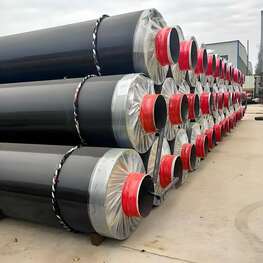
Alternative Solution 1: Pre-Insulated Polyurethane Steel Pipe

A more suitable option is a pre-insulated direct buried pipeline, consisting of:

  • A corrosion-protected steel carrier pipe

  • A rigid polyurethane foam insulation layer with a service temperature of approximately 120°C to 150°C

  • An outer HDPE protective casing

This multilayer system effectively isolates the high-temperature medium from the outer plastic jacket, providing both thermal insulation and corrosion protection while preventing the HDPE outer casing from softening due to excessive heat.

Alternative Solution 2: Dual-Layer Fusion Bonded Epoxy (FBE)

Where thermal insulation is unnecessary and corrosion protection is the primary concern, a dual-layer FBE coating system may be a better choice. It can typically provide stable long-term service at temperatures of around 100°C.

Conclusion

A 3PE coating is not a universal solution for every temperature condition.

For industrial pipeline design, 70°C should generally be regarded as the practical upper temperature limit for conventional 3PE coating systems. Pipeline designers and procurement engineers should carefully evaluate the maximum operating temperature of the transported medium, potential temperature fluctuations, and the heat dissipation conditions of the surrounding soil before selecting the most appropriate solution—whether a standard 3PE coating, a high-temperature modified 3PE system, or a pre-insulated pipeline.

Extending the service temperature of conventional 3PE coatings beyond their intended design limits can significantly increase the risk of premature coating failure and pipeline corrosion. Selecting the proper coating system from the outset is essential for ensuring the long-term safety, reliability, and service life of critical industrial pipeline networks.


cache
Processed in 0.006754 Second.