
EMAIL:
wr@insulatedpipeline.com



Number of visits:23 seconds Update time:2026-05-25
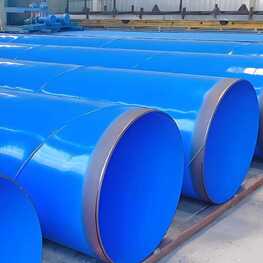
In marine engineering, port construction, cross-sea water transmission, and subsea pipeline projects, steel pipes are continuously exposed to high salinity, high humidity, and highly corrosive conditions. The corrosion rate in such environments is significantly higher than that in normal onshore buried conditions. Therefore, “how long anti-corrosion spiral steel pipes can last” is one of the most important concerns for procurement engineers and project designers.
In reality, service life is not a fixed value. It depends on multiple factors, including the coating system, construction quality, environmental conditions, and maintenance level. However, based on engineering experience, a relatively clear reference range can still be provided.
In high-salinity marine environments, steel pipe corrosion mainly comes from the following sources:
Chloride ion corrosion from seawater
Salt spray exposure from marine wind
Electrochemical corrosion from soil or seabed conditions
Integrity of the cathodic protection system
Whether the coating remains intact without damage
Among these, coating integrity is the most critical factor determining service life.
Common external anti-corrosion systems for spiral steel pipes include 3LPE, FBE, and enhanced coating systems. Their performance in marine environments varies significantly.
It can be seen that under the same conditions, 3LPE systems generally offer a significantly longer service life than single-layer FBE coatings.
Compared with standard buried pipeline conditions, high-salinity marine environments involve both continuous corrosion and dynamic mechanical damage.
Key reasons include:
Continuous salt spray exposure
Salt particles constantly attach to the pipe surface, accelerating electrochemical reactions.
Near 100% humidity levels
Once the coating is slightly damaged, corrosion can spread rapidly.
Frequent mechanical impact
Damage may occur during transportation, offshore installation, or backfilling operations.
High dependence on cathodic protection systems
If cathodic protection fails, corrosion rates increase significantly.
Theoretical service life is based on ideal conditions. In real projects, construction quality has a major impact on performance.
It can be observed that actual service life is usually slightly lower than theoretical values, but the difference is not significant when construction quality and protection measures are well controlled.
From an engineering perspective, three critical factors determine how long anti-corrosion spiral steel pipes can last:
Even minor coating defects can become corrosion initiation points, and corrosion can spread quickly in marine environments.
Many corrosion issues do not occur during operation but are introduced during handling, transportation, or installation.
Anti-corrosion coating and cathodic protection must work together as a complete system. Both are essential for long-term performance.
To ensure anti-corrosion spiral steel pipes achieve their designed service life in marine environments, the following measures are recommended:
Select an appropriate coating system (3LPE or higher is generally preferred)
Strictly control coating thickness and adhesion performance
Perform detailed inspection of weld seam areas
Avoid direct impact during transportation and handling
Conduct full holiday (spark) testing instead of sampling inspection
Ensure a stable and well-maintained cathodic protection system
In high-salinity marine environments, the service life of anti-corrosion spiral steel pipes generally ranges from 15 to 40+ years, depending on the coating system and construction quality.
FBE: Suitable for moderate corrosion environments with lower cost
3LPE: Offers better overall performance and is widely used in marine pipeline projects
3LPP: Designed for more severe or high-temperature offshore conditions
In conclusion, marine pipeline durability is not determined by a single material alone, but by a complete engineering system. The coating, construction quality, and cathodic protection together define the real service life of the pipeline.
 WeChat
 Scan wechat
WhatsApp:+86 15383177997
E-mail:wr@insulatedpipeline.com
E-mail:
Address:Development Zone, Cangzhou, Hebei Province, China
技术支持:沧州利畅网络
.jpg)

.jpg)