EMAIL:
wr@insulatedpipeline.com


Published:2026-08-13 | Last Updated: 2026-08-13 Views: 56
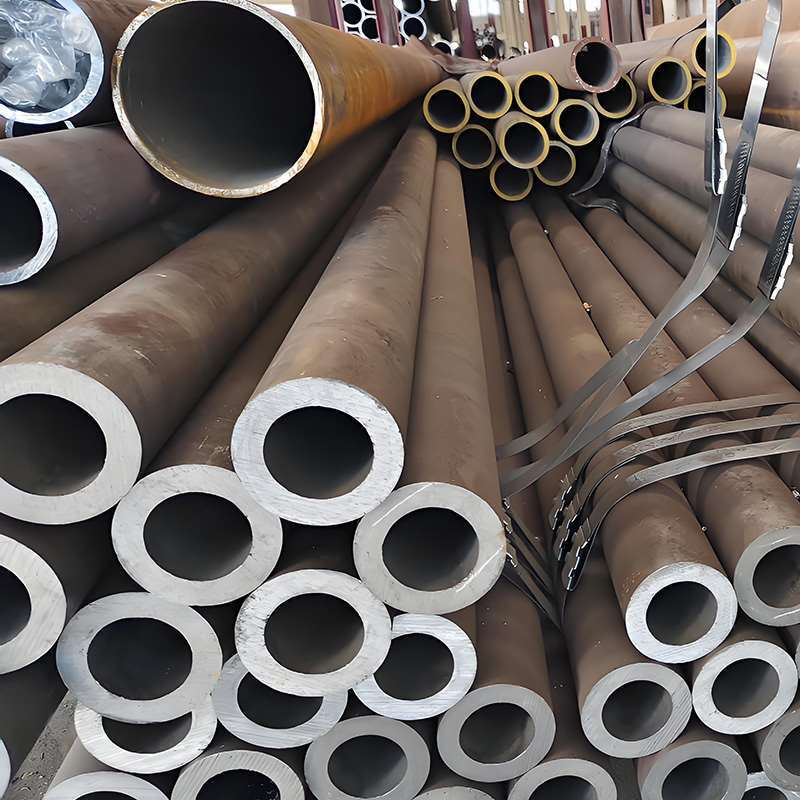
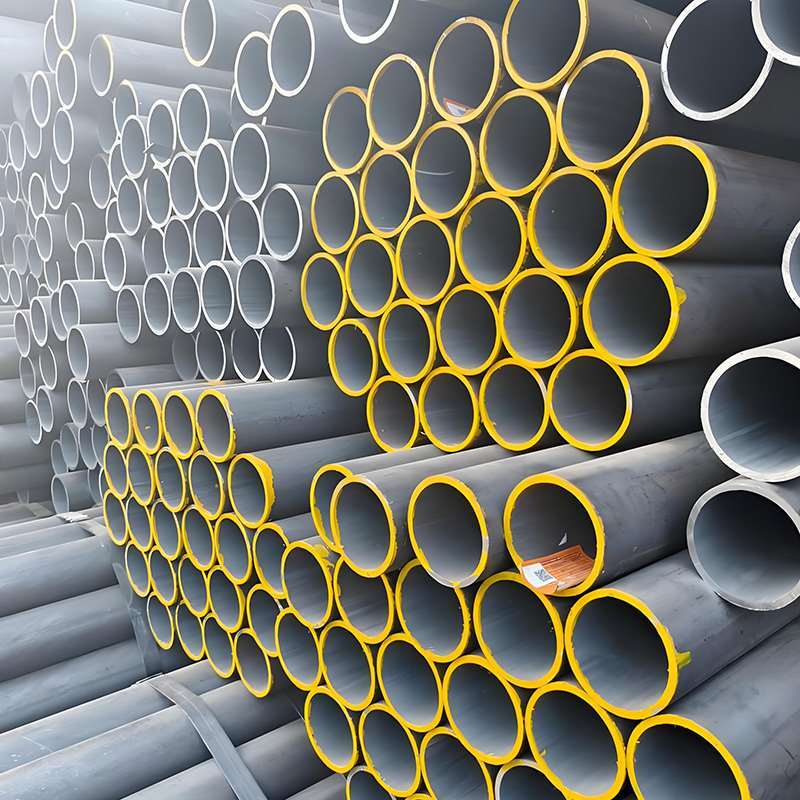
ASTM A334 alloy steel pipe is a seamless or welded pipe specifically designed for cryogenic environments, meeting the requirements of the American Society for Testing and Materials (ASTM) A334 standard.
This pipe material is typically normalized or tempered to ensure it maintains good mechanical properties and ductility at low temperatures ranging from -45°C to -195°C.
Common grades include Grade 1, Grade 3, Grade 6, Grade 7, Grade 8, Grade 9, and Grade 11. Grade 6 is the most widely used specification, suitable for LNG projects, cryogenic vessels, and chemical pipeline systems.
| Grade | Main Alloying Elements | Characteristics | Typical Applications |
|---|---|---|---|
| Grade 1 | C-Mn-Si system | Low carbon, good ductility, suitable for medium and low temperature environments | Low-temperature oil and gas pipelines, liquid storage and transportation systems |
| Grade 3 | Approximately 3.5% Ni | Improved low-temperature toughness, excellent resistance to embrittlement | LNG pipelines, cryogenic chemical installations |
| Grade 6 | Optimized C-Mn-Si system | Stable performance, applicable down to -50°C, most commonly used grade | Liquid nitrogen, liquid oxygen, cryogenic storage tanks, refrigeration systems |
| Grade 7 | Contains small amounts of Ni and Cr | Excellent low-temperature impact properties, enhanced corrosion resistance | Petrochemical low-temperature units, LPG storage and transport systems |
| Grade 8 | High Ni content (approx. 9%) | Exceptional cryogenic toughness, suitable for temperatures down to -195°C | Cryogenic equipment, air separation units, LNG pipelines |
| Grade 9 | Contains Mo element | Improved high-temperature strength and corrosion resistance | Environments alternating between high and low temperatures |
| Grade 11 | Higher Cr and Mo content | Excellent corrosion and oxidation resistance | Chemical and low-temperature gas transmission systems |
Grade | C(%) | Mn(%) | P(max%) | S(max%) | Si(%) | Ni(%) | Cr(%) | Mo(%) | V(%) |
Grade 1 | ≤0.30 | 0.40–1.06 | 0.025 | 0.025 | ≤0.10 | — | — | — | — |
Grade 3 | ≤0.19 | 0.40–0.70 | 0.025 | 0.025 | 0.18–0.37 | 3.18–3.82 | 0.44–0.64 | 0.44–0.64 | — |
Grade 6 | ≤0.30 | 0.29–1.06 | 0.025 | 0.025 | 0.10–0.35 | — | — | — | — |
Grade 7 | ≤0.19 | 0.40–0.70 | 0.025 | 0.025 | 0.18–0.37 | 0.40–0.70 | — | — | — |
Grade 8 | ≤0.13 | 0.35–0.65 | 0.020 | 0.010 | ≤0.35 | 8.50–9.50 | — | — | — |
Grade 9 | ≤0.15 | 0.30–0.60 | 0.025 | 0.025 | 0.25–1.00 | — | 2.00–2.50 | 0.90–1.10 | — |
Grade 11 | ≤0.10 | 0.30–0.60 | 0.025 | 0.025 | 0.50–1.00 | — | 1.00–1.50 | 0.45–0.65 | 0.02–0.08 |
| Steel Grade | Tensile Strength (MPa) | Yield Strength (MPa) | Elongation (%) | Impact Energy (J, @–50°C) | Applicable Temperature Range |
|---|---|---|---|---|---|
| A334 Grade 3 | ≥415 | ≥240 | ≥30 | ≥27 | –45°C to –100°C |
| A334 Grade 4 | ≥485 | ≥275 | ≥30 | ≥27 | Below –50°C |
| A334 Grade 7 | ≥415 | ≥240 | ≥30 | ≥27 | Below –50°C |
| A334 Grade 8 | ≥550 | ≥345 | ≥30 | ≥27 | Below –195°C (Cryogenic Environment) |
| A334 Grade 9 | ≥450 | ≥275 | ≥30 | ≥27 | Below –75°C |
| A334 Grade 11 | ≥480 | ≥275 | ≥30 | ≥27 | Below –50°C |
When selecting ASTM A334 alloy steel pipes, the most critical factor is determining the suitable steel grade based on the operating environment (temperature, pressure, and medium). Differences in chemical composition and properties among various grades directly impact pipeline safety and economic efficiency.
| Application Scenario | Recommended Grade | Description |
|---|---|---|
| Low-Temperature Pressure Systems (–45°C ~ –100°C) | Grade 6, Grade 7 | Nickel steel with excellent impact toughness at low temperatures; widely used in LPG and cryogenic storage tanks. |
| Cryogenic Systems (below –150°C) | Grade 8 | Contains 9% Ni; suitable for extremely low-temperature applications such as LNG, liquid nitrogen, and liquid oxygen systems. |
| Moderate Strength & General Low-Temperature Pressure Piping | Grade 3, Grade 4 | Ni-Cr-Mo alloy combining strength and low-temperature toughness; offers excellent cost-performance balance. |
| High-Strength or High-Pressure Systems | Grade 9, Grade 11 | Cr-Mo or Cr-Mo-V alloys with good creep resistance; ideal for high-pressure heat exchangers and thermal systems. |
| General Low-Temperature Fluid Transport (e.g., Water, Gas) | Grade 1, Grade 6 (Carbon Steel) | Low cost and easy to process; suitable for non-extreme temperature environments. |
Selection Recommendations:
Select steel grades based on minimum operating temperature: The lower the temperature, the higher the nickel content required (e.g., Grade 7, 8).
Determine alloy type based on system pressure: High-pressure systems should prioritize Cr-Mo series (e.g., Grade 9, 11).
Balance weldability and cost-effectiveness: For extensive welding operations, Grade 6 or 7 is recommended for superior weldability and moderate cost.
Reference Standard Requirements: Verify steel grade compatibility against the latest ASTM A334 edition or project specifications.
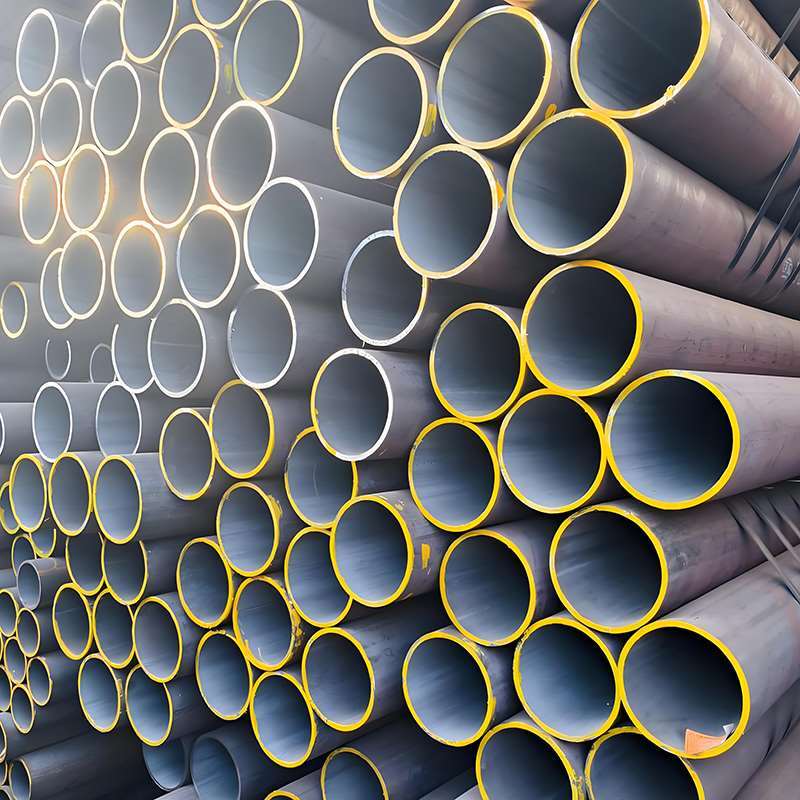
They are mainly used in low-temperature environments for pipelines, heat exchangers, boilers, and storage tank systems, such as liquefied natural gas (LNG), cryogenic air separation, and chemical storage and transportation systems.
Typically, there are two types: hot-rolled seamless and cold-drawn seamless.
Cold-drawn pipes offer high precision and smooth surfaces, while hot-rolled pipes are suitable for large-diameter, thick-walled tubes.
Outer diameter typically ranges from 10.3mm to 660mm (1/8“ to 26”),
wall thickness from 2mm to 60mm, with lengths commonly at 6m, 12m, or custom lengths.
Common testing items include: chemical composition analysis, mechanical property tests (tensile strength, yield strength, elongation), impact tests (Charpy V-notch), hydrostatic pressure tests, and non-destructive testing (UT, ET).
Typically include material test certificate (MTC/EN10204 3.1), hydrostatic test report, dimensional inspection report, packing list, and certificate of origin.
Standard specifications: approximately 7–15 days.
For special grades, thick-walled sections, or corrosion-resistant coatings: approximately 20–35 days. Custom lead times available based on order volume.
 WeChat
 Scan wechat
WhatsApp:+86 15383177997
E-mail:wr@insulatedpipeline.com
E-mail:
Address:Development Zone, Cangzhou, Hebei Province, China
技术支持:沧州利畅网络
.jpg)
.jpg)