EMAIL:
wr@insulatedpipeline.com


Published:2026-08-13 | Last Updated: 2026-08-13 Views: 53
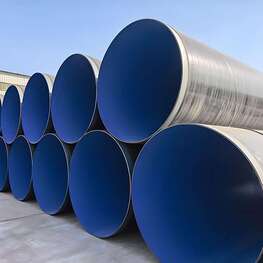
This coating structure combines the anti-corrosion properties of epoxy with the wear and impact resistance of polyethylene, effectively improving the corrosion resistance and service life of the pipe. It is suitable for oil, gas, water supply, and other pipeline projects, especially for buried or humid environments.
.jpg "3PE Coated Carbon Steel Pipe ASTM A53")
| Parameter Category | Specific Parameter |
|---|---|
| Standard | ASTM A53 |
| Pipe Type | Carbon Steel Pipe (Seamless / Welded) |
| Outer Diameter Range | 21.3 mm – 1219 mm (customizable) |
| Wall Thickness Range | SCH 5 – SCH 160 (or 2.0 mm – 25.4 mm) |
| Coating Type | 3-layer Polyethylene (3PE): Epoxy Powder Primer + Adhesive Layer + Polyethylene Outer Layer |
| Coating Thickness | Total thickness approx. 0.5 mm – 0.7 mm (depending on manufacturer) |
| Coating Adhesion | ≥ 250 N/cm² |
| Heat Resistance | ≤ 60°C continuous working temperature |
| Applicable Environment | Buried pipelines, humid or corrosive soil environments |
| Typical Application | Oil, natural gas, water supply pipelines, and industrial transport pipelines |
| Connection Method | Welding, flange connection, socket welding |
| Corrosion Protection Performance | Excellent corrosion resistance and mechanical damage resistance |
| Length | Standard length 6 m – 12 m, customizable |
Function: Tightly bonded to the steel pipe, forming an anti-corrosion base, blocking moisture and oxygen.
Pipe Selection Reference: Primer thickness and adhesion directly affect the service life of the pipeline. It is more reliable to select a product with primer adhesion ≥ 250 N/cm².
Function: Connect the primer with the outer polyethylene layer to improve the overall adhesion and impact resistance of the coating.
Pipe Selection Reference: The quality of the glue layer determines whether the coating is easy to fall off during transportation and laying of the pipeline. A good quality glue layer can reduce the risk of construction damage.
Function: Corrosion resistance, wear resistance, and chemical medium erosion resistance, protecting the pipeline from chemical corrosion in soil or water.
Pipe Selection Reference: The outer layer thickness is usually 0.3~0.5 mm. The thicker the thickness, the better the mechanical protection, suitable for buried or vulnerable environments.
.jpg "3PE Coated Carbon Steel Pipe ASTM A53")
| Pipe Type | Grade | Typical Tensile Strength | Yield Strength | Applicable Working Pressure | Typical Application | Selection Suggestion |
|---|---|---|---|---|---|---|
| Seamless Pipe | Grade A | 345 – 415 MPa | 205 MPa | ≤ 1.0 MPa | Low-pressure water supply, natural gas transport | Preferred for low-pressure systems, buried pipelines, or small-diameter pipes |
| Seamless Pipe | Grade B | 415 – 540 MPa | 245 – 295 MPa | 1.0 – 2.5 MPa | Medium-high pressure oil, water supply, chemical pipelines | For medium-high pressure systems or when higher mechanical strength is required |
| Welded Pipe | Grade A | 345 – 415 MPa | 205 MPa | ≤ 0.8 MPa | Urban water supply, low-pressure pipe network | Lower cost, suitable for low-pressure applications |
| Welded Pipe | Grade B | 415 – 540 MPa | 245 – 295 MPa | 1.0 – 2.0 MPa | Medium-pressure water supply, natural gas transport | For medium-pressure systems; pay attention to weld quality and corrosion protection |
| Coating Thickness Type | Composition Thickness (mm) | Applicable Environment | Selection Reference |
|---|---|---|---|
| Standard | Total 0.5 mm (Primer 0.15 + Adhesive 0.05 + PE 0.3) | General buried pipelines, mildly corrosive soil | Typical municipal water supply, natural gas, light industrial pipelines |
| Thickened | Total 0.6 mm (Primer 0.18 + Adhesive 0.07 + PE 0.35) | Humid or moderately corrosive soil | Buried pipelines, industrial pipelines, high mechanical damage resistance required |
| High Protection | Total 0.7 mm (Primer 0.2 + Adhesive 0.1 + PE 0.4) | Highly corrosive soil, high groundwater level, or seawater environment | Oil, chemical, marine transport pipelines, long service life required |
.jpg "3PE Coated Carbon Steel Pipe ASTM A53")
| Test Item | Standard Requirement | Test Method | Selection Reference |
|---|---|---|---|
| Coating Thickness | Total 0.5 – 0.7 mm (depending on type) | Ultrasonic Thickness Gauge | Ensure the anti-corrosion layer meets design requirements |
| Adhesion | ≥ 250 N/cm² | Tensile Pull-off Test | High adhesion prevents detachment during handling and transportation |
| Uniformity | Continuous coating, no bubbles or cracks | Visual Inspection + Magnifying Glass | Protects the pipe from corrosion and mechanical damage |
| Impact Resistance | No cracking or peeling | Impact Test | Prevents damage during construction and handling |
| Heat Resistance | ≤ 60°C continuous use | High-Temperature Exposure Test | Ensures no deformation or cracking at operating temperature |
| Test Item | ASTM A53 Standard Requirement | Typical Test Method | Selection Reference |
|---|---|---|---|
| Tensile Strength | Grade A: 345–415 MPa Grade B: 415–540 MPa | Tensile Test | Determine pipe pressure-bearing capacity |
| Yield Strength | Grade A: 205 MPa Grade B: 245–295 MPa | Tensile Test | Affects the pipe's deformation resistance under high pressure |
| Elongation | ≥ 20% | Tensile Test | Ensures pipe toughness and impact resistance in low-temperature environments |
| Impact Toughness | ≥ 27 J (-20°C) | Charpy Impact Test | Prevents brittle fracture |
| Test Item | Standard Requirement | Test Method |
|---|---|---|
| Outer Diameter, Wall Thickness, Tolerance | ASTM A53 tolerance range | Caliper, Thickness Gauge |
| Length | 6–12 m standard length, customizable | Measuring Tape |
| Surface Quality | Smooth, no rust, no obvious scratches | Visual Inspection |
 WeChat
 Scan wechat
WhatsApp:+86 15383177997
E-mail:wr@insulatedpipeline.com
E-mail:
Address:Development Zone, Cangzhou, Hebei Province, China
技术支持:沧州利畅网络
.jpg)