
EMAIL:
wr@insulatedpipeline.com



Number of visits:3 seconds Update time:2026-08-11
In the pipeline engineering industry, there is a widely circulated saying: “There are only two kinds of pipelines in the world: those that have already corroded and those that are currently corroding.”
As a pipeline engineer or project manager, designing a comprehensive internal and external corrosion protection plan is not just a battle against chemical reactions—it’s about shaping the entire project’s lifecycle and commercial return. Faced with a complex array of international standards and sales pitches from various material suppliers, how can you make the most reasonable and cost-effective technical decisions? This article will walk you through the practical logic behind selecting corrosion protection solutions and the key considerations for avoiding pitfalls.
Many novice engineers tend to view internal coatings merely as a means of “preventing rust.” However, in long-distance transmission pipelines, the commercial value of internal coatings often lies in “reducing friction and increasing throughput.”
Natural Gas Pipelines: Focus on “Friction Reduction”
Long-distance natural gas pipelines typically use friction-reducing epoxy coatings. The key performance indicator is not thickness (usually only 60–100 μm), but surface roughness. A smooth inner wall reduces gas friction, increasing gas throughput by 5%–10%. From a commercial perspective, this means the construction cost of the coating can be recouped within a few months.
Crude Oil and Multiphase Flow Pipelines: Focus on “Chemical Resistance and Erosion Resistance”
If the medium contains high concentrations of H₂S, CO₂, or associated water, thick-film liquid epoxy or fusion-bonded epoxy powder (FBE) must be selected. In harsh water-injection wells or acidic environments, high-density plastic liner pipes should be considered.
Don’t overlook the “boil-off test”: For high-pressure natural gas transmission pipelines, the internal coating must pass a pressure drop test. Otherwise, when the pipeline depressurizes, gas penetrating the coating will expand rapidly, causing the coating to peel off over a large area—like popcorn—and block downstream valves.
Weld joints are a blind spot: No matter how well the main pipeline is coated, the heat generated during on-site welding will damage the internal coating on both sides of the weld. The plan must explicitly specify the use of robotic spray coating for internal weld joints or anti-corrosion lining rings; otherwise, the weld area will become the first point of perforation.
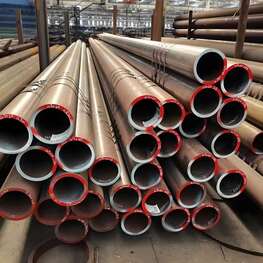
.jpg)
The international consensus on external protection is: anti-corrosion coatings + cathodic protection. These two elements are not isolated but form a mutually reinforcing system.
| Coating Technology | Key Advantages | Critical Limitations | Ideal Application Scenarios |
|---|---|---|---|
| Single-layer FBE (Fusion Bonded Epoxy Coating) | Strong adhesion and excellent resistance to cathodic disbondment | Low mechanical strength; easily scratched by stones in backfill soil | Main pipeline sections in areas with good soil conditions; carrier pipes for trenchless horizontal directional drilling (HDD) projects |
| 3PE (Three-Layer Polyethylene Coating) | Excellent impact resistance, waterproof performance, and wear resistance | Can shield cathodic protection current; hidden corrosion may occur beneath the coating if disbondment happens | Mainstream onshore buried pipelines in Asia and Europe; pipeline projects in areas with complex soil conditions |
| 3PP (Three-Layer Polypropylene Coating) | Excellent high-temperature resistance (up to 110°C–140°C) | Higher brittleness; prone to cracking at low temperatures; higher cost | High-temperature oil and gas transmission pipelines; deep-sea high-pressure pipeline systems |
Any coating will have microscopic pinholes during application and backfilling. Pinholes are not a concern; what is a concern is poor cathodic protection design.
When should sacrificial anodes be used? They are suitable for short-distance pipeline networks where site constraints prevent connection to an external power source, or for subsea pipelines (utilizing the extremely low resistivity of seawater).
When should impressed current be used? It is the preferred choice for long-distance transmission lines and areas with high soil resistivity.
Be aware of “cathodic shielding”: If a 3PE coating is selected, in the event of extensive delamination that has not yet resulted in complete peeling, the outer polyethylene layer will block the cathodic protection current from reaching the steel pipe’s surface, leading to severe corrosion within the delaminated area. Therefore, for high-corrosion, high-risk zones, many experienced engineers tend to opt for a double-layer FBE coating.
1. Are the applicable standards aligned?
In China, GB/T 23257 (external 3PE) or GB/T 18593 (internal corrosion protection) are typically referenced. For international projects, it is essential to confirm whether the owner requires ISO 21809, API RP 5L2 (internal friction reduction), or NACE SP0169 (cathodic protection).
2. Is the Surface Preparation Grade Specified?
Whether for internal or external coatings, the rust removal grade must meet Sa 2.5, and the anchor pattern depth (typically required to be 40–100 μm) must be quantified. Without the proper anchor pattern depth, even the most expensive coating will peel off as easily as adhesive tape.
3. What is the voltage for the factory spark-test leak detection?
For external 3PE coatings, the test voltage is typically required to be ≥25 kV (or 5 kV per millimeter of thickness); for internal friction-reducing coatings, low-voltage wet sponge testing or low-voltage spark testing is generally used.
4. Is the total life-cycle cost optimized?
Initial savings on materials (such as using ordinary asphalt or a single layer of standard paint) often result in frequent excavation and repairs later on, as well as substantial costs for cathodic protection electricity. Only by adopting a systems engineering approach to design can a project truly save money.
 WeChat
 Scan wechat
WhatsApp:+86 15383177997
E-mail:wr@insulatedpipeline.com
E-mail:
Address:Development Zone, Cangzhou, Hebei Province, China
技术支持:沧州利畅网络


.jpg)