EMAIL:
wr@insulatedpipeline.com


Published:2026-08-21 | Last Updated: 2026-08-21 Views: 1
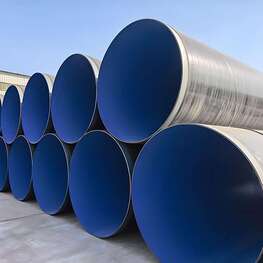
API 5L 3PE-coated steel pipes are pipeline products that use pipeline steel pipes compliant with the API 5L standard as the base material, with a three-layer polyethylene (3PE) anti-corrosion coating applied to the outer surface of the steel pipe. API 5L primarily specifies the steel grade, chemical composition, mechanical properties, and manufacturing and inspection requirements for steel pipes, while the 3PE coating is primarily used to enhance the pipe’s external corrosion resistance and mechanical protection.
The 3PE coating typically consists of three layers: fusion-bonded epoxy (FBE), an adhesive, and polyethylene (PE). FBE adheres well to the steel pipe surface; the adhesive bonds the epoxy layer to the PE layer; and the outer polyethylene layer provides excellent resistance to water, soil corrosion, and mechanical damage.
Therefore, API 5L 3PE-coated steel pipes combine the strength of API 5L pipeline steel with the external corrosion protection provided by the 3PE coating, and are commonly used in oil, natural gas, and water transmission systems, as well as other pipeline projects requiring long-term underground installation.
.jpg)
| Item | Common Specifications / Range |
|---|---|
| Product Name | API 5L 3PE Coated Steel Pipe |
| Applicable Standard | API 5L |
| Steel Grade | PSL1 / PSL2, Gr.B, X42, X52, X60, X65, X70, etc. |
| Outside Diameter (OD) | 219–1620 mm |
| Wall Thickness (WT) | 6–25 mm |
| Single Pipe Length | 5.8–12 m, or according to project requirements |
| Anti-Corrosion Type | External 3PE Coating |
| Coating Structure | FBE + Adhesive + PE |
| Coating Thickness | Determined according to pipe diameter, service environment, and project specifications |
| Pipe End Type | Plain End, Beveled End, or as required by the customer |
| Surface Preparation | Usually abrasive blasting; specific requirements shall comply with the applicable coating standard |
| Coating Color | Black or as required by the customer |
| Manufacturing Process | SSAW, LSAW, etc., depending on the required specifications |
API 5L 3PE steel pipes typically require compliance with both the pipe body standard and the 3PE anti-corrosion coating standard, which govern the pipe’s performance and the quality of the external anti-corrosion coating, respectively.
API 5L primarily specifies the manufacturing and quality requirements for line pipe, including:
Steel grades and material requirements
Chemical composition
Yield strength and tensile strength
Dimensions and weight
Manufacturing processes
Non-destructive testing
Hydrostatic testing
Product inspection and quality documentation
Common steel grades include Grade B, X42, X52, X60, X65, X70, and others. The specific steel grade and PSL rating should be determined based on the project’s design requirements.
ISO 21809-1:2018 specifically addresses three-layer polyethylene (3LPE) and three-layer polypropylene (3LPP) external anticorrosion coatings for oil and gas pipelines, specifying requirements for coating materials, application, inspection, and quality control. This standard applies to factory-applied external anticorrosion coatings used on buried or subsea pipelines.
EN 10204 is primarily used to specify the types of inspection documents for metal products, such as the common EN 10204 3.1 Material Test Certificate (MTC). Whether a 3.1 certificate is required for a specific project should be determined based on the purchase contract and the project’s technical specifications.
.jpg)
API 5L 3PE-coated steel pipes are primarily used in transportation projects that require both high pipe strength and effective external corrosion protection. Specifically, the API 5L standard governs the material and mechanical properties of the steel pipe itself, while the 3PE coating is primarily used to reduce corrosion of the pipe in external environments such as damp conditions and soil.
If you are selecting pipes, you can determine whether they are suitable for your application based on the scenarios listed below:
| Application Industry | Typical Applications | Why API 5L 3PE Coated Steel Pipe Is Suitable |
|---|---|---|
| Oil Transportation | Long-distance pipelines for transporting crude oil, refined oil products, etc. | Provides good pipe strength and external corrosion protection. |
| Natural Gas Transportation | Long-distance natural gas transmission and buried pipelines | API 5L offers different strength grades, while 3PE coating helps reduce the risk of external corrosion. |
| Water Supply Projects | Large-diameter, long-distance buried water transmission pipelines | 3PE coating is suitable for buried environments where external corrosion protection is required. |
| Industrial Piping | Fluid transportation in factories and industrial areas | The appropriate steel grade and wall thickness can be selected according to pressure, medium, and service environment. |
| Municipal Pipeline Networks | Underground water transmission and other fluid transportation in cities | Suitable for pipeline systems requiring long-term buried service. |
| Long-Distance Pipeline Projects | Cross-regional and long-distance fluid transportation projects | Helps balance pipe mechanical properties, construction requirements, and external corrosion protection. |
API 5L 3PE-coated steel pipes are generally worth considering if your pipeline has the following characteristics:
The pipeline requires long-term underground installation
The area where the pipeline is located has a high risk of soil or groundwater corrosion
The project has specific requirements for the strength and pressure-bearing capacity of the steel pipes
The pipeline covers a long distance and requires stable performance
Engineering specifications require the use of API 5L line pipe
The project also requires the steel pipes to have external corrosion protection
3PE primarily addresses external corrosion protection for steel pipes; however, this does not mean it is suitable for all transported media. Therefore, if the pipeline carries media with strong internal corrosive properties, one cannot rely solely on the external 3PE coating; internal corrosion protection, linings, or other material solutions must also be considered based on the properties of the media.
Additionally, if the pipeline is operated at high temperatures for extended periods, it is necessary to verify whether the 3PE system meets the requirements based on the actual operating temperature; it should not be selected simply because the project involves buried pipelines.
API 5L primarily specifies requirements for the material, manufacturing, performance, and inspection of pipeline steel pipes; it is a common standard for pipeline steel pipes used in oil, natural gas, and other pipeline projects. 3PE refers to a three-layer polyethylene anti-corrosion coating system applied to the exterior of steel pipes.
Simply put, API 5L primarily addresses whether the steel pipe itself meets pipeline requirements, while 3PE primarily addresses how to provide corrosion protection to the pipe’s exterior.
Therefore, API 5L 3PE-coated steel pipes effectively combine steel pipes that meet API 5L requirements with a 3PE external corrosion protection system, and are commonly used in underground pipeline projects that require external corrosion protection.
Common steel grades include API 5L Grade B, X42, X52, X60, X65, X70, and others.
The selection of a steel grade cannot be simply understood as “the higher the grade, the better.” It is typically determined based on a combination of design pressure, pipe diameter, wall thickness, transported medium, operating temperature, and project design specifications.
For example, for long-distance transmission pipelines requiring higher strength, higher steel grades such as X60, X65, or X70 may be selected; whereas standard pipeline projects may use Grade B, X42, or X52.
Therefore, when requesting a quote, be sure to specify the steel grade, outer diameter, and wall thickness, rather than simply writing “API 5L pipe.”
First Layer: Fusion-Bonded Epoxy (FBE)
This layer comes into direct contact with the surface-treated steel pipe and primarily provides corrosion protection and strong interfacial adhesion.
Second Layer: Adhesive
Located between the FBE and PE layers, this layer enhances the bond strength between the two layers.
Third Layer: Polyethylene (PE)
Serving as the outer protective layer, it primarily provides resistance to water and soil environments, as well as mechanical protection.
Therefore, 3PE is not simply “wrapping a layer of plastic around a steel pipe,” but rather a composite corrosion-resistant system formed by FBE + adhesive + PE. ISO 21809-1:2018 specifically stipulates the requirements for three-layer PE and three-layer PP external anti-corrosion coatings used in pipeline transportation systems.
Yes, they are, and underground pipelines are one of the primary applications for 3PE steel pipes.
Underground steel pipes are continuously exposed to soil and moisture, making the steel susceptible to external corrosion. The 3PE coating forms a protective layer between the steel pipe and the external environment, while the outer PE layer provides a certain degree of mechanical protection; therefore, these pipes are commonly used in oil, natural gas, and other pipeline transportation projects.
However, it is important to note that 3PE does not mean the steel pipe is completely immune to corrosion. In actual engineering projects, it is still necessary to control the surface treatment of the steel pipe, the quality of the coating, and coating damage during transportation and construction, and to consider corrosion protection measures such as cathodic protection based on project requirements. ISO 21809-1 also explicitly addresses situations involving use in conjunction with cathodic protection.
Furthermore, after pipeline welding is completed, on-site corrosion protection is typically required at the weld joints; one cannot focus solely on the 3PE coating applied during factory production. ISO 21809-3 specifically addresses corrosion-resistant coatings for on-site weld joints in buried or subsea pipelines.
Inspections are typically divided into two parts: inspection of the steel pipe body and inspection of the 3PE coating.
For the steel pipe body, the following tests may be conducted based on project requirements:
Chemical composition analysis
Tensile testing
Bending testing
Hydrostatic testing
Non-destructive testing of welds
Measurement of outer diameter, wall thickness, and length
For the 3PE coating, the following aspects are typically examined:
Surface preparation quality
Coating thickness
Visual inspection
Electrospark leak detection (Holiday Test)
Adhesion and other performance tests
Impact and other coating performance tests
The specific inspection items should be determined in accordance with API 5L, the applicable 3PE coating standards, and the project’s technical specifications; not all projects will use exactly the same combination of tests.
To ensure suppliers can provide accurate quotes, we recommend providing at least the following information:
API 5L steel grade: e.g., Gr. B, X52, X60, etc.
Outside Diameter (OD)
Wall Thickness (WT)
Pipe Length
Purchase Quantity
3PE Coating Standard
Coating Thickness or Project Technical Requirements
Pipe end types: plain ends, beveled ends, etc.
Transported medium
Operating environment: underground, subsea, or other environments
Inspection and quality documentation requirements
Delivery location and trade terms
Among these, the outer diameter, wall thickness, steel grade, and 3PE coating requirements are essential foundational information for quoting. If a customer only provides “API 5L 3PE-coated pipe” without specifying dimensions and steel grade, it is typically impossible to accurately determine the product specifications and price.
 WeChat
 Scan wechat
WhatsApp:+86 15383177997
E-mail:wr@insulatedpipeline.com
E-mail:
Address:Development Zone, Cangzhou, Hebei Province, China
技术支持:沧州利畅网络

.jpg)
.jpg)